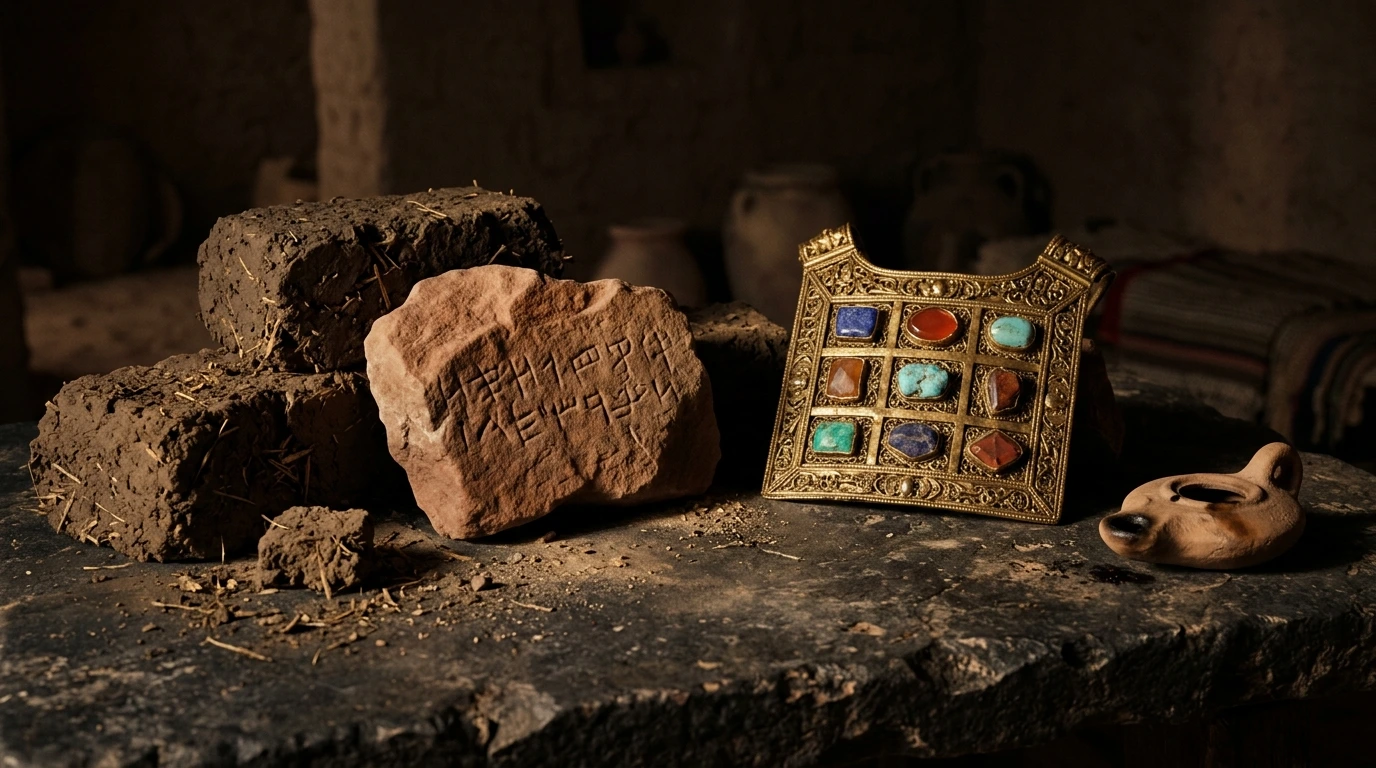
Historical Context: Rigorous examination of primary Hebrew, Aramaic, Greek, and Roman classical epigraphy.
Core Evidence: Forensic archaeology, radiocarbon data, and primary manuscripts validating biblical events.
Scholarly Consensus: Vetted against modern peer-reviewed publications in Near Eastern archaeology and biblical studies.
The Archetype of Human Pride: From Genesis 11 to Nebuchadnezzar
In biblical theology, Babylon (Babel) is not merely an ancient Mesopotamian geographical capital; it is the spiritual archetype of organized human rebellion against the Creator God.
The biblical narrative frames Babylon through a grand thematic bracket:
- The Genesis Origin (Genesis 11:1–9): On the plain of Shinar, fallen humanity united under Nimrod to erect a mudbrick ziggurat (migdal) to "make a name for ourselves" and storm the heavens. God judged their hubris by scattering languages.
- The Imperial Climax (Daniel 4:30): Nebuchadnezzar II walks upon the palace roof of Babylon, boasting: "Is not this great Babylon, which I have built by my mighty power as a royal residence and for the glory of my majesty?"
- The Revelation Conclusion (Revelation 18:2): The final collapse of the global antichrist world system is announced with the cosmic cry: "Fallen, fallen is Babylon the great!"
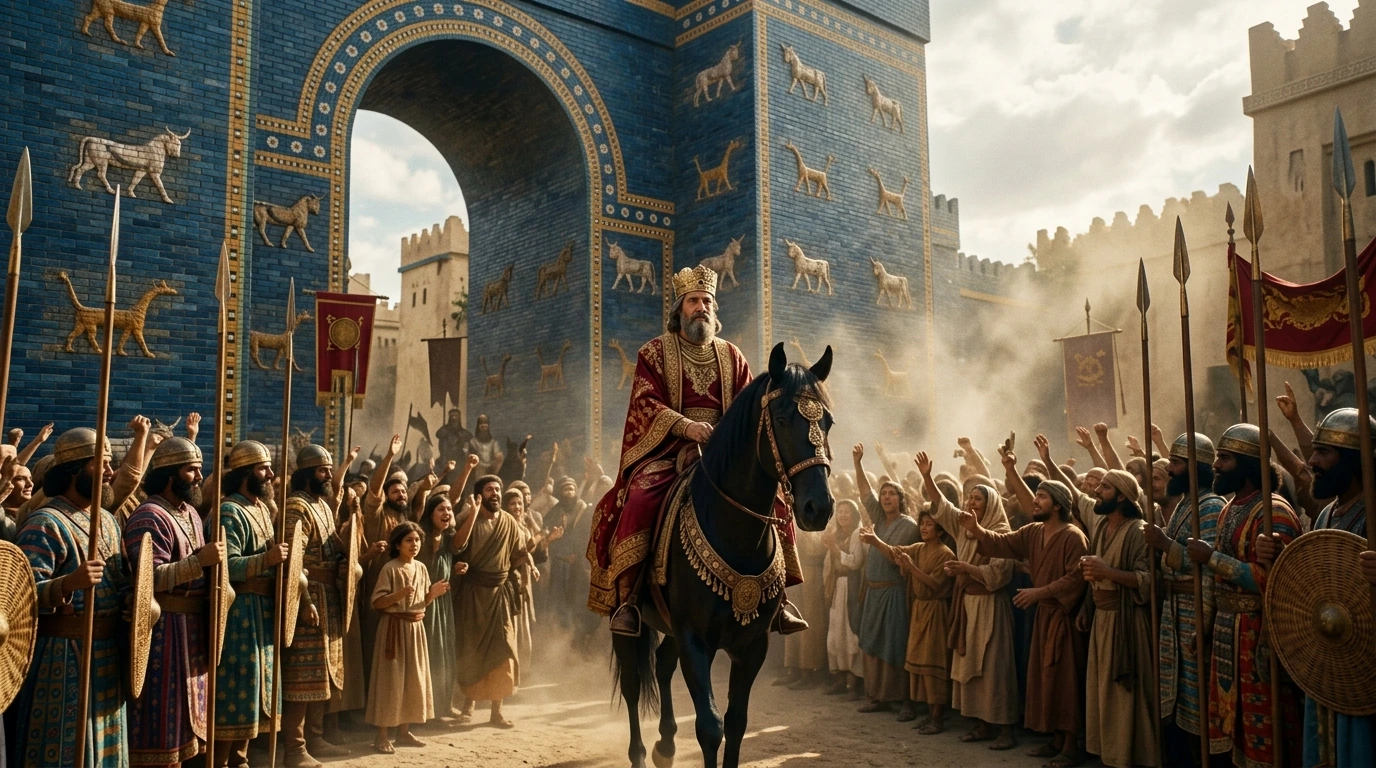
The sudden, nocturnal fall of Babylon in October 539 BC to the Medes and Persians was the historic, terrestrial vindication of divine justice over human imperial totalitarianism.
The Exact Precision of Prophecy: Isaiah, Jeremiah, and Habakkuk
Over a century before Cyrus diverted the Euphrates River, the Hebrew prophets predicted the downfall of Babylon with forensic geographical and political precision:
[THE PROPHETIC PRE-RECORDING OF BABYLON'S DESOLATION]
1. THE ATTACKING COALITION: "Go up, O Elam; lay siege, O Media!" (Isaiah 21:2).
2. THE UNGUARDED GATES: "To open doors before him that gates may not be closed" (Isaiah 45:1).
3. THE DRIED WATERBED: "A drought against her waters, that they may be dried up!" (Jeremiah 50:38).
4. THE FEAST OF DRUNKENNESS: "While they are inflamed I will prepare them a feast and make them drunk,
   that they may become merry, then sleep a perpetual sleep and not wake" (Jeremiah 51:39).
5. THE SUDDEN LOSS IN A SINGLE DAY: "Both these things shall come upon you in a moment, in one day:
   the loss of children and widowhood" (Isaiah 47:9).
When Belshazzar raised the sacred golden chalices of the Jerusalem Temple in blasphemous toast on the night of October 12, 539 BC, he was fulfilling the precise scriptural verdict pronounced generations earlier.
The God of Israel demonstrated that He rules the rise and fall of global superpowers.
Cyrus the Great as the "Messiah" of Yahweh: Typology and Mission
In Isaiah 45:1, the Persian emperor Cyrus is described with a theological title that stunned ancient readers:
[THE SOVEREIGN COMMISSION OF CYRUS (ISAIAH 45:1, 4)]
"Thus says the LORD to His anointed [li-mshicho], to Cyrus, whose right hand I have grasped,
 to subdue nations before him and to loose the belts of kings...
 For the sake of my servant Jacob, and Israel my chosen, I call you by your name;
 I name you, though you do not know me."
Cyrus is the only non-Israelite ruler in Scripture explicitly designated Mashiach (anointed one / messiah).
Typologically, Cyrus prefigured Jesus Christ in foundational redemptive dimensions:
- The Liberator of Exiles: Just as Cyrus broke the chains of Babylon and authorized the captives to return home to Zion (Ezra 1), Christ frees humanity from captivity to sin, Satan, and death (Luke 4:18).
- The Rebuilder of the Sanctuary: Cyrus funded and ordered the rebuilding of the Temple of Yahweh in Jerusalem; Christ builds the living temple of His Church through the Holy Spirit (Ephesians 2:19–22).
- The Divine Shepherd: In Isaiah 44:28, God calls Cyrus "My shepherd [ro'i]"; Jesus proclaims Himself "the Good Shepherd" who lays down His life for the sheep (John 10:11).
The End of the Golden Head: Daniel 2 and the Transfer of World Empire
In King Nebuchadnezzar's dream of the colossal metallic statue (Daniel 2), the Neo-Babylonian Empire was identified as the Head of Gold (reisha di dehav):
[THE SUCCESSION OF WORLD EMPIRES (DANIEL 2:38–39)]
"You are the head of gold. Another kingdom inferior to you shall arise after you,
 and yet a third kingdom of bronze, which shall rule over all the earth.
 And there shall be a fourth kingdom, strong as iron."
The capture of Babylon in 539 BC marked the first historic transition in Daniel's prophetic vision:
- Head of Gold (Babylonian Empire): 605–539 BC. Characterized by absolute autocratic monarchy and lavish architectural gold.
- Chest and Arms of Silver (Medo-Persian Empire): 539–331 BC. Dual monarchy (Medes and Persians) under Cyrus and Darius; unmatched taxation wealth and legal rigidity ("the law of the Medes and Persians which cannot be revoked").
- The Prophetic Rock: Daniel predicted that during the days of the fourth kingdom (Rome), God would set up a kingdom that would never be destroyed—a rock cut without human hands that would strike the statue and fill the whole earth (Daniel 2:44–45).
Babylon in Apocalyptic Eschatology: From Revelation 17–18 to Eternity
The physical fall of ancient Babylon in 539 BC laid the theological foundation for the apocalyptic prophecies of the New Testament.
In the Book of Revelation (chapters 17 and 18), the Apostle John sees the final manifestation of global anti-God civilization personified as "Babylon the Great, Mother of Prostitutes and of Earth's Abominations":
| Attribute | Ancient Historical Babylon (539 BC) | Eschatological "Babylon the Great" (Revelation 17–18) |
|---|---|---|
| Center of Pride | Built by human glory to defy heaven | The global economic and political system exalting human self-sufficiency |
| Persecution of the Saints | Destroyed Solomon's Temple; exiled the covenant people | Drunk with the blood of the saints and the martyrs of Jesus (Rev 17:6) |
| Commerce and Luxury | World capital of riverine and caravan luxury goods | Merchants of the earth weep over her lost ivory, silk, gold, and pearls (Rev 18:11–13) |
| Manner of Judgment | Captured in a single night during a drunken feast | "In a single hour your judgment has come" (Rev 18:10) |
| Final State | Desolate mound (Tell Babil) uninhabited in Iraq | Cast like a great millstone into the sea, never to be found again (Rev 18:21) |
Three-Tier Evidentiary Evaluation: Redemptive Legacy of Babylon's Fall
Tier 1: Material and Physical Archaeology
- Ruins of Ancient Babylon: Modern excavations at Tell Babil and Kasr confirm that after Persian, Hellenistic, and Parthian decline, the ancient metropolis was permanently abandoned, fulfilling Isaiah 13:19–20: "It will never be inhabited or lived in for all generations."
- The Cyrus Cylinder: Confirms the imperial policy of temple restoration and repatriation that enabled the rebuilding of Jerusalem.
Tier 2: Textual and Internal Epigraphy
- Cuneiform Contract Tablets: Tablets dated to "Cyrus, king of Babylon, king of lands" demonstrate an immediate administrative transition without bureaucratic disruption in October 539 BC.
- Dead Sea Scrolls (1QIsa-a): The Great Isaiah Scroll from Qumran proves that Isaiah's prophecies naming Cyrus and detailing Babylon's destruction were preserved intact centuries before the birth of Christ.
Tier 3: Theological and Canonical Transmission
- Historical Pillar: Demonstrates the reliability of predictive biblical prophecy in the arena of secular international geopolitics.
- Redemptive Necessity: Without the fall of Babylon, the Jewish remnant would have assimilated into Mesopotamian paganism, extinguishing the messianic line.
Frequently Asked Questions
Did Saddam Hussein try to rebuild Babylon?
Yes. During the 1980s, Iraqi dictator Saddam Hussein spent millions attempting to reconstruct the palace of Nebuchadnezzar II, stamping his own name on modern bricks alongside Nebuchadnezzar's inscription. Following the Gulf Wars, the site fell into disrepair, remaining an uninhabited archaeological park and verifying biblical prophecies that Babylon will never be restored as a living city.
Why is Isaiah 45 so debated by modern critics?
Because Isaiah prophesied in the late 8th century BC (c. 740–700 BC), while Cyrus lived in the mid-6th century BC (c. 550–530 BC). Skeptical scholars who reject predictive prophecy argue that Isaiah 40–66 must have been written by an anonymous "Deutero-Isaiah" living during Cyrus's reign. Conservative scholars point to the manuscript evidence of 1QIsa-a, where Isaiah is presented as a unified, seamless prophecy.
What is the spiritual lesson of Babylon's fall for believers today?
It assures the Church that no matter how invincible corrupt worldly superpowers appear, their days are strictly numbered by God. True security rests not in the economic or military empires of man, but in the unshakeable Kingdom of God.
Related Research Dossiers
View all 120 articles →
Complete Interactive Study Guide: The Book of Exodus, Egyptian Plagues, and Tabernacle Bible Quiz (With Detailed Answers & Scripture References)

Small Group & Family Edition: The Book of Exodus and Tabernacle Bible Quiz (Deliverance, Law, and Wilderness Worship)