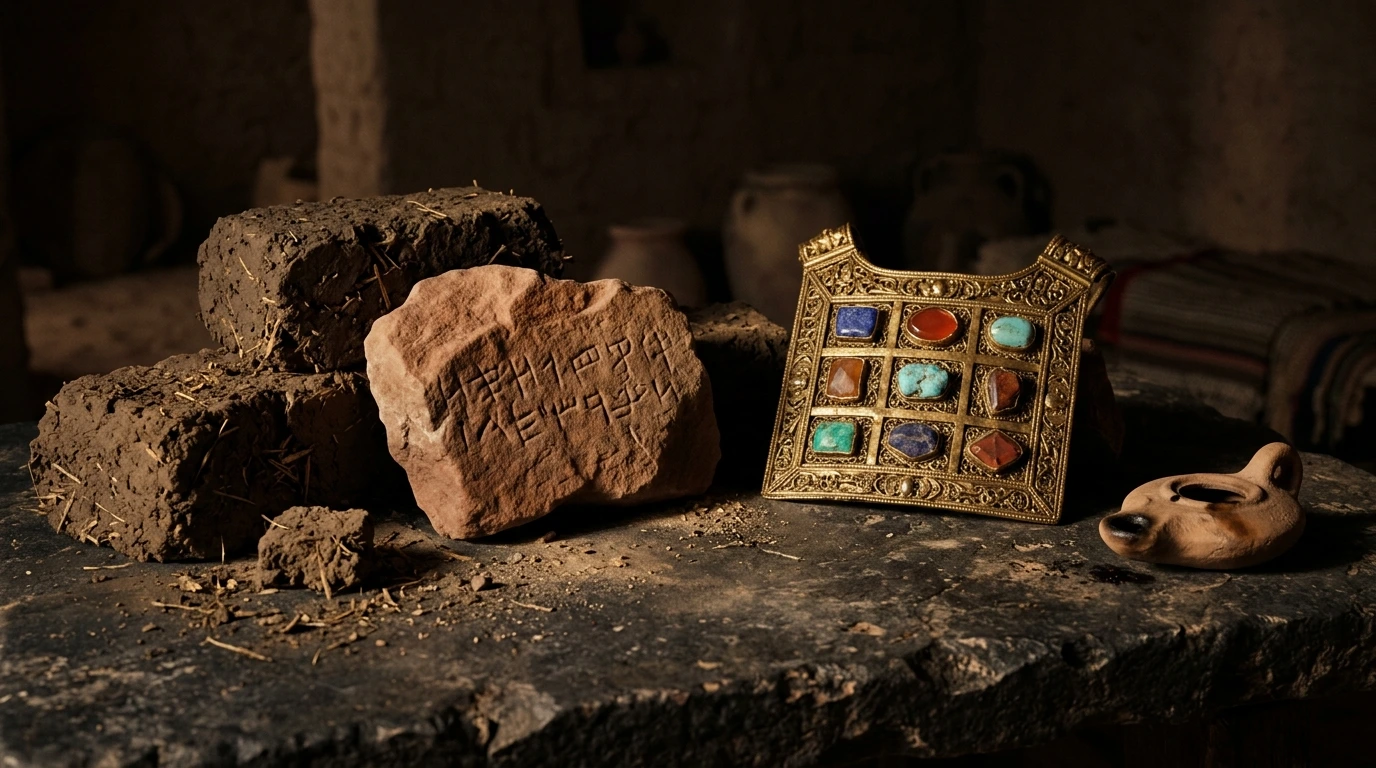
Historical Context: Rigorous examination of primary Hebrew, Aramaic, Greek, and Roman classical epigraphy.
Core Evidence: Forensic archaeology, radiocarbon data, and primary manuscripts validating biblical events.
Scholarly Consensus: Vetted against modern peer-reviewed publications in Near Eastern archaeology and biblical studies.
The Masterstroke of Neutral Political Geography
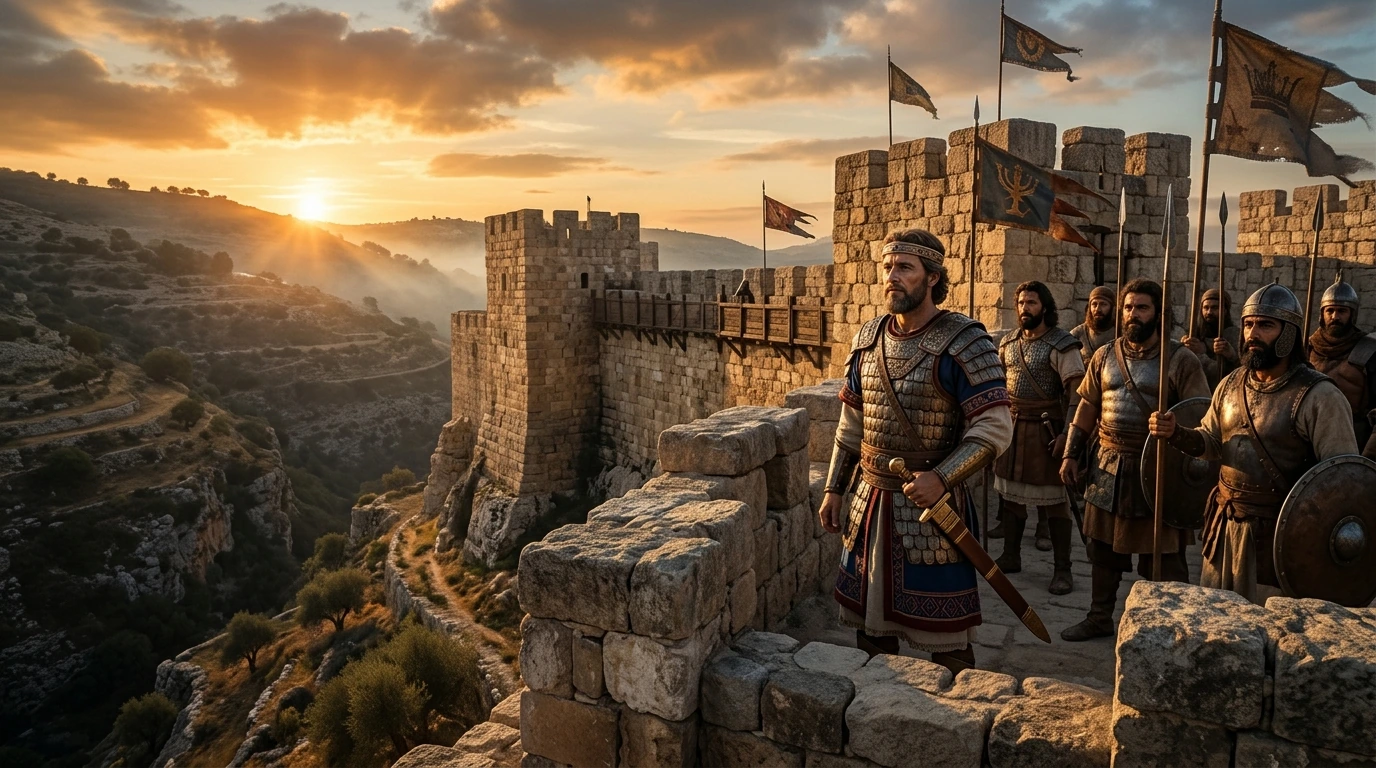
When King David captured Jebus around 1000 BC, he accomplished what military historians regard as one of the most brilliant political masterstrokes in ancient Near Eastern statecraft:
- Tribal Rivalry in Israel: For two centuries, the twelve tribes of Israel had been torn by vicious inter-tribal jealousy—most acutely between the powerful southern tribe of Judah (David's clan) and the northern tribes led by Ephraim and Benjamin (Saul's clan).
- The Failure of Previous Capitals:
- If David kept his capital at Hebron, the northern tribes would view him as a southern Judean tribal warlord.
- If David moved his capital north to Gibeah or Shechem, his own Judean kinsmen would feel betrayed.
- The "Crown Domain" Solution: Jebus was an independent Canaanite enclave that belonged to none of the twelve tribes. Because David and his personal bodyguard (Gibborim) captured the city without using the general tribal militia, the city became David's personal private possession: The City of David (Ir David).
Like modern federal districts (such as Washington D.C., Brasília, or Canberra), Jerusalem functioned as a neutral federal capital where all twelve tribes met on equal, non-partisan footing.
Uniting Throne and Altar: The Ark of the Covenant Enters Zion
David understood that a political capital without a spiritual center would never bind the hearts of the covenant people.
For nearly a century—since the Philistines captured it at the Battle of Aphek (1 Samuel 4)—the Ark of the Covenant had been neglected, languishing in a private house at Kiriath-Jearim:
[THE JUBILANT PROCESSION INTO ZION (2 SAMUEL 6:12, 14–15)]
"So David went and brought up the ark of God from the house of Obed-edom to the city of David
 with rejoicing... And David danced before the LORD with all his might. And David was wearing
 a linen ephod. So David and all the house of Israel brought up the ark of the LORD
 with shouting and with the sound of the horn."
By pitching a tent for the Ark in the heart of Jerusalem, David fused the civil throne with the sacred altar.
Jerusalem was transformed from a pagan Canaanite hill fort into Zion (Tziyon)—the earthly dwelling place of the Shekinah glory of the God of Israel.
The Davidic Covenant (2 Samuel 7): The Foundation of Messianic Hope
Once established in his cedar palace in Jerusalem, David was burdened that while he lived in a house of cedar, the Ark of God dwelled under curtains. He proposed building a permanent temple for Yahweh.
Through the prophet Nathan, God answered with the foundational promise of biblical messianism: The Davidic Covenant:
[THE ETERNAL DYNASTIC PROMISE (2 SAMUEL 7:12–13, 16)]
"When your days are fulfilled and you lie down with your fathers, I will raise up
 your offspring after you, who shall come from your body, and I will establish his kingdom.
 He shall build a house for my name, and I will establish the throne of his kingdom forever...
 And your house and your kingdom shall be made sure forever before me.
 Your throne shall be established forever."
This unconditional covenant irrevocably tied redemptive history to the physical geography of Jerusalem:
- The Seed of David: The promise finds immediate partial fulfillment in Solomon, but ultimate eternal fulfillment in Jesus Christ, the Son of David (Luke 1:32–33).
- The House and Throne: Unlike Saul's dynasty, which was terminated, David's royal line was given an eternal guarantee.
- Zion as the Holy Mountain: From this moment forward, Jerusalem became the epicenter of Old Testament prophetic expectation (Isaiah 2:2–4; Micah 4:1–2).
Mount Moriah and the Threshing Floor of Araunah
Toward the end of his reign, after a census brought divine judgment upon Israel, David was instructed by the prophet Gad to build an altar on the ridge directly north of the City of David: the threshing floor of Araunah the Jebusite (2 Samuel 24:18–25).
David insisted on purchasing the land at full price: "No, but I will buy it from you for a price. I will not offer burnt offerings to the LORD my God that cost me nothing" (2 Samuel 24:24).
This purchase represents one of the most sacred coordinates on earth:
- Mount Moriah: 2 Chronicles 3:1 explicitly identifies Araunah's threshing floor with Mount Moriah—the exact mountain where Abraham bound Isaac and offered a ram in his place (Genesis 22:2).
- The Site of the Temple: This rock ridge became the foundation platform for Solomon's Temple, the Second Temple of Zerubbabel, and the expanded Temple Mount of Herod the Great.
- The Rock of Golgotha: The same geological mountain ridge extended northward outside the city walls to the hill where Jesus Christ was crucified.
From Jebus to the New Jerusalem: The Theological Trajectory
The capture of Jerusalem initiated a vast biblical-theological trajectory spanning from the Old Testament historical books to the Book of Revelation:
| Stage of Redemptive History | Manifestation of Jerusalem / Zion | Key Biblical Passage |
|---|---|---|
| Canaanite Jebus | Pagan fortress conquered by Joab through the tsinnor | 2 Samuel 5:6–9 |
| Davidic & Solomonic Capital | Center of the United Monarchy and the First Temple | 1 Kings 8:1–11 |
| Prophetic Expectation | The mountain where all nations stream to learn Torah | Isaiah 2:2–4; Micah 4:1 |
| Crucible of Redemption | The city of Christ's passion, resurrection, and Pentecost | Luke 24:46–49; Acts 2 |
| The Heavenly Zion | The spiritual assembly of the Church and spirits of the just | Hebrews 12:22–24 |
| The New Jerusalem | The eternal, holy city descending from God out of heaven | Revelation 21:1–4 |
Without David's conquest of Jebus in 1000 BC, the entire geographical, prophetic, and theological vocabulary of redemption—the Throne of David, the Temple, Mount Zion, and the New Jerusalem—would not exist.
Three-Tier Evidentiary Evaluation: Redemptive Legacy of Jerusalem
Tier 1: Material and Physical Archaeology
- Temple Mount Bedrock: The northern expansion of the City of David to the Temple Mount preserves the physical bedrock platform identified with Araunah's threshing floor and the First Temple.
- Monumental Judean Administration: Continuous Iron Age administrative architecture, royal water systems (Hezekiah's Tunnel), and epigraphy corroborating Jerusalem's status as the Davidic royal capital.
Tier 2: Textual and Internal Epigraphy
- The Ketef Hinnom Silver Scrolls (c. 650 BC): Discovered just outside the old city of Jerusalem, containing the Priestly Blessing (Numbers 6:24–26) in Paleo-Hebrew, proving liturgical veneration of Yahweh in Jerusalem.
- Tel Dan Inscription: Confirms the historical establishment of the "House of David" as the ruling dynasty originating from Jerusalem.
Tier 3: Theological and Canonical Transmission
- Messianic Lineage: The unbroken biblical witness linking David's capture of Jerusalem to Jesus' triumphal entry into Jerusalem as the King of Kings.
- Eschatological Completion: The prophetic movement from an earthly Canaanite fortress to the heavenly city where God dwells eternally with redeemed humanity.
Frequently Asked Questions
Why did God choose Jerusalem rather than a major world capital like Babylon or Rome?
Biblically, God consistently chooses the humble and unexpected things of this world. Jerusalem was not located on a major navigable river (like the Nile, Tigris, or Euphrates) or on a maritime trade route. Its elevation, tucked away in the rugged Judean mountains, required absolute spiritual dependence upon God for protection and sustenance.
Did Araunah willingly sell his threshing floor to David?
Yes. 2 Samuel 24 records that Araunah generously offered to give the threshing floor, the oxen, and the threshing sledges to David for free as a gift. David refused the free gift, establishing the principle that true worship involves genuine personal sacrifice.
What is the difference between Zion and Jerusalem?
Originally, "Zion" referred specifically to the fortified Jebusite hill (the City of David). As the city expanded northward to include the Temple Mount and the western hill, "Zion" became the poetic and theological name for the entire holy city and the people of God.
Frequently Asked Questions
Why did God choose Jerusalem rather than a major world capital like Babylon or Rome?
Biblically, God consistently chooses the humble and unexpected things of this world. Jerusalem was not located on a major navigable river (like the Nile, Tigris, or Euphrates) or on a maritime trade route. Its elevation, tucked away in the rugged Judean mountains, required absolute spiritual dependence upon God for protection and sustenance.
Did Araunah willingly sell his threshing floor to David?
Yes. 2 Samuel 24 records that Araunah generously offered to give the threshing floor, the oxen, and the threshing sledges to David for free as a gift. David refused the free gift, establishing the principle that true worship involves genuine personal sacrifice.
What is the difference between Zion and Jerusalem?
Originally, "Zion" referred specifically to the fortified Jebusite hill (*the City of David*). As the city expanded northward to include the Temple Mount and the western hill, "Zion" became the poetic and theological name for the entire holy city and the people of God.
Related Research Dossiers
View all 120 articles →
Complete Interactive Study Guide: The Book of Exodus, Egyptian Plagues, and Tabernacle Bible Quiz (With Detailed Answers & Scripture References)
Small Group & Family Edition: The Book of Exodus and Tabernacle Bible Quiz (Deliverance, Law, and Wilderness Worship)