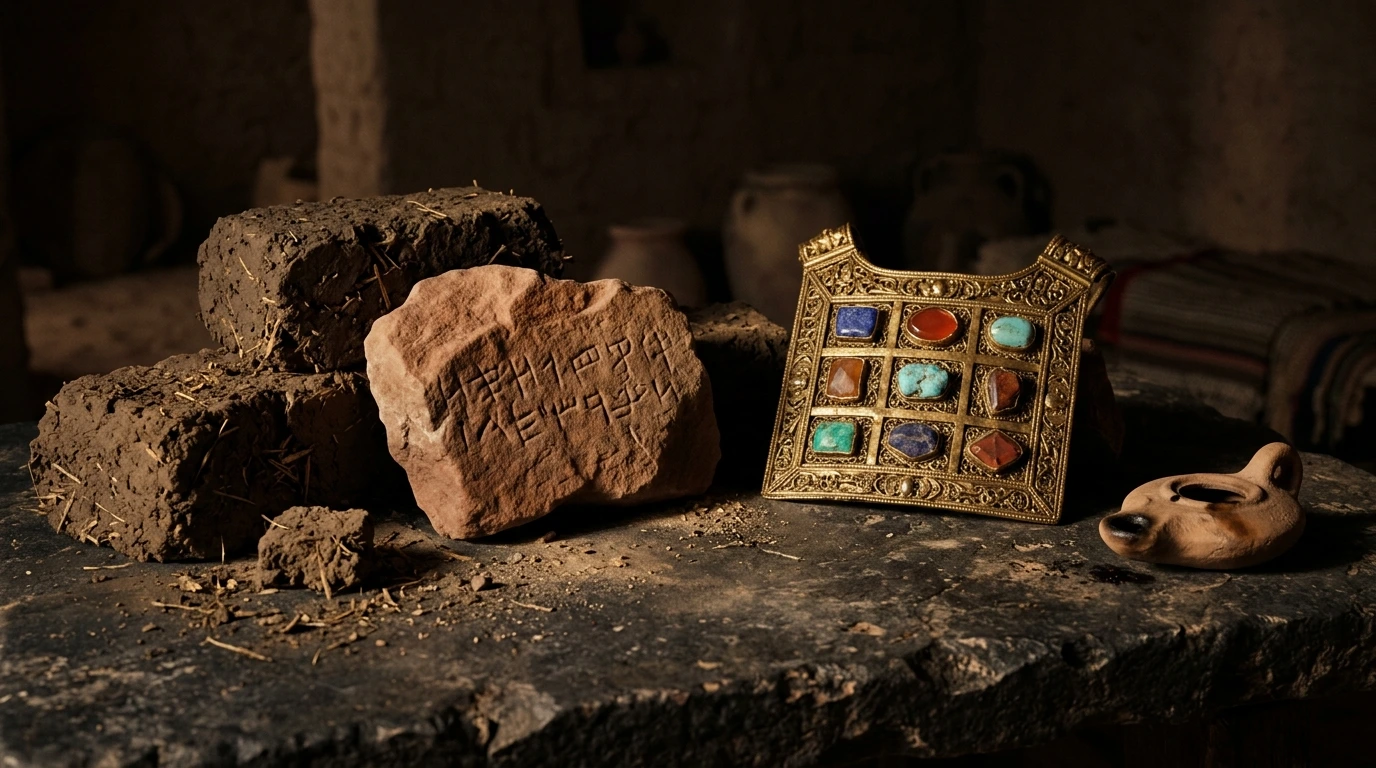
Historical Context: Rigorous examination of primary Hebrew, Aramaic, Greek, and Roman classical epigraphy.
Core Evidence: Forensic archaeology, radiocarbon data, and primary manuscripts validating biblical events.
Scholarly Consensus: Vetted against modern peer-reviewed publications in Near Eastern archaeology and biblical studies.
Phase 1: The Investment of Jerusalem (10th of Tevet, 588 BC)
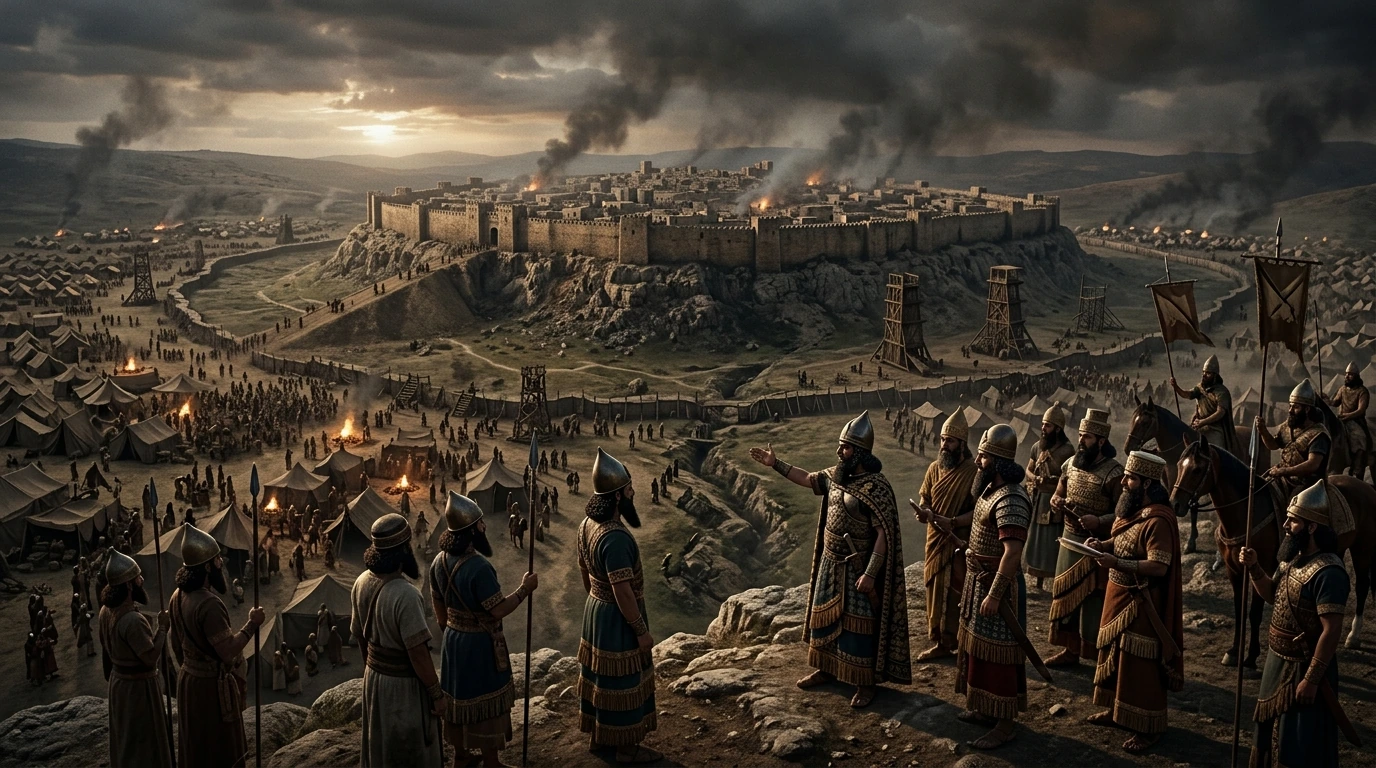
On January 15, 588 BC (the 10th day of the 10th month, Tevet), King Nebuchadnezzar II of Babylon led his combined imperial armies against Jerusalem (2 Kings 25:1):
- The Circumvallation Wall (Dayeq): The Babylonians erected a continuous perimeter palisade ditch and timber rampart around Jerusalem, cutting off all five mountain exit valleys.
- The Trapped Population: Jerusalem's population—normally around 20,000—had swelled to over 100,000 with refugees fleeing destroyed fortified towns across Judah (including Azekah and Lachish).
- Jeremiah's Desperate Plea: While King Zedekiah's ministers demanded resistance, the prophet Jeremiah walked through the streets urging surrender: "Whoever stays in this city shall die by the sword, by famine, and by pestilence, but whoever goes out and surrenders to the Chaldeans shall live" (Jeremiah 38:2). The royal court accused Jeremiah of treason and threw him into a muddy cistern.
Phase 2: The Egyptian Intervention and False Hope
In the spring of 587 BC, a temporary reprieve sparked false euphoria inside Jerusalem:
[THE TEMPORARY LIFTING OF THE SIEGE (JEREMIAH 37:5, 7–8)]
"The army of Pharaoh had come out of Egypt. And when the Chaldeans who were besieging
 Jerusalem heard news of them, they withdrew from Jerusalem...
 Thus says the LORD, God of Israel: 'Behold, Pharaoh's army that came to help you
 is about to return to Egypt, to its own land. And the Chaldeans shall return
 and fight against this city. They shall capture it and burn it with fire.'"
Pharaoh Hophra (Apries) marched an Egyptian relief army into southern Canaan. Nebuchadnezzar lifted the siege of Jerusalem to intercept and destroy the Egyptian expedition.
Inside Jerusalem, false prophets declared that the crisis was over. But within weeks, the victorious Babylonian columns returned, sealing the circumvallation ring tighter than before.
Phase 3: The Horrors of the Circumvallation Famine
By the winter of 587–586 BC, absolute starvation enveloped the besieged city:
- Depletion of Granaries: Bread supplies were completely exhausted. Citizens ate grass, leather straps, and domestic vermin.
- Cannibalism: Lamentations 2:20 and 4:10 record the ultimate horror: starving mothers boiling and consuming their own dead infants.
- Pestilence and Disease: With tens of thousands trapped within sanitary collapse, typhus, dysentery, and fecal parasites ravaged the population. Unburied corpses piled up in the public squares.
Phase 4: The Breach of the Northern Wall (9th of Tammuz, 586 BC)
On July 18, 586 BC (the 9th of Tammuz), after 18 months of siege, the Babylonian battering rams pulverized the northern wall:
[THE BREACH (JEREMIAH 39:2–3)]
"In the eleventh year of Zedekiah, in the fourth month, on the ninth day of the month,
 a breach was made in the city. Then all the officials of the king of Babylon came
 and sat in the Middle Gate."
The northern defensive towers collapsed into the moat. Babylonian shock troops, led by Nebo-Sarsekim and Nergal-sharezer, poured through the gap and occupied the Middle Gate (the inner line of defense between the Upper City and the Temple Mount).
Phase 5: The Night Escape and Capture of King Zedekiah
Recognizing that the city was lost, King Zedekiah and his elite royal bodyguard attempted a desperate nocturnal breakout:
- The Exit Gate: Slipped out under cover of midnight darkness through the gate between the two walls, by the royal King's Garden at the southern tip of the City of David.
- Flight to the Arabah: Fled down the precipitous mountain gorge toward the Jordan Valley, attempting to cross into Ammon or Moab.
- The Interception at Jericho: Babylonian cavalry pursued and overtook the exhausted Judean column in the plains of Jericho. Zedekiah's troops scattered, abandoning their king.
- The Verdict at Riblah: Zedekiah was dragged before Nebuchadnezzar at his northern military headquarters in Riblah, Syria. His sons were slaughtered before his eyes, his eyes were gouged out, and he was marched in bronze fetters to die in Babylon (2 Kings 25:6–7).
Phase 6: The Scorched-Earth Destruction of Solomon's Temple (9th of Ab)
One month after the breach, on the 9th of Ab (Tisha B'Av), 586 BC, Nebuzaradan, captain of the Babylonian imperial bodyguard, entered Jerusalem to execute total destruction:
[THE ASHES OF ZION (2 KINGS 25:9–10)]
"And he burned the house of the LORD and the king's house and all the houses of Jerusalem;
 every great house he burned down. And all the army of the Chaldeans...
 broke down the walls around Jerusalem."
- The Temple Torched: Solomon's Temple, which had stood for 410 years, was stripped of its gold, silver, and bronze vessels, and burned to the bedrock.
- The Demolition of the Walls: The cyclopean defensive walls were systematically torn down and collapsed into the surrounding ravines.
- The Great Deportation: Thousands of surviving craftsmen, nobles, priests, and warriors were marched into Babylonian captivity, leaving only the poorest vine-dressers and laborers to cultivate the ruined land.
Frequently Asked Questions
Why is the fast of 9th of Tammuz remembered today?
In modern Judaism, the 17th of Tammuz is observed as a national fast because during the Roman siege of 70 AD, the northern wall was also breached on that date. It begins the solemn "Three Weeks" of mourning culminating in Tisha B'Av.
How did the Babylonians dismantle the bronze pillars?
2 Kings 25:13 records that the Babylonians broke the massive hollow bronze pillars (Jachin and Boaz) and the colossal Bronze Sea into pieces because they were too heavy and unwieldy to transport whole, carrying the raw bronze scrap back to Babylon.
Where did Jeremiah go after the destruction?
Nebuchadnezzar issued explicit orders to Nebuzaradan to protect Jeremiah (Jeremiah 39:11–14). He was released from chains and chose to remain with the governor Gedaliah at Mizpah, before being forcibly taken to Egypt by rebellious Judean survivors.
Frequently Asked Questions
Why is the fast of 9th of Tammuz remembered today?
In modern Judaism, the 17th of Tammuz is observed as a national fast because during the Roman siege of 70 AD, the northern wall was also breached on that date. It begins the solemn "Three Weeks" of mourning culminating in Tisha B'Av.
How did the Babylonians dismantle the bronze pillars?
2 Kings 25:13 records that the Babylonians broke the massive hollow bronze pillars (**Jachin and Boaz**) and the colossal Bronze Sea into pieces because they were too heavy and unwieldy to transport whole, carrying the raw bronze scrap back to Babylon.
Where did Jeremiah go after the destruction?
Nebuchadnezzar issued explicit orders to Nebuzaradan to protect Jeremiah (Jeremiah 39:11–14). He was released from chains and chose to remain with the governor Gedaliah at Mizpah, before being forcibly taken to Egypt by rebellious Judean survivors.
Related Research Dossiers
View all 120 articles →
Complete Interactive Study Guide: The Book of Exodus, Egyptian Plagues, and Tabernacle Bible Quiz (With Detailed Answers & Scripture References)
Small Group & Family Edition: The Book of Exodus and Tabernacle Bible Quiz (Deliverance, Law, and Wilderness Worship)