Historical Context: Rigorous examination of primary Hebrew, Aramaic, Greek, and Roman classical epigraphy.
Core Evidence: Forensic archaeology, radiocarbon data, and primary manuscripts validating biblical events.
Scholarly Consensus: Vetted against modern peer-reviewed publications in Near Eastern archaeology and biblical studies.
The Shock of Temple Desecration in Ancient Israel
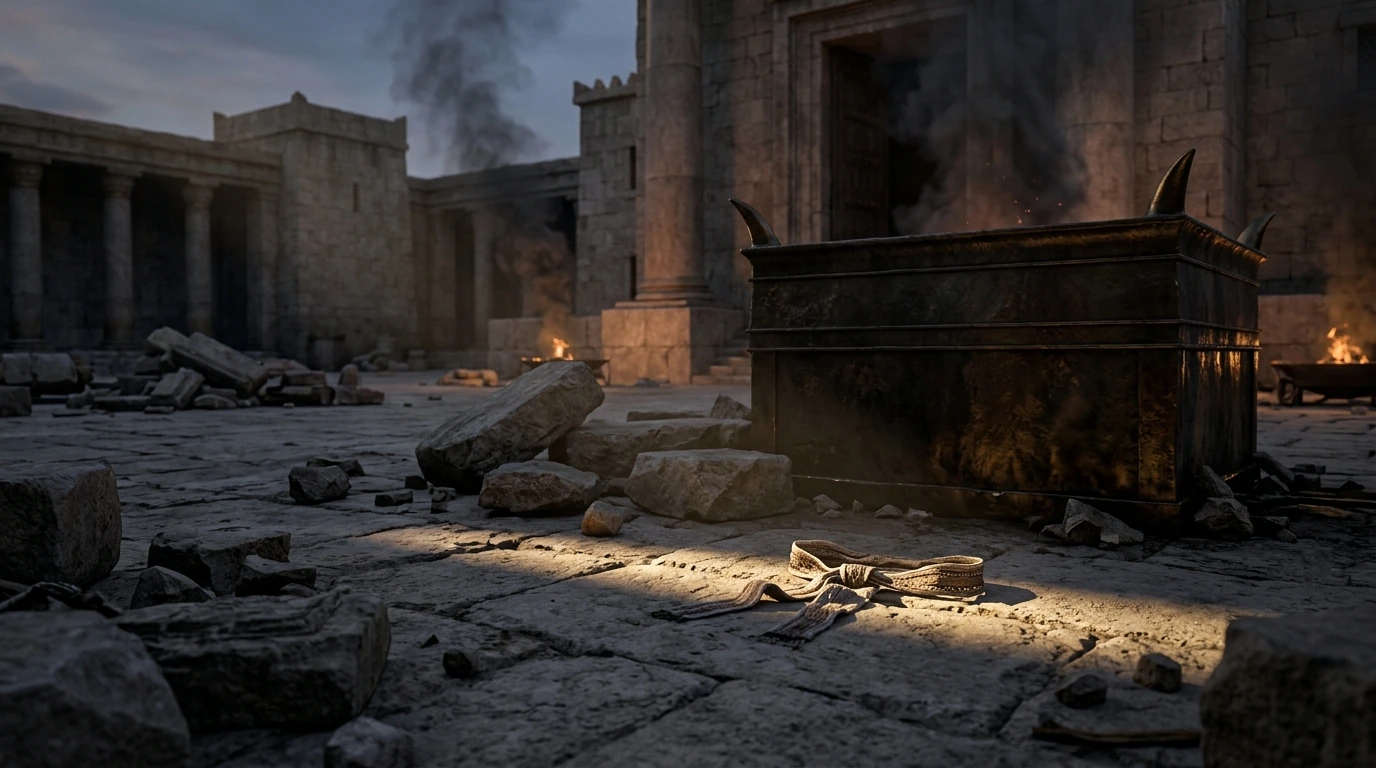
In ancient Near Eastern culture, even the most barbaric invaders respected the inviolability of temples. Murdering a consecrated priest dressed in sacred linen within the inner court of God's house was viewed as an unfathomable cosmic sacrilege.
The murder of Zechariah in the Temple courtyard left an indelible, traumatic scar upon the national consciousness of Israel. The blood of the covenant prophet stained the bare bedrock of Mount Moriah, crying out for vengeance like the blood of Abel (Genesis 4:10).
Over centuries, Jewish rabbinic historical traditions kept this memory alive as the primary spiritual cause that brought about the destruction of the First Temple.
The Talmudic Legend of the Boiling Blood (Sanhedrin 96b)
In the Babylonian Talmud (Sanhedrin 96b and Gittin 57b), as well as the Jerusalem Talmud (Ta'anit 4:5), ancient rabbis preserved a harrowing narrative regarding the Babylonian sack of Jerusalem in 586 BC:
*"When Nebuzaradan, captain of the guard, entered the Temple of Jerusalem, he saw blood bubbling and seething upon the stone floor of the court.
He asked the priests: 'What is this bubbling blood?' They replied: 'It is the blood of sacrificial calves and rams.'
Nebuzaradan brought animals and slaughtered them, but their blood coagulated, while the blood on the stones continued to bubble fiercely.
He said: 'Tell me the truth, or I will comb your flesh with iron combs!'
They confessed: 'There was a prophet and priest among us who rebuked us in the name of God, and we rose up and killed him in the sanctuary. For two hundred and fifty years his blood has refused to rest!'"*
Nebuzaradan and the Slain Priests of Jerusalem
The Talmudic text continues with a terrifying account of Babylonian retribution:
*"Nebuzaradan said: 'I will appease him.' He brought the eighty thousand young priests and slaughtered them over the blood, yet it ceased not to bubble. He brought the great Sanhedrin and slaughtered them, yet it seethed still. He brought the school children and slaughtered them, yet it did not rest.
Finally, Nebuzaradan approached the seething blood and cried: 'Zechariah, Zechariah! The finest of your people have I destroyed. Will you have me slaughter them all?' Immediately, the blood sank into the ground and rested."*
While historically embellished in rabbinic memory, this tradition illustrates how deeply ancient Judaism understood the moral gravity of shedding prophetic blood within the house of God.
The Seven Sins Committed in One Day
The ancient Midrash (Lamentations Rabbah Proem 23) notes that on the day Zechariah was murdered, Israel committed seven deadly covenant transgressions simultaneously:
- They murdered a priest (cohen).
- They murdered a prophet (navi).
- They murdered a supreme judge (dayan).
- They shed innocent blood (dam naki).
- They profaned the Name of Yahweh (chilul Hashem).
- They polluted the Holy Courtyard (azarah).
- They committed the crime on the Sabbath and the Day of Atonement (according to rabbinic tradition).
The Archaeology of Ashlar Pavements on Mount Moriah
Excavations around the Temple Mount perimeter—particularly in the Ophel and the southeastern wall—reveal the massive First Temple ashlar masonry blocks described in 1 Kings 6:36:
- Solomon's inner court was constructed with "three rows of hewn stone and a row of cedar beams".
- The altar stood atop the natural limestone knoll (traditional Even ha-Shetiyah, the Foundation Stone beneath the modern Dome of the Rock).
Zechariah’s execution took place directly on this exposed limestone ridge, cementing the physical reality that every stone of Jerusalem bore silent witness to the prophetic warnings that preceded the Babylonian exile.
Frequently Asked Questions
What is the Talmudic story of Zechariah’s boiling blood?
A famous rabbinic tradition (Sanhedrin 96b) recording that the blood of martyred Zechariah bubbled on the Temple stone floor for over two centuries until the Babylonian conquest in 586 BC.
Who was Nebuzaradan?
The Babylonian captain of the royal bodyguard who burned Solomon’s Temple and carried the Judean survivors into exile (2 Kings 25:8–11).
How did ancient rabbis view the murder of Zechariah?
They viewed it as the ultimate act of covenant sacrilege that irrevocably sealed the divine decree for the destruction of Jerusalem and the Temple.
Related Research Dossiers
View all 120 articles →
Nathan Confronting David: 'You Are the Man!' (2 Samuel 12), The Royal Court, and Prophetic Courage

The Fall of Nineveh in Secular History: The Babylonian Chronicle, Cyaxares, and Diodorus Siculus
