Historical Context: Rigorous examination of primary Hebrew, Aramaic, Greek, and Roman classical epigraphy.
Core Evidence: Forensic archaeology, radiocarbon data, and primary manuscripts validating biblical events.
Scholarly Consensus: Vetted against modern peer-reviewed publications in Near Eastern archaeology and biblical studies.
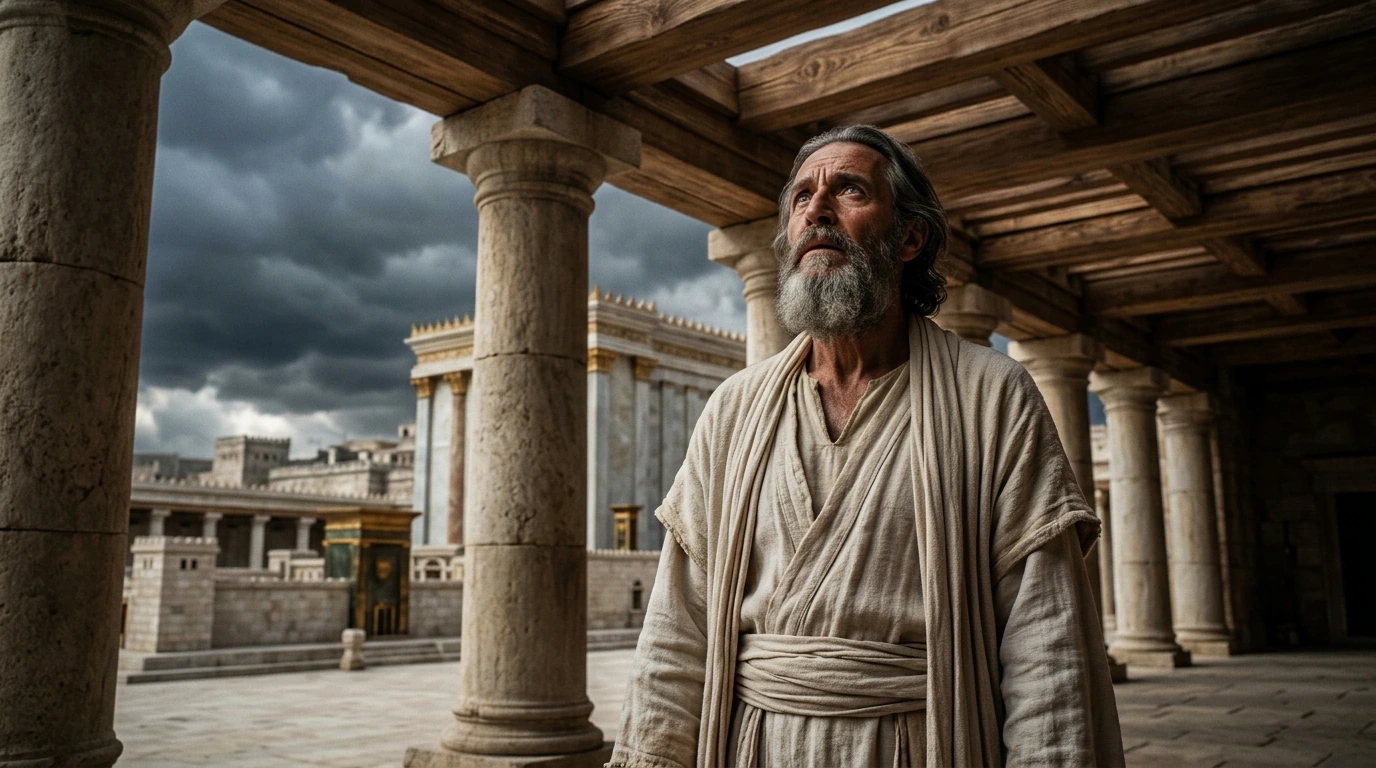
The Architectural Zoning of Solomon’s Temple
To comprehend why Jesus emphasized that Zechariah was murdered "between the sanctuary and the altar" (Matthew 23:35), one must understand the sacred architectural zoning of Solomon's Temple.
The sacred precinct was divided into graduated zones of holiness:
- The Outer Court (Great Court): Accessible to the general public and worshippers of Israel.
- The Inner Court (Court of the Priests - Azarah): Enclosed by three courses of dressed stone and cedar timbers, strictly reserved for consecrated Aaronite priests and Levites.
- The Altar of Burnt Offering: Situated in the open air directly facing the Temple entrance.
- The Vestibule (Ulam): The monumental portico flanked by the twin bronze pillars Jachin and Boaz.
- The Holy Place (Heikhal): Containing the golden lampstands, table of showbread, and altar of incense.
- The Holy of Holies (Kodesh ha-Kodashim): The inner sanctum housing the Ark of the Covenant.
The space "between the altar and the porch" was the most sacred open-air zone on earth. It was here that priests wept and prayed: "Spare Your people, O Lord!" (Joel 2:17). Murdering Zechariah in this exact corridor was an unspeakable desecration.
The Great Bronze Altar of Burnt Offering
The bronze altar constructed by Solomon (2 Chronicles 4:1) was a colossal square platform measuring 20 cubits long, 20 cubits wide, and 10 cubits high (approximately 30 feet by 30 feet, rising 15 feet into the air).
Ascended by an earthen ramp, the altar consumed the daily morning and evening sacrifices (tamid). Sacrificial blood was drained around its base into subterranean stone conduits cut through the bedrock of Mount Moriah, carrying fluids away into the Kidron Valley.
Executing a prophet beside this altar profaned the sacred precinct with unholy, illicit human blood.
The Horns of the Altar as Asylum Sanctuary
In biblical law, the four corner projections (horns) of the altar functioned as a legal place of asylum for accidental killers (Exodus 21:13–14).
When Adonijah and Joab fled Solomon’s wrath, they grasped the horns of the altar seeking sanctuary (1 Kings 1:50; 2:28). Even Joab—a military murderer—was only executed at the altar after refusing to leave.
Zechariah, an innocent priest delivering the Word of Yahweh, was granted no sanctuary whatsoever; he was stoned down within arms' reach of the very horns that symbolized divine mercy.
Biblical Stoning Jurisprudence in Iron Age Judah
Under the Mosaic Law, judicial execution by stoning (sekilah, Leviticus 20:2; Deuteronomy 17:5) was strictly regulated:
- It was reserved for capital offenses: blasphemy, idolatry, and treason against God.
- It had to occur outside the city gates (Leviticus 24:14; Acts 7:58) to prevent corpse defilement from polluting the community.
- At least two verified eyewitnesses had to cast the first stones.
In Zechariah’s case, every legal safeguard was perverted: the righteous prophet was convicted of "treason" for preaching covenant faithfulness, executed by an enraged mob without trial, and stoned inside the holy sanctuary, turning divine law on its head.
Archaeological Parallels: Iron Age Cultic Centers at Tel Dan and Arad
While the First Temple beneath the modern Temple Mount cannot be excavated, Iron Age sanctuaries at Tel Dan and Tel Arad provide direct archaeological visualization:
- At Tel Dan, excavators uncovered a massive Iron Age stone altar with four preserved stone horns, alongside bronze sacrificial shovels and ash pits.
- At Tel Arad, the Judean fortress temple featured an open-air sacrificial altar built of unhewn fieldstones conforming to Exodus 20:25, fronting a holy chamber with incense altars.
These excavation parallels demonstrate that biblical descriptions of altar courtyards reflect precise Iron Age architecture, anchoring Zechariah's tragedy in physical history.
Frequently Asked Questions
What was the space between the altar and the temple used for?
It was the most sacred open-air precinct of the Temple, where priests stood to pray and intercede for the nation of Israel before entering the Holy Place.
Why was stoning inside the Temple so shocking?
Because biblical law strictly required all executions to occur outside the city walls to prevent ritual pollution, making murder inside the Holy Court a colossal sacrilege.
Do any Iron Age altars survive archaeologically?
Yes. Intact Iron Age horned altars have been excavated at Tel Dan, Beersheba, and Tel Arad, illustrating the exact design of the altar described in Solomon’s Temple.
Related Research Dossiers
View all 120 articles →
Nathan Confronting David: 'You Are the Man!' (2 Samuel 12), The Royal Court, and Prophetic Courage

The Fall of Nineveh in Secular History: The Babylonian Chronicle, Cyaxares, and Diodorus Siculus
