Historical Context: Rigorous examination of primary Hebrew, Aramaic, Greek, and Roman classical epigraphy.
Core Evidence: Forensic archaeology, radiocarbon data, and primary manuscripts validating biblical events.
Scholarly Consensus: Vetted against modern peer-reviewed publications in Near Eastern archaeology and biblical studies.
The 1947 Discovery of 1QM (Serekh ha-Milhamah)
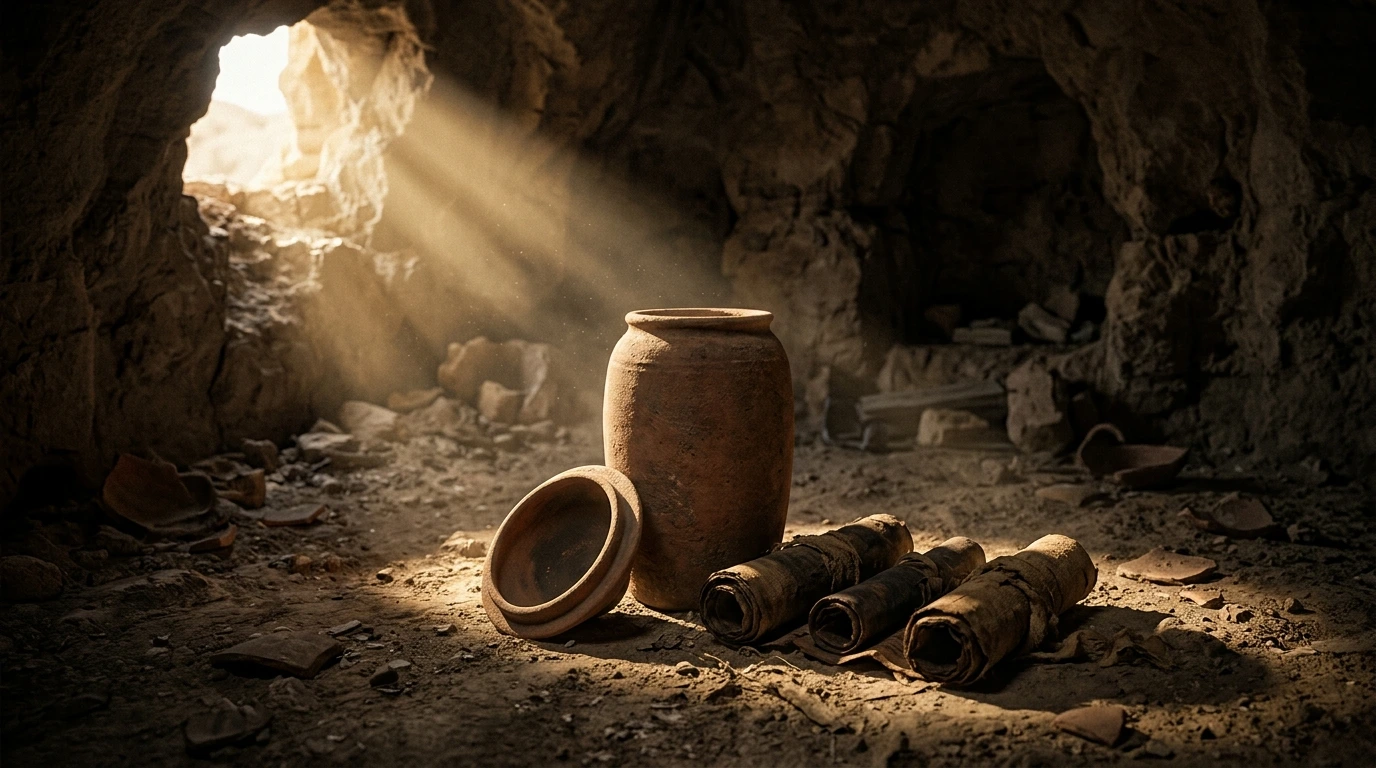
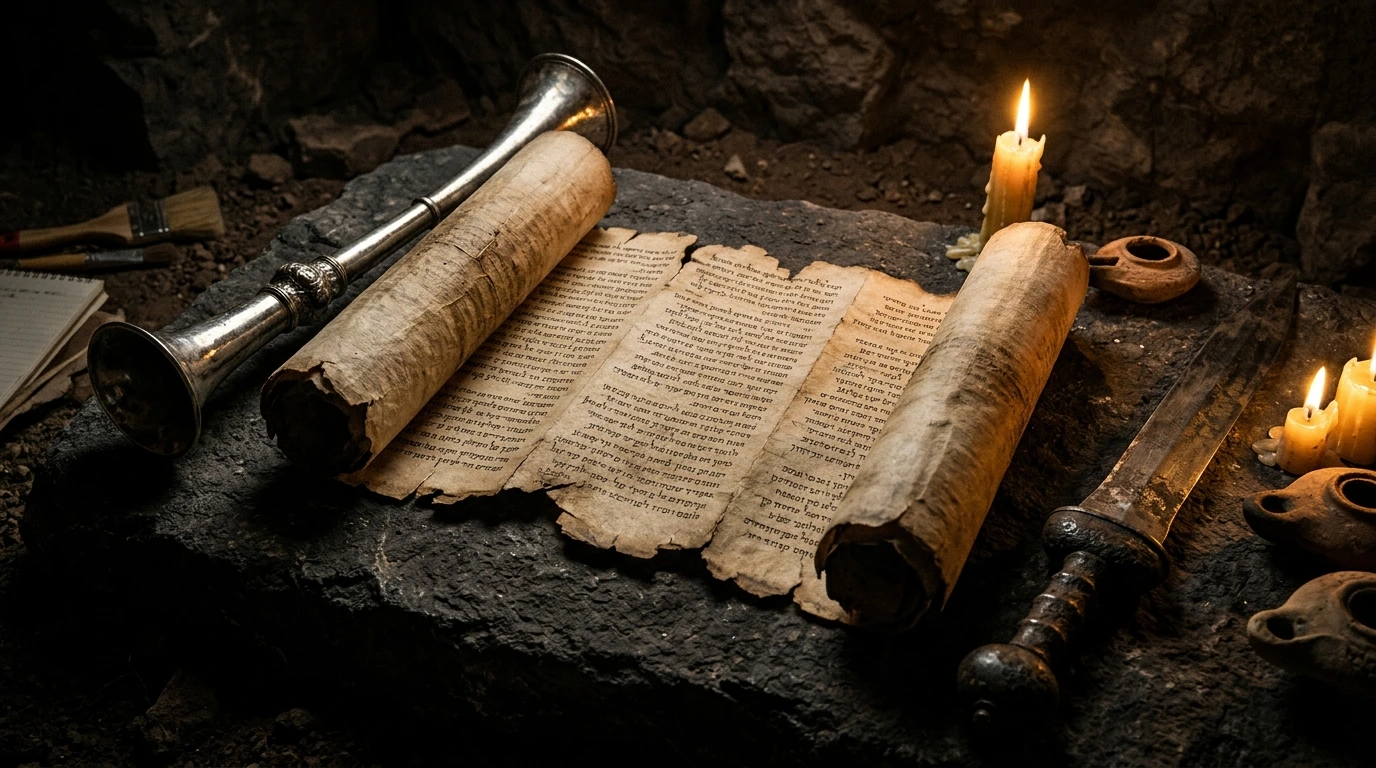
Discovered in Cave 1 in 1947, The War Scroll (designated 1QM, from Serekh ha-Milhamah, סרך המלחמה, "The Rule of War") is one of the most astonishing apocalyptic and military documents ever recovered from the ancient world.
Measuring 2.9 meters in length across 19 preserved columns of Hebrew script, 1QM dates to the late 1st century BC or early 1st century AD (c. 50 BC – 20 AD).
The manuscript presents a minute, tactical, and liturgical blueprint for an impending 40-year global conflict pitting the Sons of Light (the tribes of Levi, Judah, and Benjamin, led by the Essene faithful) against the Sons of Darkness (an alliance of Edom, Moab, Ammon, the Philistines, and their supreme imperial overlords, the Kittim—the sect's prophetic code name for the Romans).
Roman Military Influence: Phalanxes, Cohorts, and Scuta
While deeply saturated in biblical theology, 1QM exhibits an intimate, professional familiarity with 1st-century Roman legionary military tactics:
[MILITARY ORGANIZATIONAL SCHEME IN 1QM]
Total Infantry: 28,000 Foot Soldiers divided into Seven Battle Lines
Shield Type: Scutum (Curved Roman rectangular shield / Maganot)
Weaponry: Heavy javelins (Romphaia / Pilum), thrusting daggers, and cavalry lances
Tactical Maneuver: Roman "Three-Line System" (Hastati, Principes, Triarii)
Archaeologist Yigael Yadin, who served as Chief of Staff of the Israel Defense Forces before becoming a world-renowned archaeologist, published the definitive military commentary on 1QM in 1962, demonstrating that:
- The descriptions of cavalry skirmishing, flank protection, and javelin deployment mirror the tactics of the late Roman Republican army under Julius Caesar and Augustus.
- The Essenes did not envision a purely symbolic war; they expected a real, physical, blood-soaked confrontation waged with cutting-edge military hardware.
The Sacred Signal Trumpets and Banners of God
In ancient warfare, battlefield communication was conducted via acoustic signals. 1QM Columns 2 through 4 provide elaborate specifications for inscribed silver signal trumpets (khatzotzerot), fulfilling the divine mandate of Numbers 10:
[THE INSCRIBED BATTLE TRUMPETS OF 1QM]
Trumpet Purpose                 │ Inscription Chiseled on the Metal
────────────────────────────────┼─────────────────────────────────────────────
Assembly of the Congregation    │ "The Called of God" (Qeru'ei El)
Marching into Position          │ "The Powers of God" (Gevurot El)
Sounding the Charge (Alarm)     │ "The Array of God’s Godhead"
Pursuit of the Routed Foe       │ "The Hand of God in Slaying"
Triumphal Return to Camp        │ "Rejoicing of God in Peaceful Return"
Every unit bore monumental banners (otot) inscribed with sacred mottos that evolved as the battle progressed: from "Truth of God" at the assembly, to "Wrath of God" during the clash, to "Praise of God" in victory.
The Seven-Stage Cosmic Battle and the Archangel Michael
The decisive final battle against the Kittim is structured into seven dramatic engagements (lots):
[THE SEVEN LOTS OF THE FINAL BATTLE]
Engagement 1: The Sons of Light strike and prevail.
Engagement 2: The Sons of Darkness counterattack and prevail.
Engagement 3: The Sons of Light rally and prevail.
Engagement 4: The Sons of Darkness strike back and prevail.
Engagement 5: The Sons of Light push forward and prevail.
Engagement 6: The Sons of Darkness counterattack with furious strength.
             │
             ▼
[THE SEVENTH LOT: DIRECT DIVINE INTERVENTION]
Human strength reaches total exhaustion.
The Great God of Heaven stretches out His hand, sending:
  * The Archangel Michael (Sar Or, Prince of Light)
  * Legions of heavenly angels to eradicate Belial and the Kittim forever.
This vision of cosmic warfare directly parallels the apocalyptic imagery of Revelation 12:7: "And war broke out in heaven: Michael and his angels fought with the dragon; and the dragon and his angels fought, but they did not prevail..."
Three-Tier Evidentiary Evaluation: Military Manual or Apocalyptic Liturgy?
| Tier | Category | Historical Criterion | Evidentiary Verdict on 1QM |
|---|---|---|---|
| Tier 1: Physical Archaeological Manuscript | Cave 1 Discovery (1947) | Direct Carbon-14 & Material Dating | 100% Genuine Artifact: Preserved in the Shrine of the Book; dated to 50 BC – 20 AD. |
| Tier 2: Roman Military Architecture | Yadin Military Analysis | Roman Republican Tactical Parallel | Proven Historical Context: Confirms intimate knowledge of Roman legionary weapons, shields, and trumpet signals. |
| Tier 3: Relation to Christian Eschatology | Comparative Apocalypticism | Revelation & 2 Thessalonians Parallel | Profound Illuminative Value: Explains the widespread 1st-century Jewish expectation of a final apocalyptic war against Roman oppression. |
Deepen Your Study: Spiritual Warfare & Apocalyptic Prophecy
Discover how biblical prophecy, ancient warfare, and scriptural declarations empower the believer for spiritual victory:
👉 Explore Volume I: The Twelve Apostles & Ancient Manuscripts
Examine the full academic dossiers on ancient manuscripts, Dead Sea discoveries, and biblical archaeology.
🎁 Or Unlock The Sacred Keys Trilogy Master Collection ($7.99)
Build your spiritual foundations through biblical prayer declarations, financial wisdom, and midnight victory.
Frequently Asked Questions
Who were the "Kittim" in the War Scroll?
In the Dead Sea Scrolls, the Kittim was an eschatological code name derived from biblical Kittim (Numbers 24:24). While originally associated with Cyprus or Greece, Qumran commentaries (Pesharim) and 1QM clearly identify the Kittim as the Roman Empire, describing their military eagle standards, rapid cavalry conquests, and ruthless foreign rule.
Did the battle described in the War Scroll ever happen?
No. The 40-year war was an eschatological prophecy envisioned by the Essenes. When the real Roman Tenth Legion marched on Qumran in 68 AD during the First Jewish Revolt, the community was destroyed, and the monks hid their sacred scrolls in the caves where they remained untouched for 1,900 years.
What was the role of the priests during the battle?
In 1QM, the priests did not bear physical arms; they stood between the battle lines dressed in pure white linen vestments, blowing the silver signal trumpets, shouting sacred battle prayers, and maintaining the ritual purity of the camp so that God and His holy angels would dwell in their midst.
Frequently Asked Questions
Who were the "Kittim" in the War Scroll?
The Kittim was an Essene prophetic designation for the Roman Empire, referencing their legionary military power, iron weapons, and relentless global conquests.
Did the battle described in the War Scroll ever happen?
No. The 40-year cosmic conflict was an apocalyptic expectation. In 68 AD, Roman legions destroyed the Qumran settlement, after the sectarians had hidden their scrolls.
What was the role of the priests during the battle?
The priests directed combat movements using inscribed silver trumpets and interceded in prayer on the battlefield to ensure divine intervention alongside the angels.
Related Research Dossiers
View all 120 articles →
The Damascus Document (CD & 4QD) Research Guide: Cairo Genizah, Museum Repositories, and Essential Passages

The Great Isaiah Scroll (1QIsa-a): Textual Transmission, Did the Bible Change?, and Isaiah 53