
Is burnout a sign of weak faith?
No. The biblical narrative shows that some of God's greatest leaders—including Moses (Numbers 11), Elijah (1 Kings 19), and David (Psalm 38)—experienced severe emotional and physical exhaustion. Burnout is a biological indicator that finite human limits have been exceeded, not that faith has failed.
Ancient patristic witnesses, Second Temple manuscripts, and classical annals.
Stratigraphic digs, monumental epigraphy, and artifact forensics in the Levant.
Distinguishing canonical Scripture text from historical patristic traditions.
Subject Scope: When You Smile in Public Retrieve Tears in Private: The Biblical Cure for Hidden Burnout
Historical Context: Rigorous historical and theological examination within the field of Spiritual Warfare & Night Prayer.
Primary Evidence: Forensic archaeology, textual preservation, and primary ancient manuscripts corroborating scriptural events.
Investigation Highlights: The Burden of Being the Strong One • Elijah Under the Broom Tree (1 Kings 19) • The Anatomy of High-Functioning Christian Burnout
Scholarly Consensus: Vetted against peer-reviewed academic literature in biblical history, linguistics, and archaeology.
The Burden of Being the Strong One
In every church, family, and workplace, there is someone designated as 'the strong one.' You are the person everyone calls in a crisis, the calm voice during family upheaval, the dependable worker who absorbs extra responsibilities, and the faithful believer who prays for others. You smile gracefully in public, reassure those around you that everything is under control, and maintain composure.
Yet when the front door closes and the lights go out, the facade collapses. The tears soak your pillow, your body aches with bone-deep fatigue, and a heavy numbness settles over your chest. You are suffering from high-functioning spiritual and emotional burnout.
Direct Historical Answer Box:
In 1 Kings 19:3–8, the mighty prophet Elijah fled into the Judean wilderness immediately following his colossal victory over 850 false prophets on Mount Carmel. Collapsing beneath a desert broom tree (rotem), he begged God to take his life. God's response was not a lecture on faith; He sent an angel with warm baked bread, water, and 40 days of sleep, proving that physical care is deeply spiritual.
The tragedy of hidden burnout is that believers assume exhaustion is a moral failing. They conclude that if they just had more faith, prayed longer, or served harder, they would not feel hollow. Scripture teaches the exact opposite: even giants of faith reached the end of their human capacity.
Elijah Under the Broom Tree (1 Kings 19)
To understand burnout, examine the context of Elijah's collapse:
- Prolonged Hyper-Vigilance: Elijah had endured three years of national famine, hunted by King Ahab and Queen Jezebel.
- Peak Spiritual Output: On Mount Carmel, he rebuilt the altar, prayed down fire from heaven, executed the prophets of Baal, and outran Ahab's chariot through pouring rain (1 Kings 18).
- The Single Tipping Point: A single death threat from Jezebel (1 Kings 19:2) shattered his remaining reserves.
Elijah walked a day's journey into the arid desert, sat down under a solitary broom tree (Genista raetam), and prayed: 'It is enough; now, O Lord, take away my life; for I am not better than my fathers' (1 Kings 19:4).
Notice what God did not do:
- He did not rebuke Elijah for bad theology.
- He did not question his dedication or faith.
- He did not send a lightning bolt of judgment.
Instead, God allowed Elijah to fall into a deep, uninterrupted sleep. When he awoke, an angel had prepared fresh warm cake baked on hot coals and a cruise of spring water. After eating, Elijah went back to sleep again. God treated Elijah's burnout first as biological and physical exhaustion before addressing his spiritual assignment.
The Anatomy of High-Functioning Christian Burnout
Burnout rarely begins with laziness; it begins with unmanaged compassion and false responsibility:
- The Messiah Complex: Unconsciously believing that if you do not fix the problem, everything will fall apart.
- Emotional Embezzlement: Spending emotional energy on other people's crises while neglecting your own communion with God.
- Guilt Over Rest: Viewing downtime as wasted time or selfish indulgence rather than sacred sabbath obedience.
In 2 Corinthians 12:9, the Lord reminded Paul: 'My grace is sufficient for thee: for my strength is made perfect in weakness.' God never designed human beings to function as infinite power generators. We are vessels, not sources.
God’s 3-Part Prescription for Soul Exhaustion
If you are smiling in public while crumbling in private, implement God's Mount Horeb protocol immediately:
1. Drop the Invincibility Mask Before God
Confess to the Lord that your tank is empty. Stop attempting to pray triumphant, polished prayers. Tell Him plainly: 'Lord, it is enough. I have no more emotional reserves to give tonight.' God welcomes brokenhearted authenticity far above religious performance.
2. Treat Rest as Spiritual Obedience, Not Failure
Like Elijah under the broom tree, give your body permission to sleep without guilt. Eat wholesome food, drink clean water, and disconnect from digital notifications. Sleep is the primary mechanism through which God restores neurotransmitters, cellular vitality, and emotional resilience.
3. Seek the Gentle Whisper (Qol Demamah Daqqah)
At Mount Horeb, God did not reveal Himself in the violent wind, the shattering earthquake, or the blazing fire. He spoke in qol demamah daqqah—a 'still small voice' or 'the sound of gentle stillness' (1 Kings 19:12). Step away from noisy environments and spend 10 minutes in silence, allowing God's quiet presence to realign your priorities.
Spoken Prayer for Restoring the Depleted Soul
Proclaim this prayer when you feel drained to the marrow:
"Heavenly Father, You see the tears that nobody else sees. You know how hard I have worked to hold everything together for my family, my job, and my church. But tonight, I confess that I am weary to the bone. My strength is exhausted, and my soul feels dry.
I lay down the burden of trying to be everyone's savior. You alone are God; I am merely Your child. Send Your angel of peace to minister to my body tonight. Feed me with Your Word, hydrate my spirit with living water, and grant me deep, healing rest. Restore my joy, quiet my soul with Your gentle whisper, and teach me how to rest in Your sufficiency. In Jesus' name, Amen."
Biblical Warfare, Prayer & Night Peace
Overcoming night anxiety, 3:00 AM awakenings, spiritual warfare, and commanding peace through spoken Scripture. Each investigation in this pillar is corroborated by primary classical manuscripts, epigraphy, and peer-reviewed historical forensics.
Pillar Dossiers in this Corpus
Why Do I Keep Waking Up at 3:00 AM With Anxiety? A Biblical Protocol for Midnight Peace
8 min read · Verified Primary DossierThe Gethsemane Handover: How Jesus Overcame Crushing Midnight Anguish
9 min read · Verified Primary Dossier7 Spoken Psalms to Silence Intrusive Thoughts Before Bed
9 min read · Verified Primary DossierHow to Break the Spirit of Fear Over Your Bedroom and Home Tonight
8 min read · Verified Primary DossierThe 7 Biblical Keys for Silent Battles
The complete 7-night scriptural protocol for silencing midnight anxiety, broken sleep, and intrusive thoughts.
Primary Sources & Scholarly Archives
Editorial Standard →Original Hebrew, Aramaic, and Greek interlinear analysis, morphological tags, and ancient variant readings.
Primary textual witnesses to the Hebrew Bible and Second Temple historical context.
Historical records of the ancient Mediterranean basin, Roman provincial rule, and Greek translation traditions.
Frequently Asked Questions
Is burnout a sign of weak faith?
No. The biblical narrative shows that some of God's greatest leaders—including Moses (Numbers 11), Elijah (1 Kings 19), and David (Psalm 38)—experienced severe emotional and physical exhaustion. Burnout is a biological indicator that finite human limits have been exceeded, not that faith has failed.
How did God respond to Elijah's desire to die?
God responded with gentleness and practical biological care: He provided nourishing food, cold water, and multiple cycles of deep sleep before speaking to Elijah in a gentle whisper at Mount Horeb.
How can I stop feeling guilty when I say no to people?
Remember that even Jesus regularly withdrew from needy crowds to quiet wilderness places to rest and pray (Luke 5:16). Saying 'no' to secondary demands is required to say 'yes' to God's primary call on your life and health.
Restoration Tools & Next Steps {#restoration-tools}
If you are navigating deep emotional exhaustion and burnout, explore these transformative resources:- Read The 7 Biblical Keys for Silent Battles ($3.99) for guided prayer liturgies for tired souls.
- Discover God Used Imperfect People ($9.00) to see how God restored 12 biblical leaders after catastrophic failure and fatigue.
- Unlock the comprehensive Sacred Keys Trilogy Master Bundle ($7.99) on The Bible Flow.
Related Research Dossiers
View all 572 research dossiers →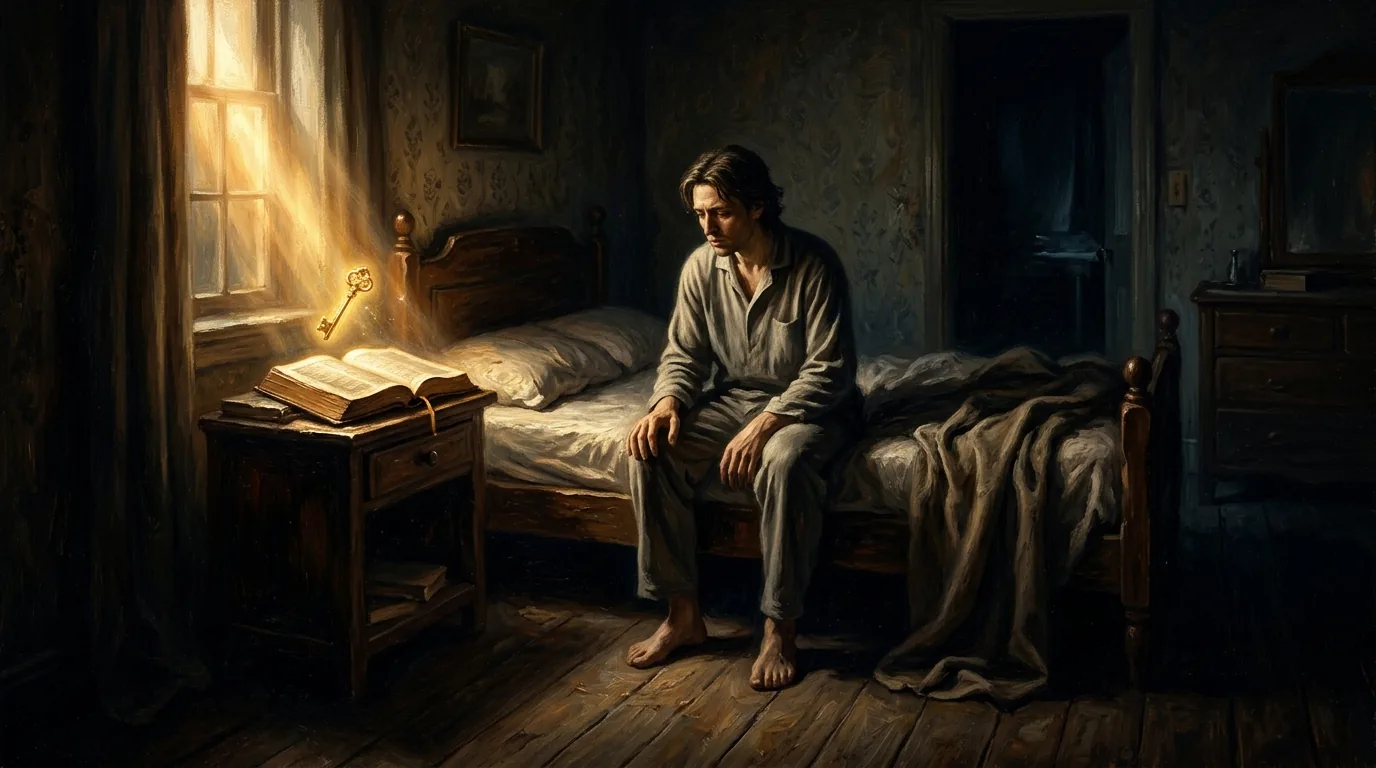
Why Do I Keep Waking Up at 3:00 AM With Anxiety? A Biblical Protocol for Midnight Peace

The Gethsemane Handover: How Jesus Overcame Crushing Midnight Anguish
