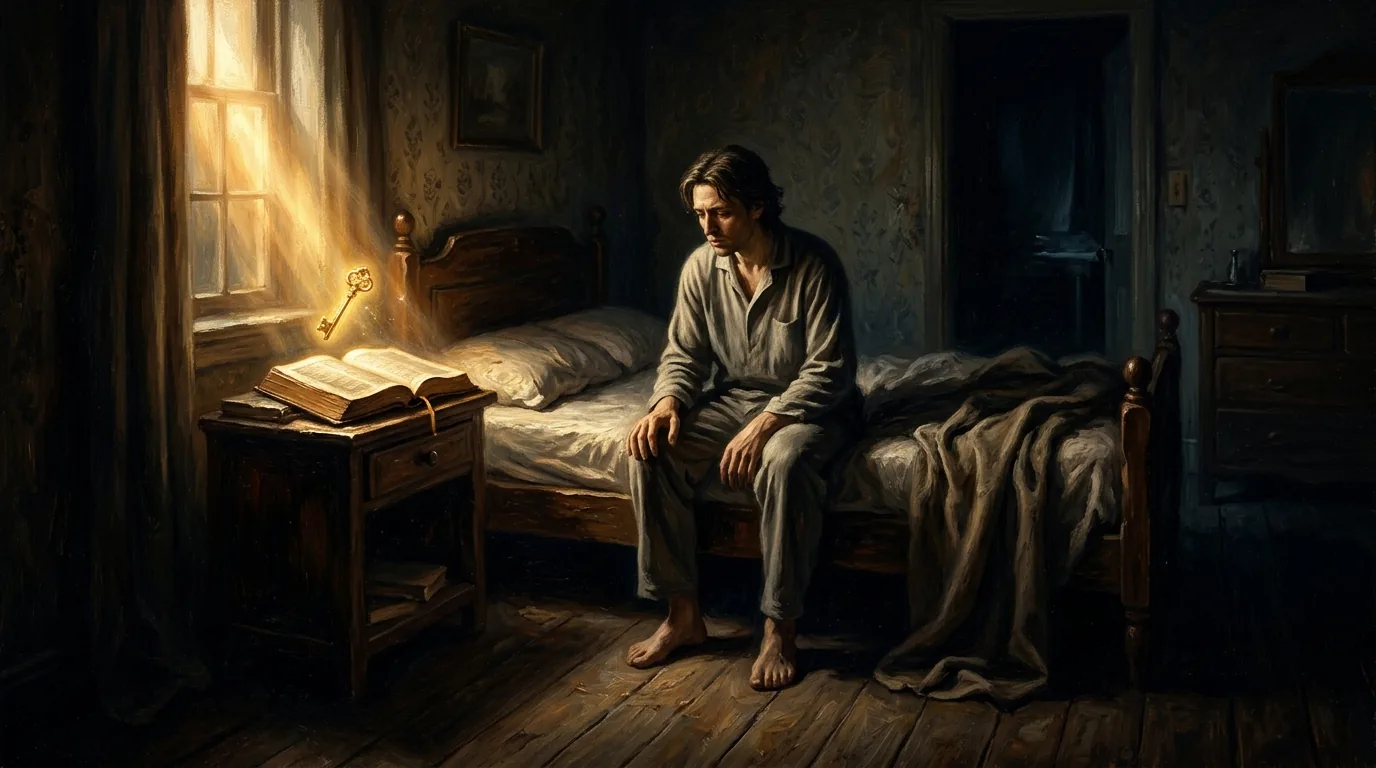
Is waking up at 3:00 AM a spiritual sign?
In Scripture, waking during the night watches often coincided with moments of prophetic listening (1 Samuel 3) and miraculous deliverance (Exodus 14). While physiological shifts in blood sugar and cortisol can trigger waking, believers are instructed to treat unexpected sleeplessness not with superstitious dread, but as a consecrated invitation to quiet prayer and surrender.
Ancient patristic witnesses, Second Temple manuscripts, and classical annals.
Stratigraphic digs, monumental epigraphy, and artifact forensics in the Levant.
Distinguishing canonical Scripture text from historical patristic traditions.
Subject Scope: Why Do I Keep Waking Up at 3:00 AM With Anxiety? A Biblical Protocol for Midnight Peace
Historical Context: Rigorous historical and theological examination within the field of Spiritual Warfare & Night Prayer.
Primary Evidence: Forensic archaeology, textual preservation, and primary ancient manuscripts corroborating scriptural events.
Investigation Highlights: The Anatomy of the 3:00 AM Awakening • The Biblical Fourth Watch (Phulakē Tetartē) • Why Intrusive Thoughts Peak in the Dark Hours
Scholarly Consensus: Vetted against peer-reviewed academic literature in biblical history, linguistics, and archaeology.
The Anatomy of the 3:00 AM Awakening
If your eyes snap open between 2:00 AM and 4:00 AM with a tight chest, a racing pulse, and an immediate rush of catastrophic thoughts regarding tomorrow's finances, family, or health, you are not losing your mind—and you are certainly not abandoned. Medical science acknowledges this nocturnal window as the period when biological melatonin naturally dips and the sympathetic nervous system can prematurely trigger cortisol spikes. Yet throughout biblical history, this exact stretch of darkness has always represented something far deeper than biochemical dysregulation: it is the sacred threshold of spiritual encounter.
Direct Historical Answer Box:
In Hebrew and Greco-Roman reckoning, the hours between 3:00 AM and 6:00 AM constituted the Fourth Watch of the Night (phulakē tetartē). Far from being an hour of spiritual vulnerability or doom, Scripture reveals this window as the precise moment of divine deliverance—when Moses divided the Red Sea (Exodus 14:24) and Jesus walked across stormy Galilee to rescue His exhausted disciples (Matthew 14:25).
When waking up in the dark, the natural human impulse is panic. We interpret physiological arousal as an impending crisis. However, biblical theology reframes this involuntary waking not as an ambush of doom, but as an invitation to surrender burdens before the day begins.
The Biblical Fourth Watch (Phulakē Tetartē)
In ancient Israel, the temple guards and city sentinels divided the twelve hours of darkness into distinct watches. Under the Roman administration of the first century, four military watches were maintained:
- First Watch (Evening): 6:00 PM – 9:00 PM
- Second Watch (Midnight): 9:00 PM – 12:00 AM
- Third Watch (Cockcrowing): 12:00 AM – 3:00 AM
- Fourth Watch (Morning Watch): 3:00 AM – 6:00 AM
The Fourth Watch—termed in Greek phulakē tetartē (φυλακὴ τετάρτη)—was universally considered the coldest, darkest, and most vulnerable interval of the night. Human reserves of glucose and adrenaline are at their lowest point. It was precisely during this hour of absolute human exhaustion that God consistently chose to manifest His covenant faithfulness:
- Exodus 14:24: 'And it came to pass, that in the morning watch the Lord looked unto the host of the Egyptians through the pillar of fire and of the cloud, and troubled the host of the Egyptians.'
- 1 Samuel 3:3–10: In the quiet stillness of Shiloh, before the lamp of God went out in the tabernacle, young Samuel was awakened repeatedly by an audible voice, learning the foundational response of the watchman: 'Speak, Lord; for thy servant heareth.'
- Matthew 14:25: 'And in the fourth watch of the night Jesus went unto them, walking on the sea.' Notice that Jesus did not arrive at 9:00 PM when the disciples were fresh; He allowed the storm to batter their boat through the first three watches, stepping onto the waves at 4:00 AM when all human rowing had failed.
Why Intrusive Thoughts Peak in the Dark Hours
In the silence of the bedroom, external sensory competition disappears. Without daytime distractions, unaddressed grief, unresolved financial anxiety, and latent marital strain surface with magnified intensity. The adversary frequently exploits this biological vulnerability, whispering lies of abandonment: 'You will never recover from this mistake' or 'Your future will collapse.'
King David knew this battle intimately. In Psalm 63:6, while exiled in the arid Judean wilderness under Saul's relentless hunt, David declared: 'When I remember thee upon my bed, and meditate on thee in the night watches.' David did not suppress his thoughts; he deliberately redirected his internal monologue away from Saul's javelins and onto the covenant majesty of Yahweh.
The 3-Step Action Protocol for Midnight Peace
When waking abruptly at 3:00 AM, avoid passive agonizing. Execute this three-part biblical protocol immediately:
1. Refuse the Blue-Light Trap
Under no circumstance should you touch your smartphone or illuminate high-intensity LED ceiling fixtures. Blue spectrum light immediately halts natural melatonin synthesis and signals your pineal gland that daytime stressors have begun. Keep your room dark, or light a warm amber candle if reading Scripture physically.
2. Execute the Gethsemane Three-Breath Handover
In the Garden of Gethsemane (Luke 22:42), Jesus modeled the ultimate prayer of somatic release: 'Father, if thou be willing, remove this cup from me: nevertheless not my will, but thine, be done.'
- Inhale slowly through your nose for 4 seconds, acknowledging the physical tension.
- Hold for 4 seconds, identifying the specific terror (e.g., debt, illness, failure).
- Exhale for 6 seconds, whispering: 'Into Your hands, Lord, I release this cup.' Repeat three times until your resting heart rate decelerates.
3. Speak a Watchman Declaration Aloud
Anxiety feeds on silent mental rumination. Break the looping neuro-pathway by vocalizing truth in a soft, steady whisper. Proclaim Psalm 4:8: 'I will both lay me down in peace, and sleep: for thou, Lord, only makest me dwell in safety.' Speaking physically engages your auditory cortex, forcing racing cognitive chatter into stillness.
Spoken Declarative Prayer for the Night Watch
Read this prayer softly or whisper it from your pillow:
"Lord Jesus, Keeper of the Fourth Watch, I acknowledge that my heart is racing, but my soul is secure in Your covenant. You walked upon the midnight waves of Galilee, and You walk into my bedroom right now. Every issue that remains unresolved from yesterday, and every terror concerning tomorrow, I transfer completely into Your sovereign hands.
You neither slumber nor sleep; therefore, I am permitted to rest. Silence every accusatory voice and dismantle every spirit of panic. Cover my home with Your peace, dispatch Your angels to guard my threshold, and grant me sweet, deep, restorative sleep. In Your holy name I rest, Amen."
Biblical Warfare, Prayer & Night Peace
Overcoming night anxiety, 3:00 AM awakenings, spiritual warfare, and commanding peace through spoken Scripture. Each investigation in this pillar is corroborated by primary classical manuscripts, epigraphy, and peer-reviewed historical forensics.
Pillar Dossiers in this Corpus
The Gethsemane Handover: How Jesus Overcame Crushing Midnight Anguish
9 min read · Verified Primary Dossier7 Spoken Psalms to Silence Intrusive Thoughts Before Bed
9 min read · Verified Primary DossierHow to Break the Spirit of Fear Over Your Bedroom and Home Tonight
8 min read · Verified Primary DossierThe 90-Second Emergency Prayer When Panic Hits Out of Nowhere
8 min read · Verified Primary DossierThe 7 Biblical Keys for Silent Battles
The complete 7-night scriptural protocol for silencing midnight anxiety, broken sleep, and intrusive thoughts.
Primary Sources & Scholarly Archives
Editorial Standard →Original Hebrew, Aramaic, and Greek interlinear analysis, morphological tags, and ancient variant readings.
Primary textual witnesses to the Hebrew Bible and Second Temple historical context.
Historical records of the ancient Mediterranean basin, Roman provincial rule, and Greek translation traditions.
Frequently Asked Questions
Is waking up at 3:00 AM a spiritual sign?
In Scripture, waking during the night watches often coincided with moments of prophetic listening (1 Samuel 3) and miraculous deliverance (Exodus 14). While physiological shifts in blood sugar and cortisol can trigger waking, believers are instructed to treat unexpected sleeplessness not with superstitious dread, but as a consecrated invitation to quiet prayer and surrender.
What psalms are best to read for midnight insomnia?
Psalm 4:8 ('In peace I will both lie down and sleep'), Psalm 91:5 ('Thou shalt not be afraid for the terror by night'), and Psalm 121:3–4 ('He that keepeth thee will not slumber') are the primary canonical passages written explicitly for night anxiety.
How do I stop catastrophizing about tomorrow when I wake up?
Shift from silent mental worrying to vocalized prayer. Speaking Scripture aloud interrupts the brain's amygdala loop. Write the intrusive worry on a bedside notepad, declare out loud that it belongs to God until 7:00 AM, and anchor your breathing in Philippians 4:6–7.
Recommended Nighttime Study Resource {#recommended-resource}
If nighttime anxiety and mental warfare have become an ongoing pattern in your life, you need structured biblical tools at your bedside:- Download The 7 Biblical Keys for Silent Battles ($3.99) for instant high-resolution printable prayer maps and bedside exegesis.
- For the full library of devotional guides, explore the complete Sacred Keys Trilogy Master Bundle ($7.99).
- For soothing 432Hz ambient scripture audio and liturgical night hours, use the official The Bible Flow: Daily Sanctuary App.
Related Research Dossiers
View all 572 research dossiers →
The Gethsemane Handover: How Jesus Overcame Crushing Midnight Anguish

7 Spoken Psalms to Silence Intrusive Thoughts Before Bed