Historical Context: Rigorous examination of primary Hebrew, Aramaic, Greek, and Roman classical epigraphy.
Core Evidence: Forensic archaeology, radiocarbon data, and primary manuscripts validating biblical events.
Scholarly Consensus: Vetted against modern peer-reviewed publications in Near Eastern archaeology and biblical studies.
The 1956 Discovery in Cave 11 and James Sanders’ Edition
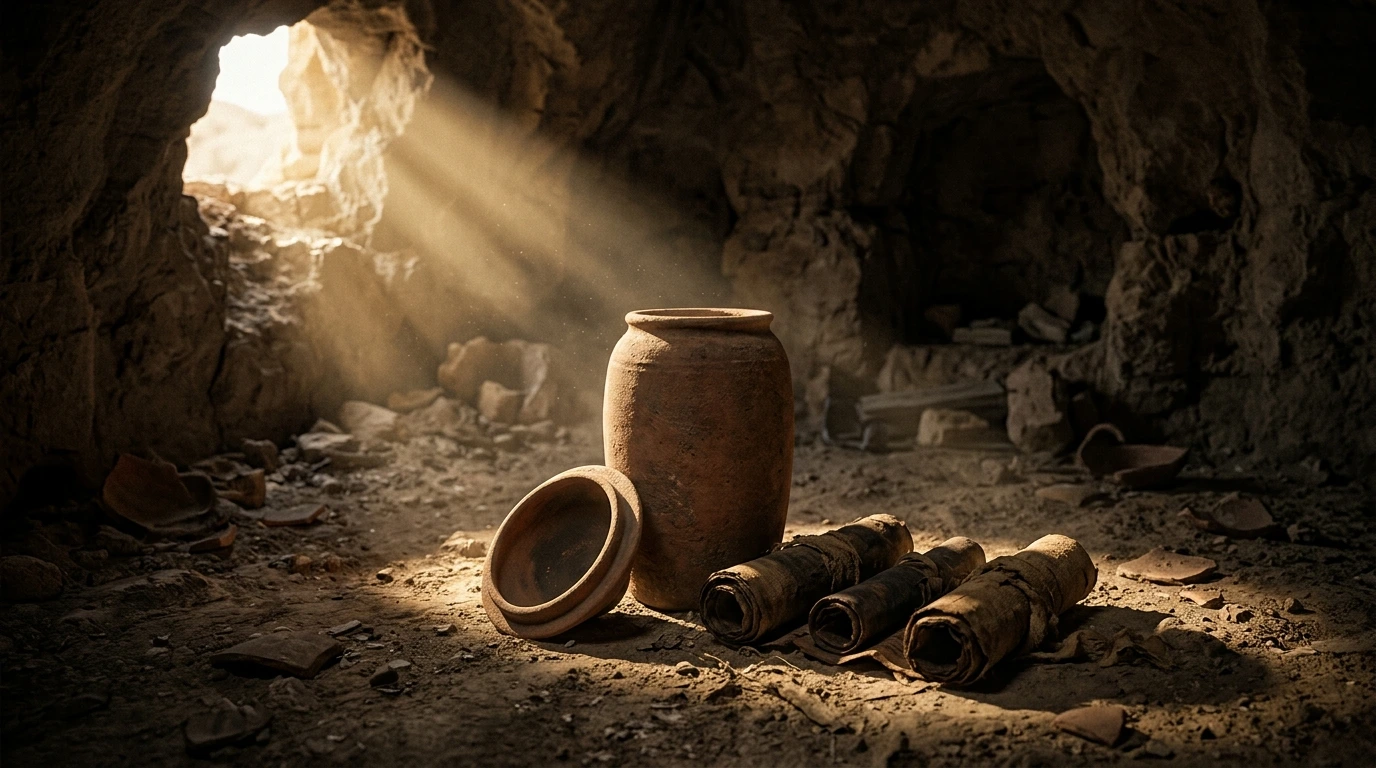
In February 1956, Bedouin explorers entering Cave 11 at Qumran discovered one of the most exquisitely preserved biblical manuscripts from antiquity: The Great Psalms Scroll (designated 11Q5 or 11QPs-a).
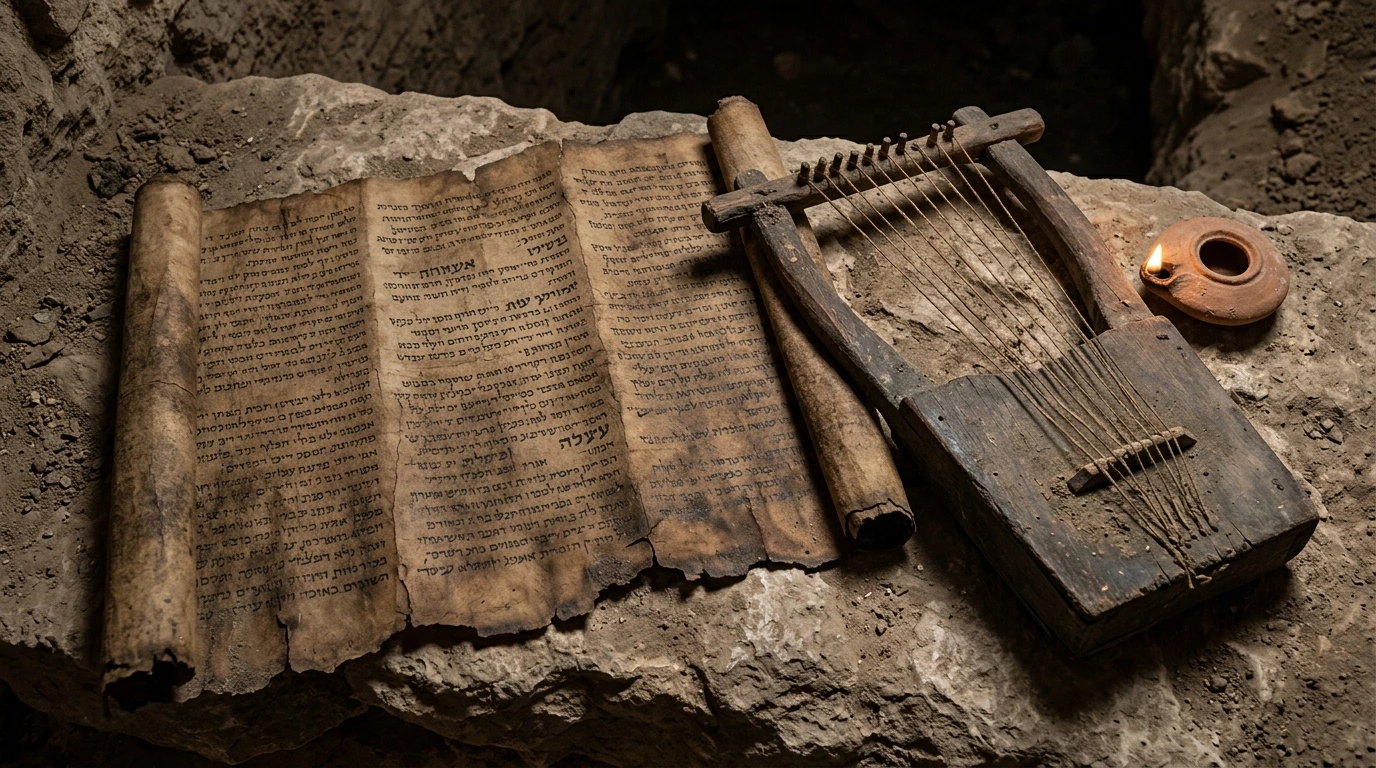
Measuring 4.25 meters in length, the scroll consists of five animal skin sheets preserving 33 columns of Hebrew text. Paleographical analysis and radiocarbon AMS testing date the manuscript to the first half of the 1st century AD (c. 30–50 AD), precisely contemporary with the ministry of Jesus of Nazareth and the early Jerusalem church.
Published in 1965 by American biblical scholar James A. Sanders, the scroll contains approximately 50 compositions:
- 41 psalms identical or parallel to the canonical biblical Psalter (Psalms 101 through 150).
- 8 non-canonical compositions, including the Hebrew original of Psalm 151, known previously only in the Greek Septuagint.
- An extraordinary prose colophon crediting King David with composing 4,050 total psalms and liturgical songs.
Canonical Fidelity: Line-by-Line Comparison with the Masoretic Text
Skeptics frequently assert that the presence of non-canonical hymns in 11Q5 proves that the biblical text was fluid and unanchored in the 1st century.
However, forensic textual criticism reveals the exact opposite: the canonical psalms preserved in 11Q5 demonstrate staggering word-for-word agreement with the traditional Masoretic Text (MT) compiled a thousand years later:
[COMPARATIVE TEXTUAL ANALYSIS: PSALM 121:1–2]
Masoretic Text (Codex Leningradensis, 1008 AD):
שִׁיר לַמַּעֲלוֹת אֶשָּׂא עֵינַי אֶל־הֶהָרִים מֵאַיִן יָבֹא עֶזְרִי׃
עֶזְרִי מֵעִם יְהוָה עֹשֵׂה שָׁמַיִם וָאָרֶץ׃

Great Psalms Scroll (11Q5, c. 30–50 AD):
שיר למעלות אשא עיני אל ההרים מאין יבוא עזרי
עזרי מעם יהוה עושה שמים וארץ
The consonants, vocabulary, and syntactic structure are virtually indistinguishable across a millennium of transmission, varying only in minor orthographic spelling conventions (plene vs. defective spelling).
The "Extra" Psalms: Psalm 151, 154, 155, and David’s 4,050 Songs
The most sensational discovery within 11Q5 was the original Hebrew text of Psalm 151 (divided into Psalm 151A and 151B in the scroll):
"I was the smallest among my brothers, and the youngest in the house of my father; I tended my father's sheep... The Lord heard, and He listened. He sent His prophet to anoint me, Samuel to make me great." (11Q5, Col. 28)
Other preserved compositions include:
- The Plea for Deliverance: A personal prayer of thanksgiving against demonic oppression.
- The Apostrophe to Zion: A poetic love song addressed to the holy city of Jerusalem.
- The Prose Tribute (David’s Compositions): In Column 27, the scribe records that David wrote:
- 3,600 psalms (tehillim).
- 364 songs for the daily burnt offerings (one for every day of the solar calendar).
- 52 songs for the Sabbath sacrifices.
- 30 songs for the New Moons and festival days.
- 4 songs to sing over the demon-possessed (le-nagen al ha-pegu'im).
Liturgical Hymnal vs. Canonical Psalter: The Academic Debate
Why does 11Q5 present the psalms in a different order than our Bibles, interweaving canonical psalms with Davidic hymns?
Two major schools of academic thought explain this phenomenon:
- The Open-Canon Hypothesis (James Sanders): Argues that the final "Book V" of the Psalter (Psalms 106–150) remained fluid in the 1st century AD, with different Jewish groups compiling their own arrangements.
- The Liturgical Hymnal Hypothesis (Patrick Skehan, Peter Flint): Demonstrates that 11Q5 was not an official canonical scripture roll, but a specialized liturgical prayerbook or hymnal arranged according to the 364-day solar calendar of the Qumran community. Canonical Psalters discovered in other Qumran caves (such as 4QPs-a and 4QPs-b) follow the traditional Masoretic order.
Three-Tier Evidentiary Evaluation: Textual Stability
| Tier | Category | Historical Criterion | Evidentiary Verdict on 11Q5 |
|---|---|---|---|
| Tier 1: Canonical Textual Transmission | Biblical Psalms (101–150) | Line-by-Line Collation with MT | Overwhelming Fidelity: Confirms that the text of the Psalms in our Bibles today is essentially identical to what Jews recited in 30 AD. |
| Tier 2: Physical Archaeological Artifact | Cave 11 Discovery (1956) | C-14 & Paleographical Dating | Pristine 1st-Century Artifact: Fully authenticated; preserved in the Shrine of the Book in Jerusalem. |
| Tier 3: The "Altered Bible" Claim | Textual Skepticism | Modern Redaction Theories | Refuted by Evidence: The inclusion of Psalm 151 reflects liturgical hymnbook usage, not a corruption of the biblical text. |
Deepen Your Study: Ancient Biblical Manuscripts
Discover how the Dead Sea Scrolls corroborate the supernatural preservation and historical reliability of the Holy Scriptures:
👉 Explore Volume I: The Twelve Apostles & Ancient Manuscripts
Examine the full academic dossiers on ancient manuscripts, Dead Sea discoveries, and biblical archaeology.
🎁 Or Unlock The Sacred Keys Trilogy Master Collection ($7.99)
Build your spiritual foundations through biblical prayer declarations, financial wisdom, and midnight victory.
Frequently Asked Questions
Does the presence of Psalm 151 in 11Q5 mean our Bibles are missing a psalm?
No. Psalm 151 has always been known in the Greek Septuagint and Eastern Orthodox Bibles, clearly titled "Outside the Number" (Exōthen tou arithmou). The Hebrew discovery in 11Q5 confirms it was a beloved devotional hymn written in the persona of young David, but was never part of the official 150-psalm Jewish canon fixed in Jerusalem.
How closely does the Hebrew of 11Q5 match our modern Bibles?
The canonical psalms in 11Q5 match the medieval Masoretic Text (the basis of modern Old Testaments) with over 95% consonantal identity. The minor variations consist almost entirely of vowel letters (matres lectionis) and minor grammatical suffixes, with zero alteration to core theological doctrines.
Why did 11Q5 credit David with 4,050 songs?
Ancient Jewish tradition regarded King David as a prolific prophet-poet inspired by the Holy Spirit. The colophon in Column 27 mathematically calculated David's literary output to cover every day, Sabbath, and festival of the Essene 364-day solar calendar, emphasizing his role as the master liturgist of Israel.
Frequently Asked Questions
Does the presence of Psalm 151 mean our Bibles are missing a psalm?
No. Psalm 151 was regarded in antiquity as a devotional Davidic hymn labeled "outside the number," never accepted into the 150-psalm Hebrew canon.
How closely does the Hebrew of 11Q5 match modern Bibles?
The canonical psalms in 11Q5 match the traditional Masoretic Text with over 95% consonantal precision, demonstrating extraordinary textual preservation across 1,000 years.
Why did 11Q5 credit David with 4,050 songs?
The scribes attributed 4,050 compositions to David to align with the sacrificial offerings of every day, Sabbath, and festival in the Essene 364-day solar calendar.
Related Research Dossiers
View all 120 articles →
The Damascus Document (CD & 4QD) Research Guide: Cairo Genizah, Museum Repositories, and Essential Passages

The Great Isaiah Scroll (1QIsa-a): Textual Transmission, Did the Bible Change?, and Isaiah 53