Historical Context: Rigorous examination of primary Hebrew, Aramaic, Greek, and Roman classical epigraphy.
Core Evidence: Forensic archaeology, radiocarbon data, and primary manuscripts validating biblical events.
Scholarly Consensus: Vetted against modern peer-reviewed publications in Near Eastern archaeology and biblical studies.
The Dual Vision: The Metallic Colossus and the Four Beasts
The philosophical architecture of the Book of Daniel is structured around two parallel apocalyptic visions revealing the entire geopolitical trajectory of Western civilization:
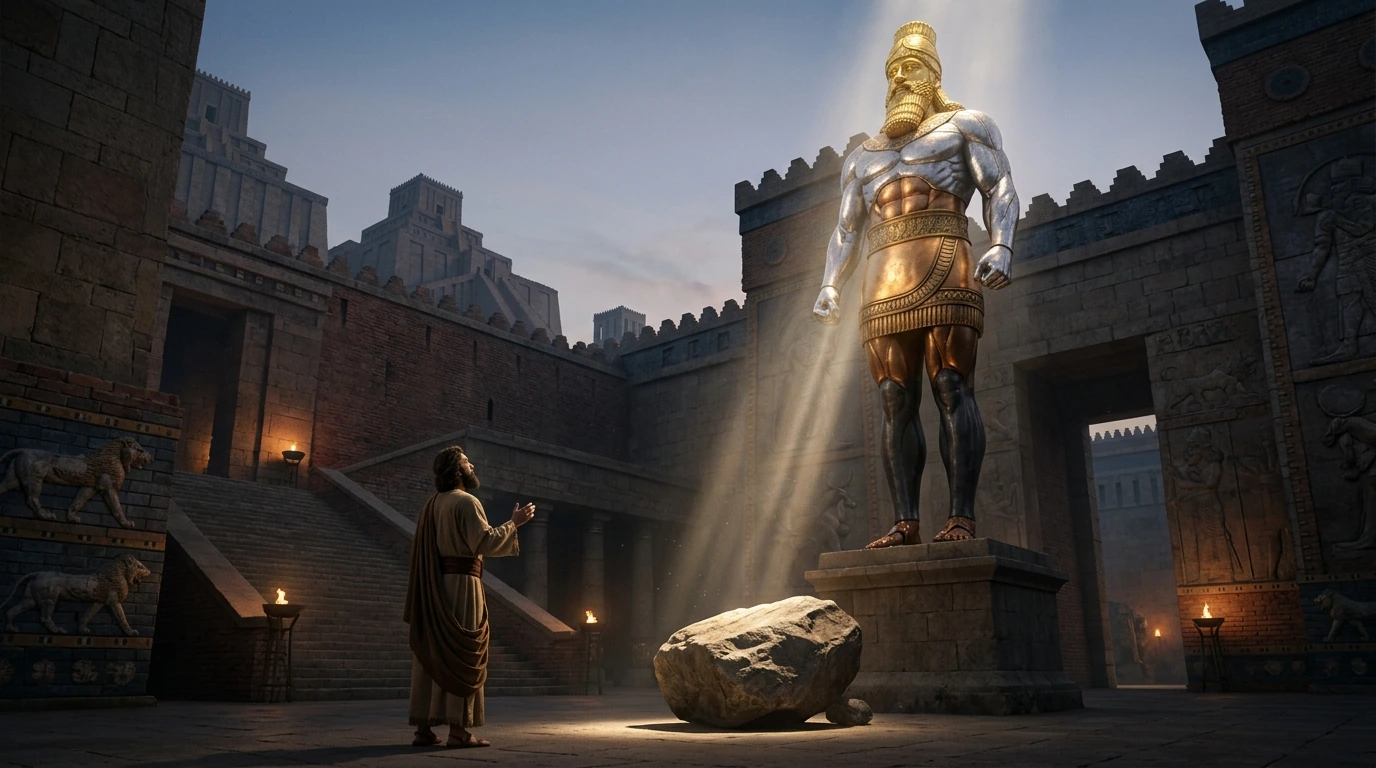
- Daniel 2 (The Human Perspective): King Nebuchadnezzar sees a towering, dazzling colossus of human power composed of descending metals: gold, silver, bronze, iron, and clay.
- Daniel 7 (The Divine Perspective): Daniel sees the exact same four world monarchies depicted as voracious, predatory beasts emerging from a stormy sea: a winged lion, a lopsided bear, a four-winged leopard, and an indescribable iron-toothed monster.
Every secular empire from the sixth century BC through the classical era fulfilled this prophetic matrix with terrifying, photographic accuracy.
Empire I: The Golden Head of Babylon (605–539 BC)
- Daniel 2: Head of Fine Gold ("You are this head of gold", Daniel 2:38).
- Daniel 7: Lion with Eagle’s Wings (Daniel 7:4).
Archaeological Confirmation:
- Babylon used gold lavishly. Herodotus visited Babylon in the fifth century BC and marveled at the temple of Bel-Marduk, recording that over 22,000 kilograms of pure gold adorned the statues, altars, and thrones.
- The national emblem of the Neo-Babylonian Empire was precisely a winged lion—dozens of which were molded in glazed relief brick along the Processional Way and Ishtar Gate, excavated by Robert Koldewey and preserved in Berlin’s Pergamon Museum.
Empire II: The Silver Chest of Medo-Persia (539–331 BC)
- Daniel 2: Chest and Arms of Silver.
- Daniel 7: A Bear raised up on one side with three ribs in its mouth (Daniel 7:5).
Historical Alignment:
- The Dual Nature: The two arms of silver represent the twin confederation of Media and Persia, with Persia rapidly becoming the dominant half ("raised up on one side").
- The Three Ribs: The Medo-Persian bear devoured three major imperial powers: Lydia (546 BC), Babylon (539 BC), and Egypt (525 BC under Cambyses).
- The Silver Tax Standard: Darius the Great instituted an imperial monetary taxation system based exclusively on standardized silver talents (karsha), as verified by the Persepolis Treasury Tablets.
Empire III: The Bronze Thighs of Greece (331–63 BC)
- Daniel 2: Belly and Thighs of Bronze.
- Daniel 7: A Leopard with four wings of a bird and four heads (Daniel 7:6).
- Daniel 8: A shaggy male goat with a notable horn that flies without touching the ground (Daniel 8:5–7).
Unprecedented Prophetic Precision:
- Lightning Speed: Between 334 and 331 BC, Alexander the Great conquered the entire known world from Greece to India in barely eight years—a military speed symbolized perfectly by a four-winged leopard.
- The Bronze Armor: The Greeks were known across the Mediterranean as the "bronze-clad soldiers" (chalkochitones), utilizing bronze helmets, greaves, breastplates, and round shields.
- The Four Heads: Following Alexander’s abrupt death in Babylon at age 32 in 323 BC, his empire was fractured among his four leading generals (the Diadochi):
- Cassander (Macedonia and Greece)
- Lysimachus (Thrace and Asia Minor)
- Seleucus I Nicator (Syria and Mesopotamia)
- Ptolemy I Soter (Egypt and Palestine)
Empire IV: The Iron Legs of Rome (63 BC – 476 AD)
- Daniel 2: Legs of Iron, Feet of Iron mixed with Miry Clay.
- Daniel 7: A fourth beast, dreadful and terrible, exceedingly strong, with great iron teeth (Daniel 7:7).
Historical Fulfillments:
- The Iron Legion: Rome conquered with brutal, mechanized military discipline, wielding iron gladii (short swords) and iron-tipped pila (javelins), crushing and trampling all previous civilizations.
- The Two Legs: The Roman Empire eventually split into two distinct geopolitical halves: the Western Roman Empire (governed from Rome/Milan/Ravenna) and the Eastern Byzantine Empire (governed from Constantinople).
- Iron Mixed with Clay: The late Roman Empire suffered systemic decay through mass barbarian migrations, combining brittle regional kingdoms that could never fuse into a permanent world monarchy.
The Stone Cut Without Hands: The Messianic Kingdom
The climax of Daniel’s vision does not belong to human conquerors:
"And in the days of these kings the God of heaven will set up a kingdom which shall never be destroyed; and the kingdom shall not be left to other people; it shall break in pieces and consume all these kingdoms, and it shall stand forever." (Daniel 2:44)
During the reign of Caesar Augustus—at the absolute zenith of the fourth (Roman) empire—Jesus Christ was born in Bethlehem of Judea.
Without human political machinations or military arms ("a stone cut out without hands"), the kingdom of God struck the imperial foundations of Rome, spreading across the globe to outlive every Caesar, Pharaoh, and Shah who ever reigned.
Frequently Asked Questions
What are the four empires prophesied in Daniel?
1. Babylon (Gold / Lion), 2. Medo-Persia (Silver / Bear), 3. Greece (Bronze / Leopard), and 4. Rome (Iron / Beast).
How did the Greek empire fulfill the four heads of the leopard?
Following Alexander the Great’s death in 323 BC, his vast empire was partitioned among four of his generals (Cassander, Lysimachus, Seleucus, and Ptolemy).
What does the stone cut without hands represent?
It represents the Messianic Kingdom of God initiated by Jesus Christ during the Roman Empire, which outlives and replaces all worldly human empires.
Related Research Dossiers
View all 120 articles →
Nathan Confronting David: 'You Are the Man!' (2 Samuel 12), The Royal Court, and Prophetic Courage

The Fall of Nineveh in Secular History: The Babylonian Chronicle, Cyaxares, and Diodorus Siculus
