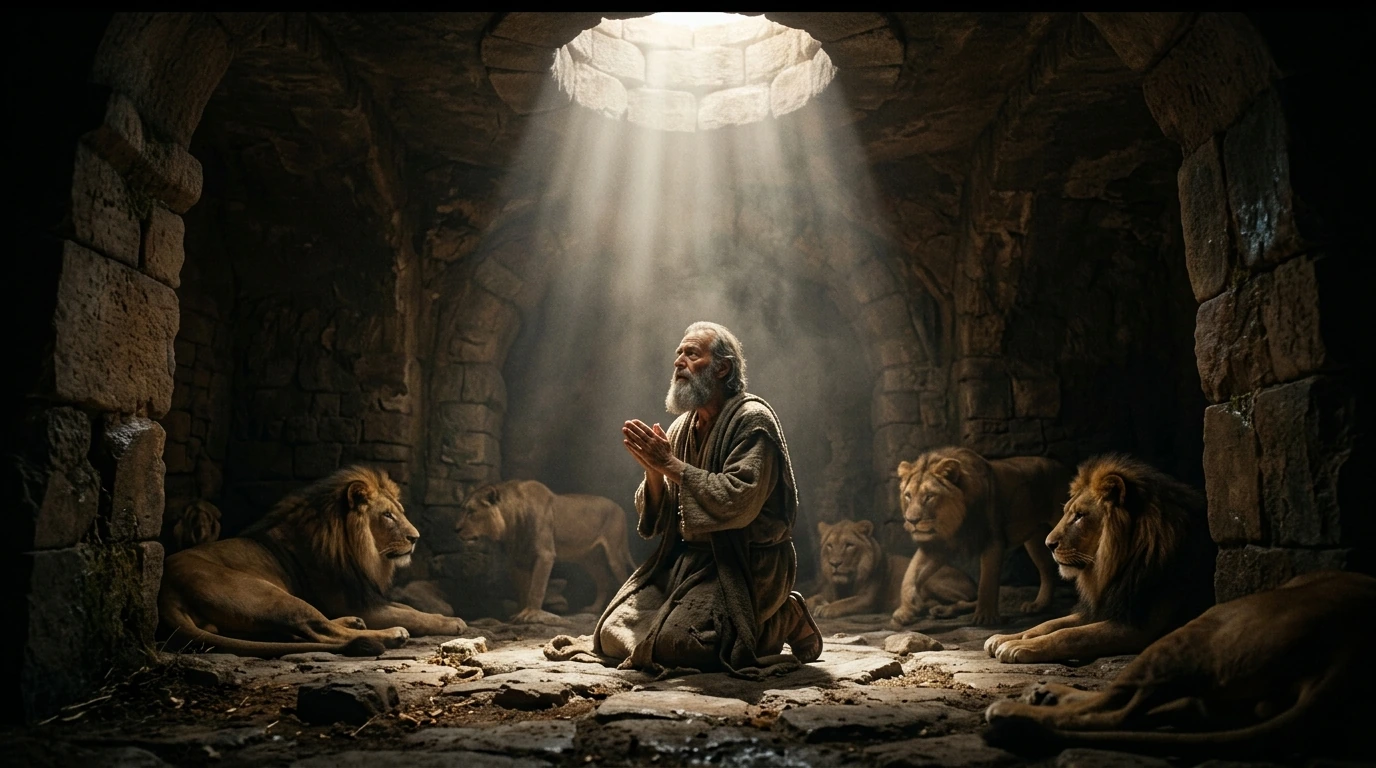
Historical Context: Rigorous examination of primary Hebrew, Aramaic, Greek, and Roman classical epigraphy.
Core Evidence: Forensic archaeology, radiocarbon data, and primary manuscripts validating biblical events.
Scholarly Consensus: Vetted against modern peer-reviewed publications in Near Eastern archaeology and biblical studies.
The Belshazzar Mystery: History’s Greatest Vindication
Throughout the eighteenth and nineteenth centuries, secular historians considered the Book of Daniel completely fictitious because of one name: Belshazzar (Daniel 5).
Greek classical historians (Herodotus, Xenophon, Berossus) recorded that the final king of Babylon was Nabonidus (Nabû-na'id). Nowhere in classical literature did the name Belshazzar appear. Critics triumphantly asserted that Daniel’s author was a confused second-century BC writer who invented a mythological monarch.
In 1854, British consul J.G. Taylor excavated the ruins of the Great Ziggurat of Ur in southern Iraq and uncovered several foundation cylinders inscribed by King Nabonidus.
When translated by Sir Henry Rawlinson, the Nabonidus Cylinder of Ur delivered a stunning shock:
"As for Belshazzar (Bel-shar-usur), my eldest son, the offspring of my heart,
place into his heart reverence for your great divinity,
and let not sin possess him, that he may be satisfied with fullness of life!"
Subsequent cuneiform tablets (The Verse Account of Nabonidus) revealed that Nabonidus, obsessed with the moon god Sin, lived for ten years in exile at the oasis of Tayma in Arabia, leaving his eldest son Belshazzar as co-regent in Babylon with full royal authority.
This explains why Belshazzar offered to make Daniel "the third ruler in the kingdom" (Daniel 5:16, 29): Nabonidus was first, Belshazzar was second, and the third position was the highest honor available!
The Cyrus Cylinder: Freedom of Religion and the Fall of Babylon
In October 539 BC, the Medo-Persian army under Gubaru (Ugbaru) diverted the waters of the Euphrates River and marched into Babylon without a siege during an intoxicated royal festival (Daniel 5:30–31).
In 1879, Hormuzd Rassam discovered the Cyrus Cylinder in Babylon, now in the British Museum. Written in Akkadian cuneiform by Cyrus the Great, the barrel cylinder states:
- Cyrus entered Babylon "in peace and joy, without battle or fighting".
- Cyrus returned confiscated religious images and permitted displaced ethnic captives to return to their ancestral lands and rebuild their temples.
This directly confirms the historical background of Ezra 1 and Daniel 6: Persian imperial policy embraced religious tolerance and restoration for exiled nations.
Darius the Mede: Historical and Cuneiform Candidates
Daniel 5:31 records: "And Darius the Mede received the kingdom, being about sixty-two years old."
Scholars identify Darius the Mede with one of two well-documented historical figures:
- Gubaru (Gobryas): The Median general of Cyrus who captured Babylon. The Nabonidus Chronicle states that Cyrus appointed Gubaru as governor of Babylon, where he appointed subordinate governors and collected taxes—matching Daniel 6:1–2.
- Cyaxares II: The Median uncle and father-in-law of Cyrus mentioned in Xenophon’s Cyropaedia, who held nominal titular rule over Babylon alongside Cyrus until his death.
The Royal Den of Lions in Persian Punishment Jurisprudence
Critics often scoffed at the execution method of throwing prisoners to lions (Daniel 6). However, Near Eastern archaeology confirms this practice:
- French archaeologist Marcel-Auguste Dieulafoy excavated royal Persian palaces and identified royal menageries and subterranean pits where captive Asiatic lions were maintained for royal hunting games and judicial executions.
- In Persian jurisprudence, the monarch was considered the earthly representative of truth (Arta); therefore, an official royal edict sealed with the king's signet could never be altered ("the law of the Medes and Persians, which does not alter", Daniel 6:8).
Excavations at Susa: The Palace of Shushan Uncovered
Between 1884 and 1886, French archaeologists Marcel-Auguste Dieulafoy and Jacques de Morgan excavated the ancient acropolis of Susa (biblical Shushan).
They uncovered the colossal royal palace built by Darius I and Artaxerxes I:
- The Apadana (Audience Hall): Covering 10,000 square meters, supported by 36 towering stone columns 20 meters high topped with double-bull capitals.
- The glazed siliceous brick friezes of the Persian Immortals (elite imperial guards armed with bows and spears) and winged sphinxes.
- The inner courtyard where Queen Esther approached the king (Esther 5:1) and the subterranean archival vaults where Daniel’s records were stored.
The ruins of Susa stand as silent, colossal monuments verifying that the stories of Daniel, Esther, and Nehemiah took place in real royal courts before the eyes of history.
Frequently Asked Questions
Who was Belshazzar and did he really exist?
Yes. Long dismissed by secular skeptics, Belshazzar was confirmed by the Nabonidus Cylinder of Ur as the eldest son and co-regent of King Nabonidus, ruling Babylon during his father’s absence.
Why did Belshazzar offer Daniel the "third" place in the kingdom?
Because Nabonidus was the primary king and Belshazzar was the second ruler, making the third position the highest political office he could grant.
What is the Cyrus Cylinder?
A 6th-century BC clay cylinder in the British Museum recording Cyrus the Great’s conquest of Babylon and his decree allowing exiled peoples to return home and rebuild their temples.
Related Research Dossiers
View all 120 articles →
Nathan Confronting David: 'You Are the Man!' (2 Samuel 12), The Royal Court, and Prophetic Courage

The Fall of Nineveh in Secular History: The Babylonian Chronicle, Cyaxares, and Diodorus Siculus
