Historical Context: Rigorous examination of primary Hebrew, Aramaic, Greek, and Roman classical epigraphy.
Core Evidence: Forensic archaeology, radiocarbon data, and primary manuscripts validating biblical events.
Scholarly Consensus: Vetted against modern peer-reviewed publications in Near Eastern archaeology and biblical studies.
The Paradox of Nineveh’s Repentance: Historical Plausibility
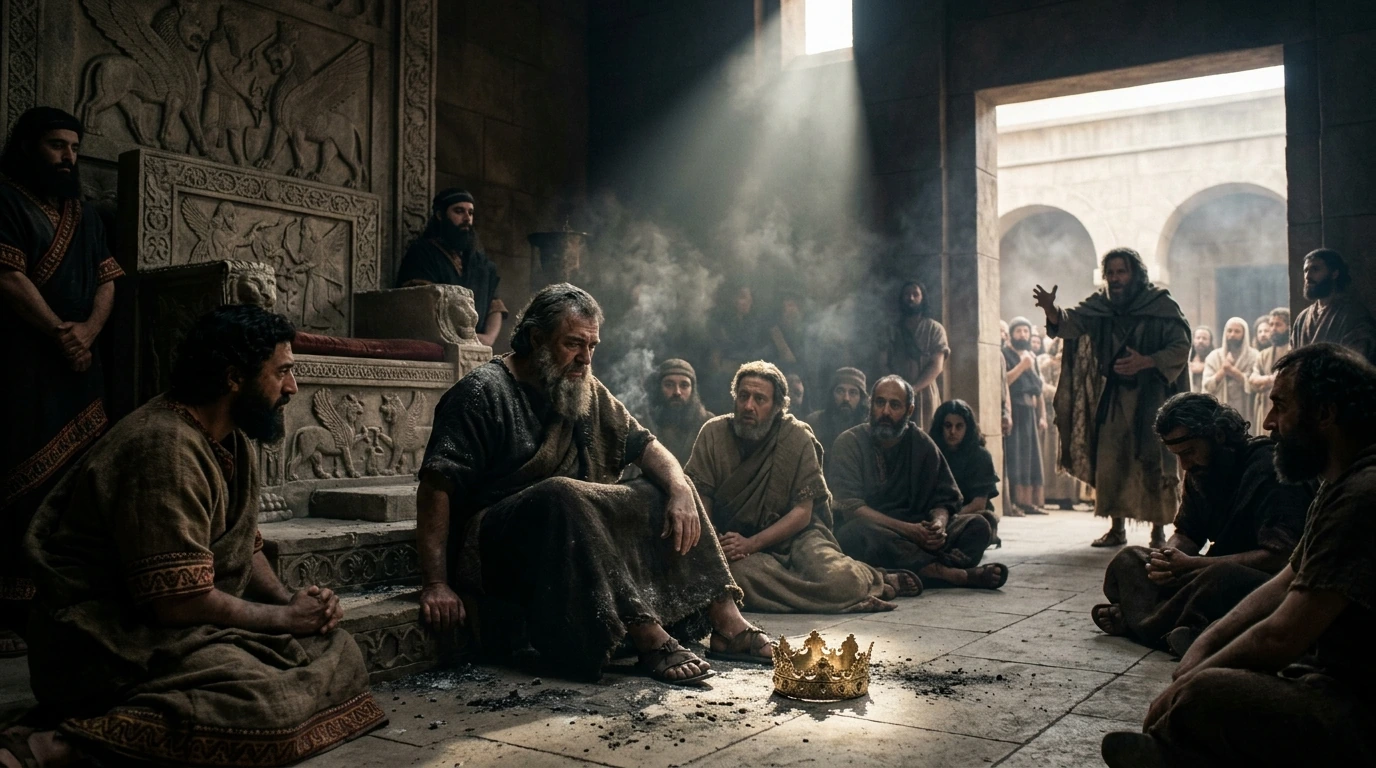
For centuries, secular historians argued that the national repentance of Nineveh—where the king laid aside his royal robes, put on sackcloth, sat in ashes, and decreed a universal fast for both humans and animals (Jonah 3:5–9)—was a literary impossibility.
Why would the bloodthirsty masters of the ancient Near East listen to a solitary, uninvited Hebrew prophet proclaiming: "Yet forty days, and Nineveh shall be overthrown!"?
The answer was unlocked in the late nineteenth century when British Museum cuneiform scholars deciphered the Assyrian Eponym Chronicle (Limmu Lists).
The cuneiform annals reveal that during the exact decades of Jonah’s prophetic mission, the Assyrian Empire was paralyzed by a catastrophic cascade of cosmic omens, deadly pandemics, military collapses, and violent civil rebellions that brought the imperial dynasty to its knees.
The Assyrian Eponym Chronicle (Limmu Lists)
In ancient Assyria, each calendar year was officially named after a prominent imperial magistrate (the Limmu). Cuneiform scribes recorded annual events on clay tablets preserved in imperial archives at Nineveh and Ashur.
The Eponym Chronicle for the reign of King Ashur-dan III (772–755 BC) provides an astonishing secular backdrop to the Book of Jonah:
765 BC:  In the eponymy of Ninurta-mukin-ahi: Campaign against Hatarikka. Plague in the land.
764 BC:  In the eponymy of Sidqi-ilu: In the land (no military campaigns; state paralysis).
763 BC:  In the eponymy of Bur-Sagale (governor of Guzana):
         Insurrection in the city of Ashur. In the month of Simanu, the sun was darkened!
762 BC:  Insurrection in the city of Ashur continues.
761 BC:  Insurrection in Arrapha.
760 BC:  Insurrection in Arrapha.
759 BC:  Insurrection in Guzana. Plague in the land again!
758 BC:  Peace restored in the land.
The Bur-Sagale Total Solar Eclipse (June 15, 763 BC)
Modern astrophysics has calculated the precise astronomical date of the line in the Bur-Sagale eponymy: June 15, 763 BC.
On that morning, a total solar eclipse swept across northern Mesopotamia:
- Modern NASA solar retro-calculations confirm that Nineveh fell directly within the zone of totality.
- The sun vanished in midday; darkness enveloped the city, stars appeared, temperatures plunged, and the corona blazed like a ring of ghostly fire in the sky.
In ancient Mesopotamian astrology (Enuma Anu Enlil), a total solar eclipse was viewed as the most terrifying cosmic omen possible:
- It signified that the supreme gods (Shamash and Sin) were furious with the reigning king.
- It portended the imminent military downfall of the king, the overthrow of the dynasty, and universal devastation.
When a Hebrew prophet walked into Nineveh in the aftermath of this celestial terror, crying that the city would be destroyed in forty days, the population did not mock him—they were already trembling under cosmic dread!
Devastating Plagues and Civil War in Assyria (765–759 BC)
The solar eclipse did not occur in a vacuum. It was sandwiched between two catastrophic national disasters:
- The Great Plague of 765 BC: Cuneiform records document a devastating epidemic that swept across the empire, wiping out garrison troops and municipal populations.
- The Second Plague of 759 BC: A second virulent outbreak struck the cities just as civil insurrections spread from Ashur to Arrapha.
- Internal Civil Rebellions: Rebellious provinces rose in armed revolt against the crown; the king was barricaded in his capital, unable to conduct foreign campaigns for consecutive years.
King Ashur-dan III: The Vulnerable Monarch
The monarch reigning in Nineveh during this crisis was Ashur-dan III (772–755 BC), a weak and embattled ruler who witnessed his empire fragmenting from within.
In Mesopotamian royal crisis rituals (Shar Puhi - "The Substitute King Ritual"), when catastrophic omens occurred:
- The reigning king stepped down from his throne, stripped off his royal robes, dressed in sackcloth and mourning garments, and appointed a temporary commoner to sit on the throne to absorb the divine curse.
- Animals were ritually starved and covered in sackcloth to join the mourning ritual, weeping before the gods to avert cosmic destruction.
This matches the exact cultural mechanism described in Jonah 3:6–8:
"Then word came to the king of Nineveh; and he arose from his throne and laid aside his robe, covered himself with sackcloth and sat in ashes... 'Let neither man nor beast, herd nor flock, taste anything; do not let them eat, or drink water. But let man and beast be covered with sackcloth, and cry mightily to God!'"
The Book of Jonah does not describe an impossible fantasy; it documents a miraculous divine intervention perfectly coordinated with hard astronomical, epidemiological, and political events in eighth-century BC Assyria.
Frequently Asked Questions
What was the Bur-Sagale solar eclipse?
A total solar eclipse that occurred over Nineveh on June 15, 763 BC, recorded on Assyrian cuneiform tablets, which ancient people interpreted as an omen of imminent divine judgment.
Who was the King of Nineveh during Jonah’s visit?
Historical and chronological evidence points to King Ashur-dan III (reigned 772–755 BC), who presided over a weakened empire racked by plagues and civil insurrections.
Why did the king order animals to wear sackcloth?
In ancient Mesopotamian crisis rituals, universal fasting and covering animals in mourning cloth was a documented cultural practice designed to evoke pity from the gods during catastrophic omens.
Related Research Dossiers
View all 120 articles →
Nathan Confronting David: 'You Are the Man!' (2 Samuel 12), The Royal Court, and Prophetic Courage

The Fall of Nineveh in Secular History: The Babylonian Chronicle, Cyaxares, and Diodorus Siculus
