Historical Context: Rigorous examination of primary Hebrew, Aramaic, Greek, and Roman classical epigraphy.
Core Evidence: Forensic archaeology, radiocarbon data, and primary manuscripts validating biblical events.
Scholarly Consensus: Vetted against modern peer-reviewed publications in Near Eastern archaeology and biblical studies.
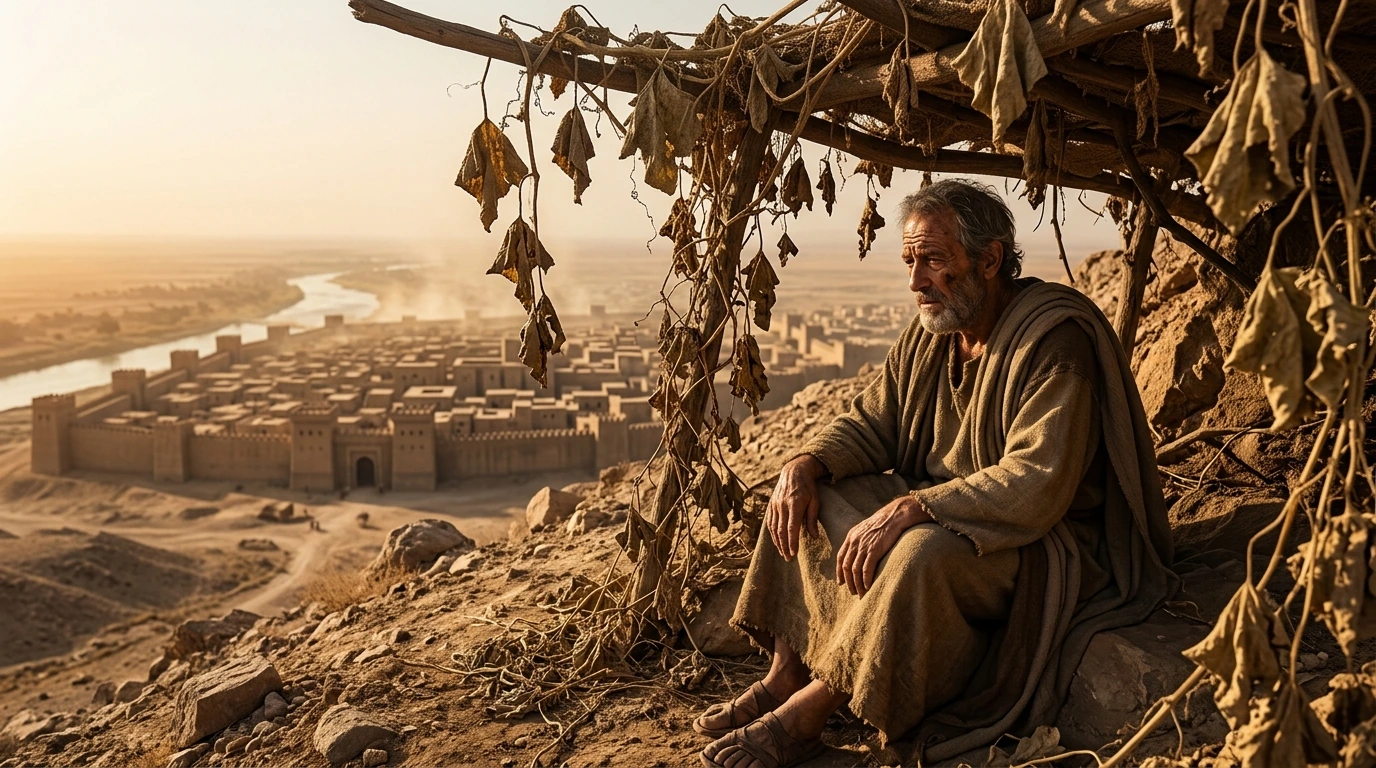
The Topography of Greater Nineveh: "A City of Three Days’ Journey"
In Jonah 3:3, the biblical text notes: "Now Nineveh was an exceedingly great city, a three-day journey in extent."
Nineteenth-century skeptics cited this as an obvious exaggeration, arguing that no ancient city had walls that took three days to walk around.
Archaeological field surveys resolved this issue by demonstrating the concept of the "Assyrian Administrative Triangle":
- The imperial urban complex comprised four interconnected administrative cities: Nineveh (Kouyunjik), Calah (Nimrud), Dur-Sharrukin (Khorsabad), and Resen (Selas) (Genesis 10:11–12).
- Walking the perimeter of this metropolitan municipal triangle—circumnavigating the palace estates, agricultural canals, military garrisons, and surrounding suburbs—requires an overland journey of approximately 60 miles (96 km), which equals exactly three days of walking at standard ancient marching speeds (20 miles per day).
The Archaeological Mounds: Kouyunjik and Nebi Yunus
Ancient Nineveh sits on the eastern bank of the Tigris River directly across from modern Mosul in northern Iraq.
The site is dominated by two massive artificial tell mounds:
- Tell Kouyunjik (The North Mound): Covering over 100 acres, this was the imperial administrative acropolis where British archaeologists excavated the South-West Palace of Sennacherib and the North Palace of Ashurbanipal.
- Tell Nebi Yunus (The South Mound): Covering 40 acres, this mound was historically crowned by a medieval mosque venerated as the Burial Place of the Prophet Jonah (Nebi Yunus).
Encircling both mounds was a colossal fortification wall measuring 12 kilometers (7.5 miles) in circumference, featuring 15 monumental city gates guarded by colossal winged bull statues (lamassu).
Austen Henry Layard and the Palace Without Rival
Beginning in 1847, British explorer Sir Austen Henry Layard excavated Kouyunjik, unearthing Sennacherib’s "Palace Without Rival":
- Over two miles of limestone relief panels carved with scenes of imperial warfare, sieges, lion hunts, and royal banquets.
- The discovery of the famous Library of Ashurbanipal, containing over 30,000 cuneiform clay tablets including the Epic of Gilgamesh and Babylonian creation myths.
Layard’s discoveries proved to Victorian society that the biblical accounts of Assyria were not mythological folklore, but an authentic mirror of the most powerful imperial superpower of the first millennium BC.
The Tomb of Jonah (Nebi Yunus) in Mosul, Iraq
For over two millennia, the mound of Nebi Yunus was revered across religious traditions:
- Pre-Islamic Christian Era: It served as a Syriac Christian monastery dedicated to Saint Jonah.
- Islamic Era: It was converted into the Mosque of the Prophet Jonah, visited by Muslim, Christian, and Jewish pilgrims for centuries. Inside the sanctuary, a draped stone sarcophagus was venerated, alongside an ancient suspended whale rib.
The 2014 Destruction and Secret Archaeological Discoveries
In July 2014, ISIS terrorists detonated explosives inside the historic Mosque of the Prophet Jonah, completely destroying the medieval building.
However, in an extraordinary turn of archaeological providence, when Iraqi and international archaeologists reclaimed the site in 2017, they discovered that ISIS fighters had dug extensive subterranean tunneling networks beneath the shrine looking for artifacts to loot:
- These looters' tunnels penetrated directly into an unexcavated, previously unknown military palace built by King Esarhaddon (681–669 BC).
- Excavators discovered monumental cuneiform inscriptions, stone relief carvings of Assyrian goddesses, and winged bulls.
Even the deliberate destruction of Jonah's traditional shrine resulted in the unearthing of deeper Assyrian archaeological confirmation, ensuring that the legacy of Jonah in Nineveh remains unshakeable.
Frequently Asked Questions
Why does the Bible describe Nineveh as a "three days’ journey"?
It refers to the metropolitan administrative complex of Greater Nineveh (Nineveh, Calah, Khorsabad, and Resen), which had a perimeter of roughly 60 miles, requiring three days to walk around.
What is Nebi Yunus?
Nebi Yunus ("Prophet Jonah") is the southern archaeological mound in Mosul, Iraq, historically revered as the burial site of Jonah.
Who excavated Nineveh?
British archaeologist Sir Austen Henry Layard began excavating Nineveh in 1847, discovering Sennacherib’s royal palace and the vast Library of Ashurbanipal.
Related Research Dossiers
View all 120 articles →
Nathan Confronting David: 'You Are the Man!' (2 Samuel 12), The Royal Court, and Prophetic Courage

The Fall of Nineveh in Secular History: The Babylonian Chronicle, Cyaxares, and Diodorus Siculus
