What does 'hundredfold' (me'ah she'arim) mean in Genesis 26:12?
In ancient Near Eastern agriculture, an average grain harvest yielded 5 to 10 grains per seed planted; a spectacular year might yield 25 to 30. Reaping an exact 'hundredfold' (me'ah she'arim) was an extraordinary, mathematically maximum yield that defied regional drought and proved supernatural divine favor.
Ancient patristic witnesses, Second Temple manuscripts, and classical annals.
Stratigraphic digs, monumental epigraphy, and artifact forensics in the Levant.
Distinguishing canonical Scripture text from historical patristic traditions.
Subject Scope: How Isaac Sowed in a Year of Famine and Reaped 100-Fold (Genesis 26:12)
Historical Context: Rigorous historical and theological examination within the field of Biblical Wisdom & Financial Stewardship.
Primary Evidence: Forensic archaeology, textual preservation, and primary ancient manuscripts corroborating scriptural events.
Investigation Highlights: The Paralyzing Instinct to Retreat • God’s Counter-Intuitive Command: Do Not Go to Egypt • The Archaeology of Re-Digging Abraham’s Wells
Scholarly Consensus: Vetted against peer-reviewed academic literature in biblical history, linguistics, and archaeology.
The Paralyzing Instinct to Retreat
When economic crisis, inflation, or industry downturns strike, the instinctive human reaction is panic-driven contraction: hoard remaining cash, freeze all kingdom generosity, cancel forward-looking investments, and retreat into survival mode. We look at barren soil, rising interest rates, and dry bank statements, and conclude that the only rational move is to flee.
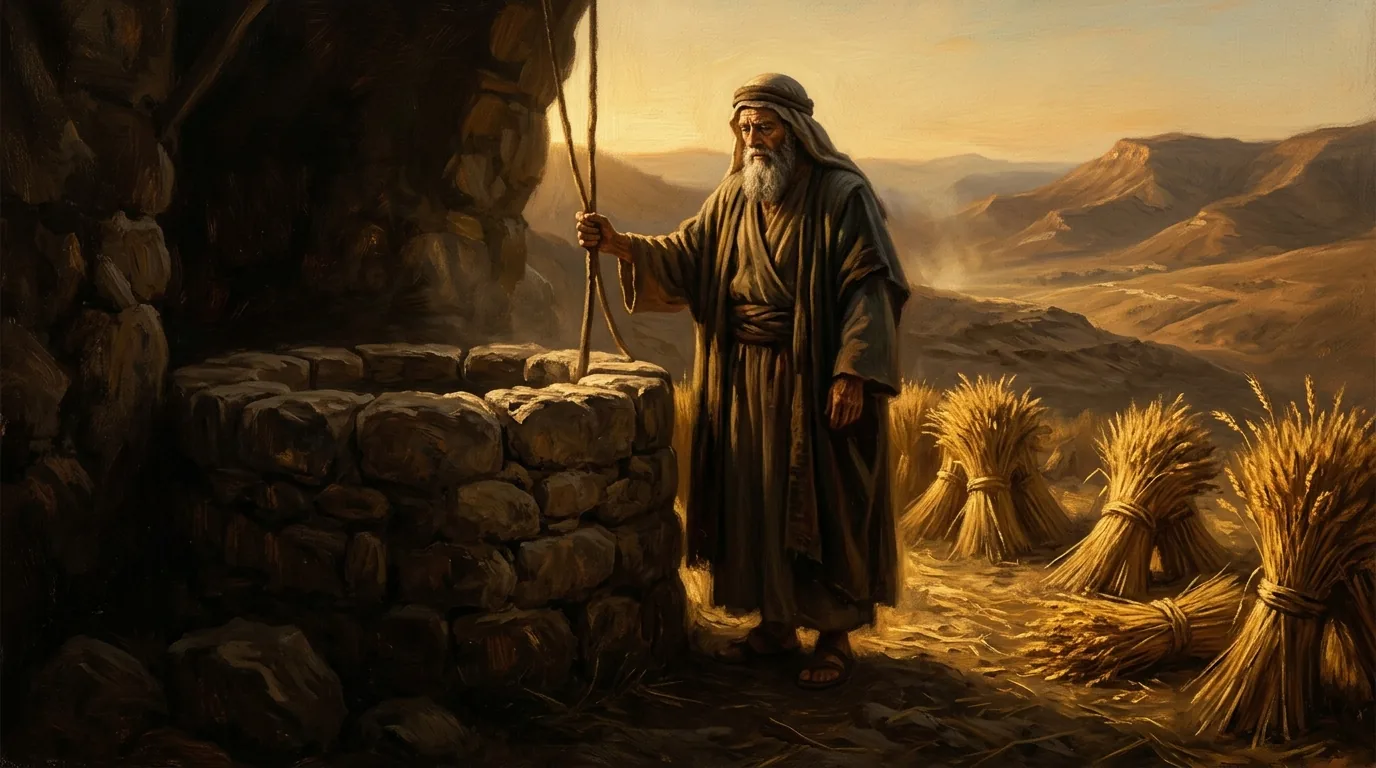
In Genesis 26, the patriarch Isaac faced this exact crisis. A devastating, scorched-earth famine struck the land of Canaan—the kind of drought that wiped out herds, desiccated barley crops, and reduced wealthy families to destitute refugees.
Direct Historical Answer Box:
In Genesis 26:1–12, God explicitly commanded Isaac not to flee south to the reliable Nile irrigation of Egypt, but to dwell in the arid borderlands of Gerar. Verse 12 records one of the most astonishing economic transactions in Scripture: 'Then Isaac sowed in that land, and received in the same year an hundredfold: and the Lord blessed him.' In Hebrew, a hundredfold is me'ah she'arim (מֵאָה שְׁעָרִים)—representing the theoretical mathematical maximum yield possible for Judean grain under miraculous covenant favor.
Isaac did not prosper because the weather was favorable or the soil was naturally rich; he prospered because he obeyed God's geographic assignment, sowed into dry ground, and systematically re-dug the covenant wells of his father Abraham.
God’s Counter-Intuitive Command: Do Not Go to Egypt
In the ancient Near East, Egypt was the breadbasket of the Mediterranean. When seasonal rains failed in Canaan, the annual inundation of the Nile River guaranteed green pastures and abundant grain. Isaac’s father Abraham had fled to Egypt during an earlier famine (Genesis 12:10), resulting in moral compromise, deceit, and marital danger.
When Isaac packed his tents to head south, God intervened:
- Genesis 26:2–3: 'Go not down into Egypt; dwell in the land which I shall tell thee of: Sojourn in this land, and I will be with thee, and will bless thee; for unto thee, and unto thy seed, I will give all these countries, and I will perform the oath which I sware unto Abraham thy father.'
Egypt represents the world’s self-reliant economic system—a system governed by human effort, imperial exploitation, and anxiety. God commanded Isaac to stay in the dry desert of Gerar because God wanted Isaac’s provision to be completely traceable to covenant grace, not Egyptian irrigation.
The Archaeology of Re-Digging Abraham’s Wells
Notice what Isaac did after reaping his hundredfold harvest:
- Genesis 26:18: 'And Isaac digged again the wells of water, which they had digged in the days of Abraham his father; for the Philistines had stopped them after the death of Abraham: and he called their names after the names by which his father had called them.'
In the arid Negev desert around Beersheba and Gerar, life is dictated by subterranean aquifers. Hand-hewn bedrock cisterns and bell-shaped wells dug thirty to sixty feet through limestone represented the most valuable infrastructural assets of antiquity. The hostile Philistines had deliberately filled Abraham's wells with stones and earth—a biological warfare tactic designed to erase Abraham’s legacy and force his descendants off the land.
Isaac faced three successive wells:
- Esek (עֵשֶׂק — Contention): The Philistine herdsmen strove for it. Isaac refused to retaliate; he moved on.
- Sitnah (שִׂטְנָה — Hostility/Accusation): They fought for this well also. Isaac walked away again, refusing to waste his emotional energy arguing with envious critics.
- Rehoboth (רְחֹבוֹת — Broad Places/Room): 'And he removed from thence, and digged another well; and for that they strove not: and he called the name of it Rehoboth; and he said, For now the Lord hath made room for us, and we shall be fruitful in the land' (Genesis 26:22).
Isaac understood that when God is your source, you do not need to fight over old puddles. Keep digging until you reach Rehoboth.
The 3-Step Protocol for Sowing in Hard Times
To apply the Isaac principle during seasons of economic pressure:
1. Stay Planted Where God Assigned You
Do not make panic-driven career moves or abandon your kingdom convictions out of fear. Resist the temptation to run to 'Egypt'—cutting ethical corners, accepting dishonest compromise, or adopting the world's frantic anxiety. Flourishing is a matter of covenant alignment, not geographical luck.
2. Re-Dig Your Ancestral Spiritual Wells
When money is tight and stress is high, return to the ancient wells that sustained the saints before you: the well of daily early-morning prayer, the well of systematic tithing, the well of Scripture immersion, and the well of sabbath rest. Clean out the dirt of cynicism, distraction, and apathy that stopped up your flow of divine peace.
3. Keep Sowing Good Seeds in the Downturn
The seed Isaac sowed was literal grain that his family could have baked into bread. Sowing in famine felt like throwing survival food into dust. Yet planting during a downturn yields the greatest leverage. Continue sowing value into your craft, continue serving your clients with excellence, and continue honoring God with firstfruits. God guarantees the harvest.
Spoken Prayer for Supernatural Multiplication in Famine
Proclaim this covenant blessing over your home and investments:
"Lord God of Abraham and Isaac, You who command the rain and govern the storehouses of heaven, I look to You as my sole Provider tonight. I refuse the fear of economic recession, inflation, and scarcity. I will not flee to Egypt, nor will I trust in human chariots.
Tonight, I re-dig the wells of prayer, faith, and generosity. In the dry seasons of this world, I choose to sow good seed into Your kingdom and into my craft. Open the windows of heaven over my household and grant me Isaac's hundredfold increase (me'ah she'arim). Lead my family past Esek and Sitnah straight into Rehoboth—the broad place of divine peace and kingdom fruitfulness. In Jesus' mighty name, Amen."
Kingdom Governance, Stewardship & Blueprint 2027
Biblical economic theology, marketplace authority, generational wealth stewardship, and strategic preparedness in uncertain times. Each investigation in this pillar is corroborated by primary classical manuscripts, epigraphy, and peer-reviewed historical forensics.
Pillar Dossiers in this Corpus
The Statistical Impossibility of 8 Messianic Prophecies Fulfilled in One Man
16 min read · Verified Primary DossierThe Coin in the Fish’s Mouth: The Tilapia Nilotica and the Lake of Galilee Tax
14 min read · Verified Primary DossierThe Kingdom Builder Blueprint 2027 (Special Edition)
The Joseph Storehouse Principle (Genesis 41) applied to generational wealth, family sovereignty, and kingdom capital.
Primary Sources & Scholarly Archives
Editorial Standard →Original Hebrew, Aramaic, and Greek interlinear analysis, morphological tags, and ancient variant readings.
Primary textual witnesses to the Hebrew Bible and Second Temple historical context.
Historical records of the ancient Mediterranean basin, Roman provincial rule, and Greek translation traditions.
Frequently Asked Questions
What does 'hundredfold' (me'ah she'arim) mean in Genesis 26:12?
In ancient Near Eastern agriculture, an average grain harvest yielded 5 to 10 grains per seed planted; a spectacular year might yield 25 to 30. Reaping an exact 'hundredfold' (me'ah she'arim) was an extraordinary, mathematically maximum yield that defied regional drought and proved supernatural divine favor.
Why did the Philistines stop up Abraham's wells with dirt?
In arid desert regions, wells represented territorial ownership and life-support. By filling the wells with dirt, the Philistines sought to erase Abraham's presence, prevent his heirs from grazing livestock, and drive them into permanent exile.
What should I do if people are envious of my blessings?
Follow Isaac's example: do not retaliate, waste energy in toxic disputes (Esek and Sitnah), or defend yourself. Move forward with quiet dignity, keep digging new wells, and trust God to bring you to Rehoboth where heaven makes room for your expansion.
Kingdom Economics & Wisdom Resources {#kingdom-economics-resources}
Discover the master principles of ancient wealth and covenant provision:- Explore the complete laws of stewardship in The Solomon Code ($4.99).
- Master morning discipline and declarations in Command Your Morning & Night ($3.99).
- For the full set of digital study guides, explore The Sacred Keys Trilogy Master Bundle ($7.99).
Related Research Dossiers
View all 568 research dossiers →
The Statistical Impossibility of 8 Messianic Prophecies Fulfilled in One Man

The Coin in the Fish’s Mouth: The Tilapia Nilotica and the Lake of Galilee Tax