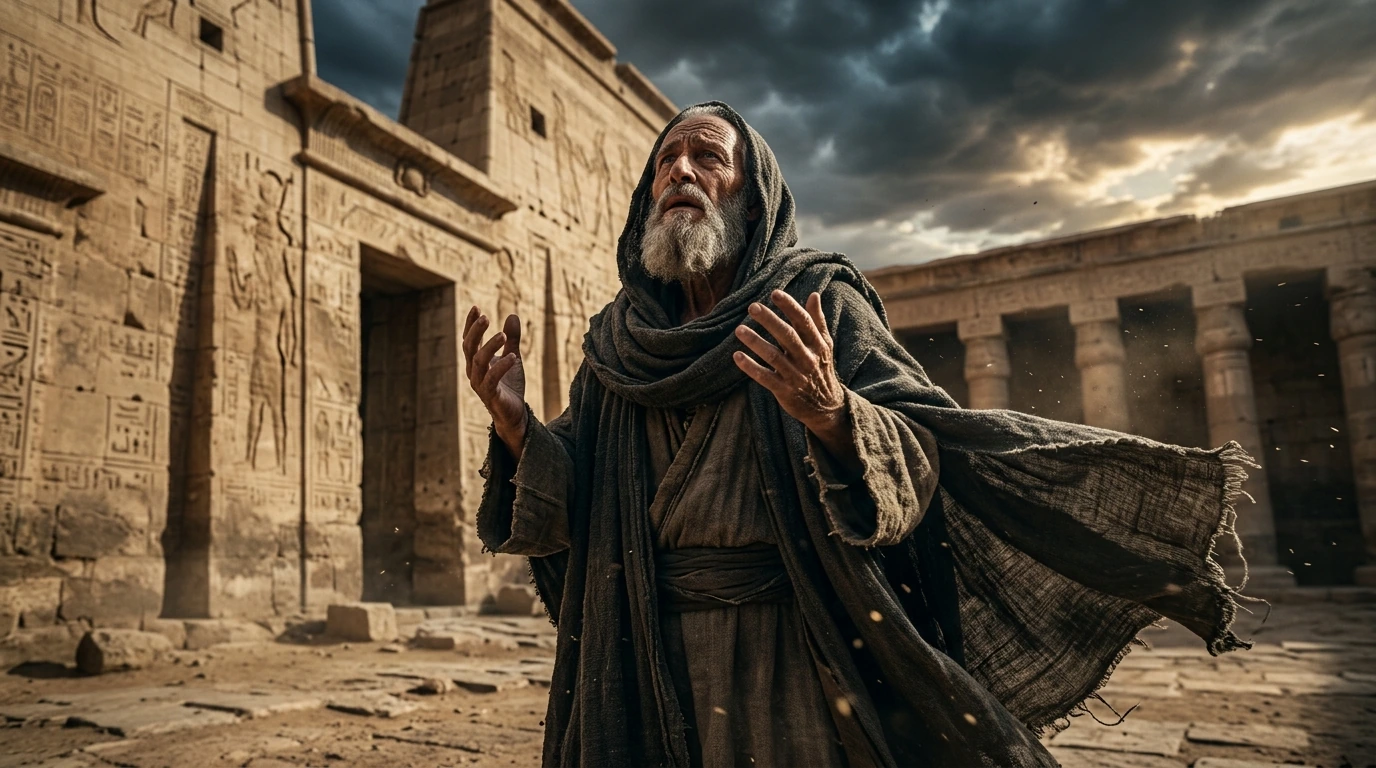
Historical Context: Rigorous examination of primary Hebrew, Aramaic, Greek, and Roman classical epigraphy.
Core Evidence: Forensic archaeology, radiocarbon data, and primary manuscripts validating biblical events.
Scholarly Consensus: Vetted against modern peer-reviewed publications in Near Eastern archaeology and biblical studies.
The Egyptian Diaspora: Migdol, Tahpanhes, Noph, and Pathros
Jeremiah 44 opens with a comprehensive geographical survey of Jewish settlements scattered across Egypt following the fall of Jerusalem in 586 BC:
"The word that came to Jeremiah concerning all the Jews who dwell in the land of Egypt, who dwell at Migdol, at Tahpanhes, at Noph [Memphis], and in the country of Pathros [Upper Egypt]..." (Jeremiah 44:1)
Archaeological excavations confirm that all four locations were active military and trading centers during the Twenty-Sixth (Saite) Dynasty:
- Migdol (Tell el-Heir): The strategic frontier fortress guarding the military road entering Egypt from the Sinai.
- Tahpanhes (Tell Defenneh): The royal palace and mercenary garrison town where Pharaoh housed foreign auxiliaries.
- Noph (Mit Rahina / Memphis): The ancient administrative capital of Lower Egypt, featuring temples to Ptah and Apis.
- Pathros (Pa-ta-res, Upper Egypt): The southern territory reaching from Thebes to Aswan.
The Cult of the Queen of Heaven (Ishtar / Isis)
The theological conflict that cost Jeremiah his life centered on the worship of the Queen of Heaven (Mlekhet ha-Shamayim).
In the syncretistic melting pot of the sixth century BC, Jewish refugees combined the Mesopotamian goddess Ishtar / Astarte with the Egyptian mother-deity Isis:
- Women took the primary leadership role, kneading dough and baking crescent-shaped cakes stamped with the goddess's image (kavvanim, Jeremiah 7:18; 44:19).
- They poured out libations of wine and burned fragrant frankincense upon flat rooftops at moonrise.
- The exiles argued pragmatically that during the reign of King Manasseh—when the Queen of Heaven was worshiped—Judah enjoyed peace and prosperity, whereas Josiah’s exclusive monotheistic reforms were followed by defeat at Megiddo and the destruction of Jerusalem.
Jeremiah forcefully refuted this historical revisionism, demonstrating that Jerusalem fell precisely because the covenant people had provoked Yahweh to holy wrath through their persistent idolatry.
The Elephantine Papyri: Proof of Jewish Syncretism in Egypt
In the late nineteenth and early twentieth centuries, German and British archaeologists discovered the Elephantine Papyri—a vast fifth-century BC archive of Aramaic legal, military, and religious documents written by a Jewish military colony stationed on Elephantine Island (Yeb) in southern Egypt (Pathros).
The Elephantine Papyri provide jaw-dropping extra-biblical confirmation of the exact religious conditions Jeremiah condemned:
- The Elephantine Jews possessed a physical temple dedicated to YHW (Yahweh).
- Alongside Yahweh, their financial ledgers record donations to female syncretistic deities: Anat-Yahu ("Anat of Yahweh") and Ashim-Bethel.
- They maintained intermarriage, pagan oathtaking, and sacrificial rites that violated Deuteronomic law.
The discovery proved that Jeremiah’s descriptions of Jewish apostasy in Egypt were not polemical exaggerations, but an exact sociological reflection of the diaspora.
Exegetical Breakdown of Jeremiah 44
Jeremiah 44 represents the final recorded words of the Weeping Prophet. The chapter follows the classical prophetic lawsuit (rib) pattern:
- The Indictment (vv. 2–10): Reminding the refugees of the smoking ruins of Jerusalem and questioning why they repeat the same spiritual crimes in Egypt.
- The Sentence (vv. 11–14): Total collapse of the refugee community; only a tiny remnant of fugitives will ever return to the soil of Judah.
- The People’s Defiance (vv. 15–19): An open rebellion where the leaders and women explicitly refuse Jeremiah’s words.
- The Divine Sign (vv. 29–30): The overthrow and execution of Pharaoh Hophra as an infallible historical sign that Yahweh’s word cannot fail.
The End of the Saite Dynasty: Prophecy Fulfilled
History confirms the complete collapse of the world the Jewish exiles trusted for protection:
- In 568 BC, Nebuchadnezzar II invaded the Nile Delta and plundered Tahpanhes.
- In 525 BC, the Persian imperial army under Cambyses II conquered Egypt, capturing Memphis and ending Saite independence forever.
According to Herodotus, Cambyses marched his troops to Elephantine and spared the Jewish temple while destroying the Egyptian animal temples. The tiny remnant that survived preserved the sacred scrolls of Jeremiah, carrying them back into Judea and Babylon, ensuring his prophetic testimony was enshrined forever in Holy Scripture.
Frequently Asked Questions
Who was the Queen of Heaven mentioned in Jeremiah 44?
A syncretistic mother-goddess blending Mesopotamian Ishtar (Astarte) with Egyptian Isis, worshiped through rooftop incense burning and ritual cake offerings.
What are the Elephantine Papyri and how do they confirm Jeremiah?
They are 5th-century BC Aramaic documents from a Jewish garrison in southern Egypt proving that Jewish exiles worshiped Yahweh alongside pagan female deities like Anat-Yahu, exactly as Jeremiah described.
What did Jeremiah prophesy would happen to Pharaoh Hophra?
He prophesied that Pharaoh Hophra would be delivered into the hands of his enemies seeking his life, which occurred when he was overthrown by Amasis II and strangled.
Related Research Dossiers
View all 120 articles →
Nathan Confronting David: 'You Are the Man!' (2 Samuel 12), The Royal Court, and Prophetic Courage

The Fall of Nineveh in Secular History: The Babylonian Chronicle, Cyaxares, and Diodorus Siculus
