
Historical Context: Rigorous examination of primary Hebrew, Aramaic, Greek, and Roman classical epigraphy.
Core Evidence: Forensic archaeology, radiocarbon data, and primary manuscripts validating biblical events.
Scholarly Consensus: Vetted against modern peer-reviewed publications in Near Eastern archaeology and biblical studies.
The Royal Tragedy of 4 BC: Death at Jericho
In the spring of 4 BC, inside the lavish winter palace complex of Jericho—surrounded by Roman peristyle gardens, sunken reception halls, and heated bathhouses—King Herod I ("the Great"), King of Judea, died at the age of approximately 69.
His reign had been defined by breathtaking architectural achievements (the rebuilt Second Temple in Jerusalem, Caesarea Maritima, Masada, and Herodium) coupled with psychotic domestic paranoia. In his final years, Herod executed his beloved Hasmonean wife Mariamne, her mother Alexandra, his brother-in-law, and three of his own sons (Alexander, Aristobulus, and Antipater)—the latter executed just five days before Herod's own death.
Yet the monarch who had survived assassination plots, Roman civil wars, and geopolitical intrigue could not escape one of the most agonizing, grotesque clinical deaths documented in ancient medical literature.
The Clinical Symptoms Recorded by Flavius Josephus
In both The Jewish War (I.656) and Antiquities of the Jews (XVII.168–170), Jewish historian Flavius Josephus provides an extraordinarily precise clinical chronicle of Herod’s terminal disease:
"A fire glowed within him, not very discernible to those who touched him, but which increased his inward distress. He had an insatiable craving for food which nothing could appease. His bowels were ulcerated with ferocious colics, and his feet were swollen with a transparent, watery dropsy.
A similar inflammation afflicted his abdomen, and his private parts underwent gangrene, breeding worms (scolex). When he sat erect, he gasped for breath with terrible stertorous respirations, and spasms convulsed every limb. The diviners declared this disease was God's vengeance on the king for his impious atrocities."
Synthesizing Josephus’ ancient clinical observations, Herod suffered from:
- Low-grade internal burning sensation (visceral inflammation / uremic pruritus).
- Polyphagia / ravenous hunger.
- Intestinal ulceration with severe colic and diarrhea.
- Bilateral pitting edema of the lower extremities (dropsy).
- Genital gangrene with active tissue myiasis (infestation of fly maggots).
- Orthopnea and Cheyne-Stokes respiration (gasping for air when seated).
- Generalized convulsions and muscle spasms.
- Severe halitosis / fetid uremic breath odor.
Modern Forensic Retro-Diagnosis: What Killed Herod?
For centuries, historians vaguely labeled Herod’s illness as "venereal disease" or "leprosy". In 2002, Dr. Philip A. Mackowiak (University of Maryland School of Medicine) convened a historic clinicopathological conference to establish a scientific retro-diagnosis.
The medical consensus identifies a deadly synergy of three primary conditions:
1. Chronic Kidney Disease (End-Stage Renal Disease)
Herod’s intense itching, visceral burning, lower extremity edema, foul breath, mental agitation, and terminal convulsions correlate precisely with uremia resulting from chronic renal failure. Uremic neuropathy causes severe limb cramping, while fluid retention in the lungs (pulmonary edema) produced his suffocating orthopnea.
2. Fournier’s Gangrene (Necrotizing Fasciitis of the Perineum)
Josephus’ horrific mention of genital putrefaction and worms (scolex) points conclusively to Fournier’s gangrene—a fulminant, rapidly spreading necrotizing soft-tissue infection of the scrotum, penis, and perineal region.
- In elderly diabetic or immunocompromised patients with poor vascular perfusion, bacterial necrosis causes massive tissue destruction.
- In the arid climate of Jericho, open necrotic flesh rapidly attracted blowflies, producing cutaneous myiasis (living larvae devouring dead epidermal tissue).
3. Arteriosclerotic Cardiovascular Disease
Herod’s heavy lifestyle, chronic stress, and advanced age led to generalized arteriosclerosis, precipitating ischemic mesenteric bowel ulcerations and congestive heart failure.
The Callirrhoe Thermal Springs and Final Psychological Collapse
Desperate for relief, Herod’s royal physicians transported him across the Dead Sea to the hot sulfuric mineral baths of Callirrhoe (modern Ain ez-Zarqa in Jordan).
When the mineral baths failed, the royal doctors immersed the king in a large bronze vat filled with warm olive oil. The treatment proved nearly fatal: Herod fainted, his eyes rolled back, and his servants cried out in mourning, believing the king had expired. Resuscitated by his attendants' screams, Herod abandoned medical therapy and returned to Jericho in hopeless despair.
Knowing that the Jewish people would celebrate his demise, Herod ordered his commanders to summon the foremost Jewish elders and scholars from every town in Judea to the Hippodrome at Jericho. He locked them inside and ordered his sister Salome:
"The moment I breathe my last, let archers slaughter every one of them in the hippodrome. Thus shall all Judea weep at my funeral, even if they weep not for me."
Immediately upon Herod’s death, Salome and her husband Alexas demonstrated moral courage: they concealed the king’s death for several hours, released all the imprisoned Jewish elders unharmed, and only then announced Herod's demise to the imperial Roman troops.
The Excavation of Herod’s Tomb at Herodium (Ehud Netzer, 2007)
Herod was transported in a lavish funeral procession from Jericho across the Judean Desert to his palace-fortress at Herodium (south of Bethlehem). Josephus describes a golden bier encrusted with precious gems, accompanied by five hundred freedmen carrying aromatic spices.
For over thirty years, Israeli archaeologist Prof. Ehud Netzer of the Hebrew University searched for Herod's final resting place at Herodium. On May 7, 2007, Netzer announced the monumental discovery:
- Located on the upper northeastern slope of the artificial cone, Netzer uncovered the shattered podium of a luxury Roman mausoleum.
- Fragments of a lavish red limestone sarcophagus, adorned with rosettes and urn decorations matching the imperial Augustan artistic repertoire, were recovered.
- The sarcophagus had been smashed into hundreds of tiny pieces in antiquity—deliberately shattered by Jewish rebels during the First Jewish Revolt (66–73 AD) who vented their fury against the tyrant's remains.
Herod’s final resting place stands as an enduring archaeological witness to the fleeting vanity of ruthless tyranny compared to the eternal kingdom proclaimed in Judea during his reign.
Frequently Asked Questions
When and where did Herod the Great die?
Herod the Great died in late March or early April of 4 BC at his winter palace in Jericho, at the age of approximately 69.
What is the modern medical explanation for Herod’s death?
Forensic pathologists conclude Herod died from end-stage chronic kidney disease (causing uremia and dropsy) combined with Fournier’s gangrene (a necrotic perineal infection accompanied by maggot infestation/myiasis).
Was King Herod’s tomb ever found?
Yes. In 2007, archaeologist Ehud Netzer discovered Herod’s mausoleum and shattered red limestone sarcophagus on the slopes of Herodium south of Jerusalem.
Related Research Dossiers
View all 120 articles →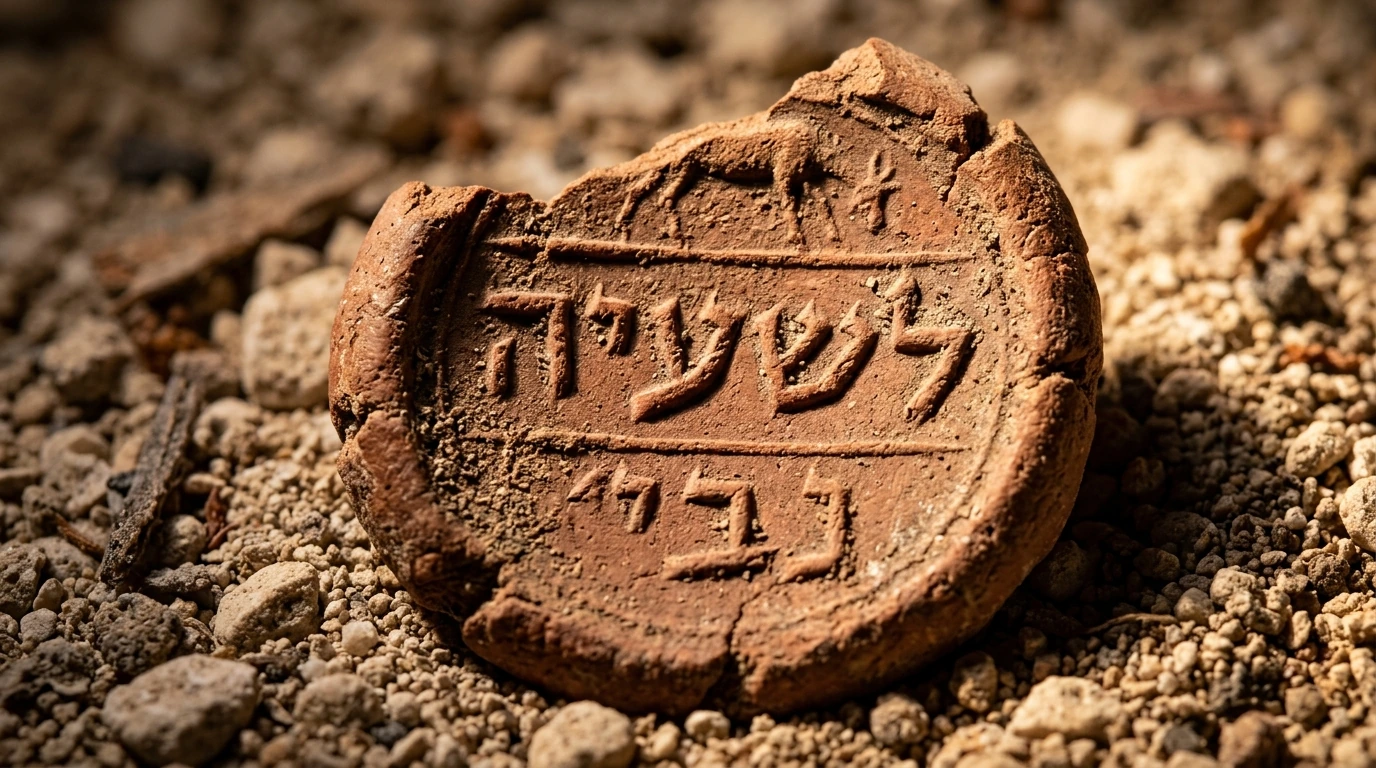
The Isaiah the Prophet Bulla: Dr. Eilat Mazar's Ophel Discovery and the Signature of the Royal Seer

Epigraphic Analysis of the Isaiah Bulla: Reconstructing 'Navi' and the Court Prophet of Jerusalem
