Historical Context: Rigorous examination of primary Hebrew, Aramaic, Greek, and Roman classical epigraphy.
Core Evidence: Forensic archaeology, radiocarbon data, and primary manuscripts validating biblical events.
Scholarly Consensus: Vetted against modern peer-reviewed publications in Near Eastern archaeology and biblical studies.
The Unprecedented Discovery: A Prophet’s Seal in Dirt
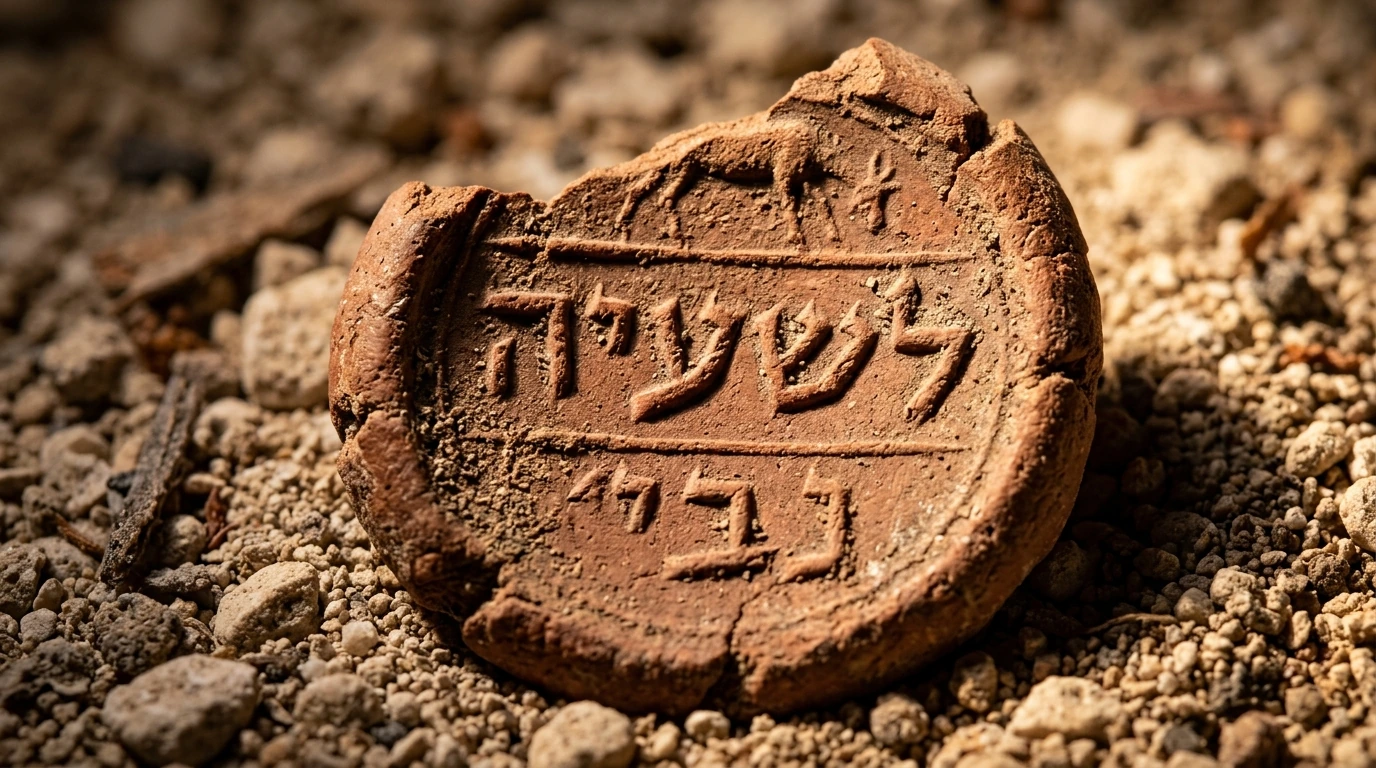
In February 2018, three years after the unveiling of the King Hezekiah bulla, archaeologist Dr. Eilat Mazar published an even more sensational finding in the Biblical Archaeology Review: a small, damaged clay bulla bearing the name of the Prophet Isaiah (Yesha'yahu).
While kings, governors, and royal treasurers are routinely documented in ancient Near Eastern epigraphy, the major literary prophets of the Bible had remained strictly confined to biblical manuscripts.
Mazar’s discovery marked the first time in the history of archaeology that a physical seal impression linked directly to a canonical Old Testament prophet was unearthed in a controlled, scientific excavation.
Spatial Proximity: 10 Feet from King Hezekiah
The archaeological context of the Isaiah bulla is as compelling as its inscription:
- The bulla was recovered from the same Iron Age II refuse stratum at the Ophel, located just 3 meters (less than 10 feet) from where King Hezekiah’s bulla had been discovered.
- Both bullae were stratified within the same late eighth-century BC soil matrix outside the royal administrative bakery/storehouse complex.
- Both bullae had been attached to papyrus scrolls sealed with fine flax cords and preserved by the same municipal burning event.
In the Hebrew Bible, the Prophet Isaiah and King Hezekiah appear together in fourteen separate chapters across 2 Kings, Isaiah, and 2 Chronicles. Finding their personal seal impressions separated by only ten feet of earth in the royal quarter of Jerusalem is one of the most stunning archaeological synchronisms in history.
Reading the Paleo-Hebrew Script: Yesha‘yahu Nvy
The oval bulla, measuring roughly 12 millimeters in length, is fractured along its top and bottom edges. The inscription is divided into three registers:
Upper register:   [Depiction of a grazing doe or roe - partially damaged]
Middle register:  לישעיהו [LYŠ‘YHW] - "Belonging to Isaiah"
Lower register:   נבי[ה]   [NBY(?)]    - "Prophet" / "Navi"
Epigraphic Breakdown
- Middle Register: The letters Lamed-Yod-Shin-Ayin-Yod-He-Waw (לישעיהו) are completely intact, crisp, and unambiguous. It spells the exact biblical Hebrew name Yesha‘yahu ("Yahweh is Salvation").
- Lower Register: The letters Nun-Bet-Yod (נבי) are clearly preserved. In ancient Hebrew:
- Navi (נביא) is the standard word for "prophet".
- In eighth-century epigraphy, words ending in an aleph (’) frequently dropped the final consonant or used the letter He (nbyh) as a vowel letter (matres lectionis).
- The left margin of the lower register is broken away, leaving room for a missing Aleph (א) or He (ה).
The Biblical Bond Between Hezekiah and Isaiah
The physical proximity of these two bullae brings the dramatic historical narrative of 2 Kings 19 to life:
"And so it was, when King Hezekiah heard it, that he tore his clothes, covered himself with sackcloth, and went into the house of the Lord. Then he sent Eliakim, who was over the household, Shebna the scribe, and the elders of the priests, covered with sackcloth, to Isaiah the prophet, the son of Amoz." (2 Kings 19:1–2)
Isaiah was not a detached wilderness ascetic like John the Baptist; he was an aristocratic court prophet who had direct daily access to the royal palace and the King of Judah.
- He walked the corridors of the Ophel.
- He delivered divine strategy during Sennacherib’s military siege.
- He applied the poultice of figs that healed Hezekiah’s mortal ulcer (2 Kings 20:7).
The Impact on Old Testament Historicity
For two centuries, literary critics operating under nineteenth-century Wellhausen paradigms argued that the narratives of Isaiah were pious Hellenistic or Persian retro-projections.
The discovery of the Isaiah bulla at the Ophel firmly anchors the Prophet Isaiah in the living, breathing political reality of eighth-century BC Jerusalem. He was an authenticated historical figure whose written correspondence was sealed, stamped, and archived in the shadow of the Temple Mount.
Frequently Asked Questions
Who discovered the Isaiah the Prophet bulla?
Israeli archaeologist Dr. Eilat Mazar excavated the bulla at the Ophel in Jerusalem, publishing the sensational discovery in 2018.
How close was the Isaiah bulla to King Hezekiah’s bulla?
They were discovered only 3 meters (less than 10 feet) apart in the exact same Iron Age archaeological layer at the Ophel.
Is it 100% certain that it refers to Isaiah the Prophet?
While the letters "Belonging to Isaiah" (לישעיהו) and "NBY" (נבי) are intact, the final letter on the damaged edge is missing. Most scholars, including Dr. Mazar, consider it highly probable that it belonged to the biblical prophet.
Related Research Dossiers
View all 120 articles →
Solomon’s Archaeology: Six-Chambered City Gates at Hazor, Megiddo, and Gezer, and the Royal Copper Mines

The Caiaphas Ossuary: The Peace Forest Discovery, Aramaic Epigraphy, and the High Priest of the Passion
