Historical Context: Rigorous examination of primary Hebrew, Aramaic, Greek, and Roman classical epigraphy.
Core Evidence: Forensic archaeology, radiocarbon data, and primary manuscripts validating biblical events.
Scholarly Consensus: Vetted against modern peer-reviewed publications in Near Eastern archaeology and biblical studies.
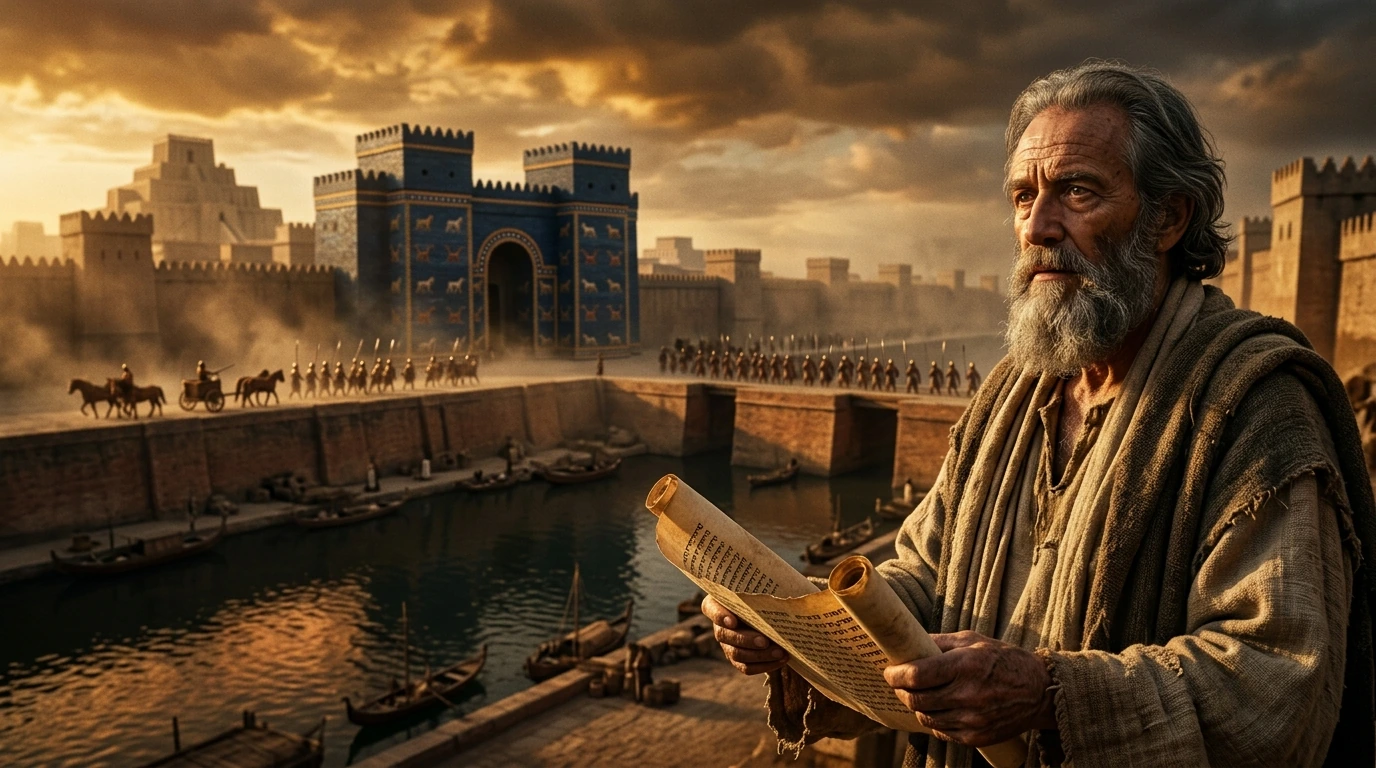
The River Chebar (Naru Kabari) in Cuneiform Geography
The Book of Ezekiel opens in the fifth year of King Jehoiachin’s captivity (July 593 BC):
"Now it came to pass in the thirtieth year, in the fourth month, on the fifth day of the month, as I was among the captives by the River Chebar, that the heavens were opened and I saw visions of God." (Ezekiel 1:1)
For centuries, commentators mistook the River Chebar for the Khabur River in northern Syria. Modern Assyriology corrected this error:
- Thousands of cuneiform commercial tablets excavated from ancient Nippur (the Murashu Archive) reference the Nāru Kabari ("The Grand Canal").
- The Nāru Kabari was a colossal, navigable irrigation canal branching from the Euphrates River north of Babylon, cutting across central Mesopotamia, passing ancient Nippur, and re-entering the river near Uruk.
It was along this agricultural waterway that Nebuchadnezzar settled the 10,000 elite Judean deportees carried away in the first deportation of 597 BC (2 Kings 24:14–16).
The Al-Yahudu Cuneiform Tablets: Everyday Life of Judean Exiles
Between 2014 and 2015, scholars Laurie Pearce and Cornelia Wunsch published over 200 clay cuneiform tablets designated the Al-Yahudu Archive (Āl-Yāḫūdu, "Town of Judah"):
- Dating from 572 to 477 BC, these tablets record commercial contracts, marriage agreements, tax receipts, and agricultural leases of Judean families living along the Chebar canal system.
- Scores of individuals bear biblical Hebrew names with the Yahwistic theophoric suffix -yahu (e.g., Gedaliah, Shelamiah, Mattaniah, Pedaiah).
- The tablets reveal that Judean deportees were not kept in concentration camps; they were crown tenants (shushanu) assigned land to cultivate barley, dates, and flax, paying taxes to the Babylonian state.
This matches the exact conditions presupposed in Ezekiel: the elders gathered freely in Ezekiel's private home (Ezekiel 8:1; 14:1; 20:1), and exiles conducted active business transactions.
The Babylonian Empire Under Nebuchadnezzar II
During Ezekiel’s lifetime, Babylon was the undisputed cultural and military capital of the ancient world:
- Nebuchadnezzar II transformed Babylon into an impregnable metropolis encircled by double walls 25 meters thick, featuring the majestic blue-glazed Ishtar Gate and the Processional Way.
- Towering over the city was Etemenanki—the 90-meter-high ziggurat dedicated to Marduk (Bel), the source of the biblical Tower of Babel traditions.
- Ezekiel’s visual prophecies—such as the winged creatures (cherubim), the multi-faced beasts, and the eyes upon wheels (Ezekiel 1:5–21)—draw upon the monumental architectural imagery of Babylonian royal palace art (lamassu winged bulls and lion gate guardians).
Ezekiel’s Priestly Background and Vision of the Chariot
Ezekiel was a son of Buzi, born into the elite Zadokite priestly lineage (Ezekiel 1:3). In biblical law, a priest entered full temple service at age thirty (Numbers 4:3).
In 593 BC, at age thirty, stranded 700 miles away from Jerusalem in an "unclean" pagan land, Ezekiel had no temple, no altar, and no sacrificial ministry.
It was in this moment of acute personal and national despair that God appeared in the Merkavah (Throne-Chariot):
- A whirling storm cloud flashing with amber fire and sapphire stone.
- The radiant throne moving on cosmic wheels within wheels, mobile and unbound by physical geography.
- The staggering theological message: Yahweh had not been left behind in Jerusalem. God’s glory was sovereign over Babylon, capable of leaving His apostate Jerusalem sanctuary and dwelling with the exiles as "a little sanctuary" (Ezekiel 11:16) along the waters of the Chebar.
The Theological Revolution of the Exile
Ezekiel’s ministry catalyzed a permanent theological revolution that preserved Judaism through centuries of displacement:
- Individual Moral Responsibility: Overturning the fatalistic proverb "The fathers have eaten sour grapes, and the children's teeth are set on edge", Ezekiel declared: "The soul who sins shall die... the righteousness of the righteous shall be upon himself" (Ezekiel 18:2, 20).
- The New Covenant Heart: Ezekiel foretold that God would take away the stony heart and put a heart of flesh, placing His Holy Spirit within His people (Ezekiel 36:26–27).
- Resurrection of the Nation: In the Valley of Dry Bones (Ezekiel 37), God promised that Israel would be physically and spiritually resurrected from the graves of international exile.
Frequently Asked Questions
What was the River Chebar in Babylon?
The River Chebar was the Nāru Kabari ("Grand Canal"), a monumental irrigation waterway branching from the Euphrates River near Nippur, where Judean exiles were settled.
What are the Al-Yahudu tablets?
A collection of over 200 Babylonian cuneiform tablets from the 6th and 5th centuries BC documenting the daily commercial, legal, and family life of Judean exiles in the "Town of Judah".
Why was Ezekiel’s vision of the Chariot so important?
It revealed that God was not confined to the physical Temple in Jerusalem, but was sovereign everywhere, capable of accompanying and comforting His exiled people in Babylon.
Related Research Dossiers
View all 120 articles →
Nathan Confronting David: 'You Are the Man!' (2 Samuel 12), The Royal Court, and Prophetic Courage

The Fall of Nineveh in Secular History: The Babylonian Chronicle, Cyaxares, and Diodorus Siculus
