Historical Context: Rigorous examination of primary Hebrew, Aramaic, Greek, and Roman classical epigraphy.
Core Evidence: Forensic archaeology, radiocarbon data, and primary manuscripts validating biblical events.
Scholarly Consensus: Vetted against modern peer-reviewed publications in Near Eastern archaeology and biblical studies.
The Historical Geography of the Valley (Biq’ah)
In Ezekiel 37:1–14, the prophet is carried out by the Spirit of the Lord into the midst of an expanse that has captivated human imagination for millennia:
"The hand of the Lord came upon me and brought me out in the Spirit of the Lord, and set me down in the midst of the valley; and it was full of bones. Then He caused me to pass by them all around, and behold, there were very many in the open valley; and indeed they were very dry." (Ezekiel 37:1–2)
The Hebrew term translated "valley" is biq’ah (בִּקְעָה), which denotes a broad, flat alluvial plain or rift valley—precisely the wide, sun-scorched plains between the Tigris and Euphrates rivers.
This was not a formal cemetery; in the ancient Near East, an unburied army left scattered across an open plain was the ultimate curse of covenant failure (Deuteronomy 28:26). The bones were yavesh me'od (יָבֵשׁ מְאֹד - "exceedingly dry"): bleached by the brutal Mesopotamian sun, desiccated of all marrow, lipids, and organic collagen. In the eyes of any observing physician or soldier, the biological probability of resurrection was absolute zero.
The Four Stages of Forensic Reconstitution (Ezekiel 37)
God asked Ezekiel: "Son of man, can these bones live?" Ezekiel’s answer was the epitome of reverent theological prudence: "O Lord God, You know" (Ezekiel 37:3).
When commanded to prophesy to the dry bones, Ezekiel witnessed a precise, four-stage reverse autopsy of decomposition:
1. Acoustic Realignment (The Rattling of Bone to Bone)
"And as I prophesied, there was a noise, and suddenly a rattling (ra'ash); and the bones came together, bone to its bone" (Ezekiel 37:7). The Hebrew word ra'ash is the same term used for an earthquake. In an astonishing display of anatomical teleology, millions of scattered skeletal fragments mobilized across the plain: femurs matched acetabula, carpals found radii, and vertebrae slotted into articulated spinal columns.
2. Ligamentous & Tendinous Re-Anchoring (Giddim)
"I looked, and behold, sinews (giddim) came upon them..." (Ezekiel 37:8). The tough collagenous bands of tendons and articular ligaments reformed, stabilizing joints and providing tensile leverage for motor movement.
3. Myogenesis & Muscular Envelope (Basar & Or)
"...and flesh (basar) grew, and skin (or) covered them over; but there was no breath in them." Skeletal muscle fibers wrapped the skeleton, capillary networks vascularized the muscle beds, and the epidermal envelope enclosed the bodies.
4. The Critical Missing Ingredient: Corpse without Breath
Notice Ezekiel’s acute clinical observation: they had skeletons, muscles, and intact skin, but they were still corpses ("there was no breath in them"). A fully formed physical structure without the divine breath is merely an organized cadaver. Structure without spirit is sterile.
The Theology of Ruach: Breath, Wind, and Spirit
God commanded Ezekiel a second time:
"Prophesy to the breath, prophesy, son of man, and say to the breath, ‘Thus says the Lord God: “Come from the four winds, O breath (ruach), and breathe on these slain, that they may live.”’" (Ezekiel 37:9)
The Hebrew word ruach (רוּחַ) is an untranslatable linguistic powerhouse that carries a threefold semantic range:
- Physical breath: The biological intake of air into lungs.
- Atmospheric wind: The four winds of heaven sweeping across the earth.
- The Holy Spirit: The sovereign, life-giving creative power of Yahweh.
This directly echoes Genesis 2:7, where God formed man of the dust (structure) and breathed into his nostrils the breath of life (ruach), making man a living being (nephesh chayah). The recreation of the dead exiles required the exact same primordial creative agency that founded human existence.
The Babylonian Exile as a Living Cemetery
Lest anyone treat this vision as an abstract allegory, God explicitly interprets the vision in Ezekiel 37:11:
"Then He said to me, ‘Son of man, these bones are the whole house of Israel. They indeed say, “Our bones are dry, our hope is lost, and we ourselves are cut off!”’"
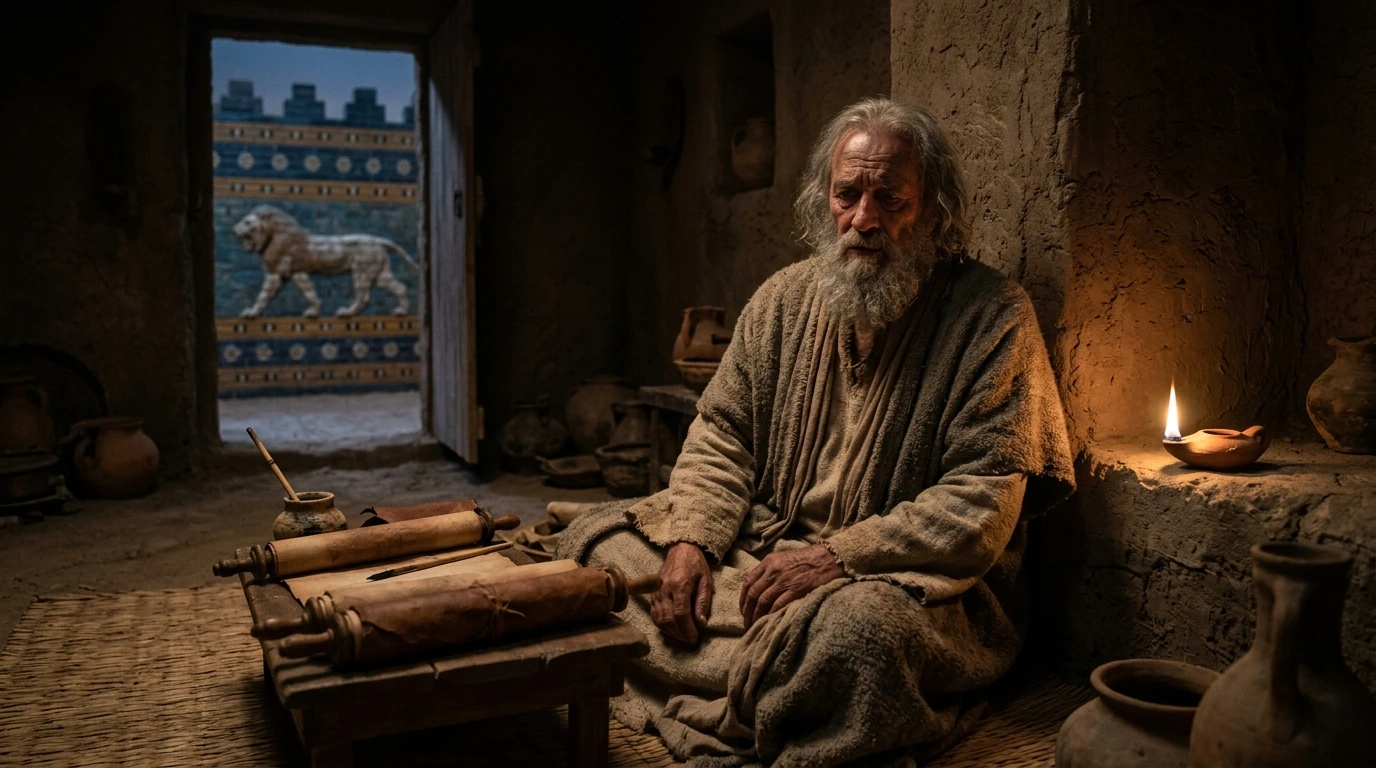
The exiles in Babylon viewed themselves as walking dead men. Jerusalem was incinerated; the Solomonic Temple was flattened; the Davidic monarchy was blind and imprisoned in Babylon; the covenant promises appeared null and void. They cried: "Abdah tikvatenu" ("Our hope is perished").
God’s answer was devastating to their despair:
- God does not wait for a spark of remaining human vitality.
- God specializes in working with bones that are already bleached dry.
- When human capacity reaches complete exhaustion, divine resurrection power takes the stage.
Pastoral Application: Speaking to the Dry Bones of Your Life
Ezekiel 37 provides a timeless operating protocol for every believer facing seemingly irreversible defeat:
1. Refuse to Deny the Reality of the Bones
God did not ask Ezekiel to practice positive thinking; He walked him around the perimeter of the bones until the prophet absorbed the full gravity of the devastation. Faith does not deny the severity of the crisis; faith looks the crisis in the face and anchors itself in God’s sovereignty.
2. Recognize That Structure Alone Is Insufficient
You can have organizational structure, financial budgets, church programs, and human discipline—yet remain dead. Without the sovereign wind of the Holy Spirit (ruach), human effort remains a well-dressed skeleton.
3. Open Your Mouth and Prophesy the Spoken Word
Ezekiel was not told to physically assemble the bones with his hands; he was told to prophesy. God’s supernatural power is released when human vocal cords agree with divine revelation. Speaking God’s living Word over financial drought, broken families, and paralyzed minds causes the bones to hear and live.
Continue Your Spiritual & Historical Study
Discover how prophetic authority and divine discipline transform personal crises:
👉 Explore The Solomon Code: Discipline and Provision
Learn the five royal laws of King Solomon to restore financial order and divine discipline.
🎁 Or Unlock The Sacred Keys Trilogy Master Collection ($7.99)
Claim all 3 volumes with daily spoken declarations and spiritual warfare protocols.
Frequently Asked Questions
Was the Valley of Dry Bones an actual physical resurrection or a vision?
Ezekiel 37 is an inspired prophetic vision (in the Spirit of the Lord) given to Ezekiel to illustrate the national, spiritual, and geopolitical resurrection of the house of Israel from the grave of the Babylonian exile, while also prefiguring the final physical resurrection of the dead at the end of the age.
What is the theological significance of the word "ruach"?
The Hebrew word ruach embodies breath, wind, and the Holy Spirit simultaneously. In Ezekiel 37, it emphasizes that physical forms are lifeless until activated by the direct, sovereign life-giving breath of God.
How does this passage connect to the New Testament?
In John 20:22, the risen Christ mirrored Ezekiel 37 and Genesis 2:7 when He breathed on His disciples and declared: "Receive the Holy Spirit." Pentecost (Acts 2) was the ultimate arrival of the "rushing mighty wind" that brought permanent life to the spiritual body of Christ.
Frequently Asked Questions
What do the dry bones represent in Ezekiel 37?
God explicitly states in Ezekiel 37:11 that the bones represent the "whole house of Israel" in exile, who believed their national and spiritual hope was completely dead after the destruction of Jerusalem.
Why did the bones rattle before receiving breath?
The vision reveals a systematic divine order: first the skeletal alignment, then ligaments and muscle tissue, and finally the sovereign impartation of God’s breath (ruach) to bring full vitality.
How can this vision be applied today?
It teaches that no situation is too dead for God’s resurrection power. When human ability is exhausted, speaking God’s promises in vocal faith invites the Holy Spirit to revive dead circumstances.
Related Research Dossiers
View all 120 articles →
Nathan Confronting David: 'You Are the Man!' (2 Samuel 12), The Royal Court, and Prophetic Courage

The Fall of Nineveh in Secular History: The Babylonian Chronicle, Cyaxares, and Diodorus Siculus
