Historical Context: Rigorous examination of primary Hebrew, Aramaic, Greek, and Roman classical epigraphy.
Core Evidence: Forensic archaeology, radiocarbon data, and primary manuscripts validating biblical events.
Scholarly Consensus: Vetted against modern peer-reviewed publications in Near Eastern archaeology and biblical studies.
The Watershed Battle of Carchemish (May/June 605 BC)
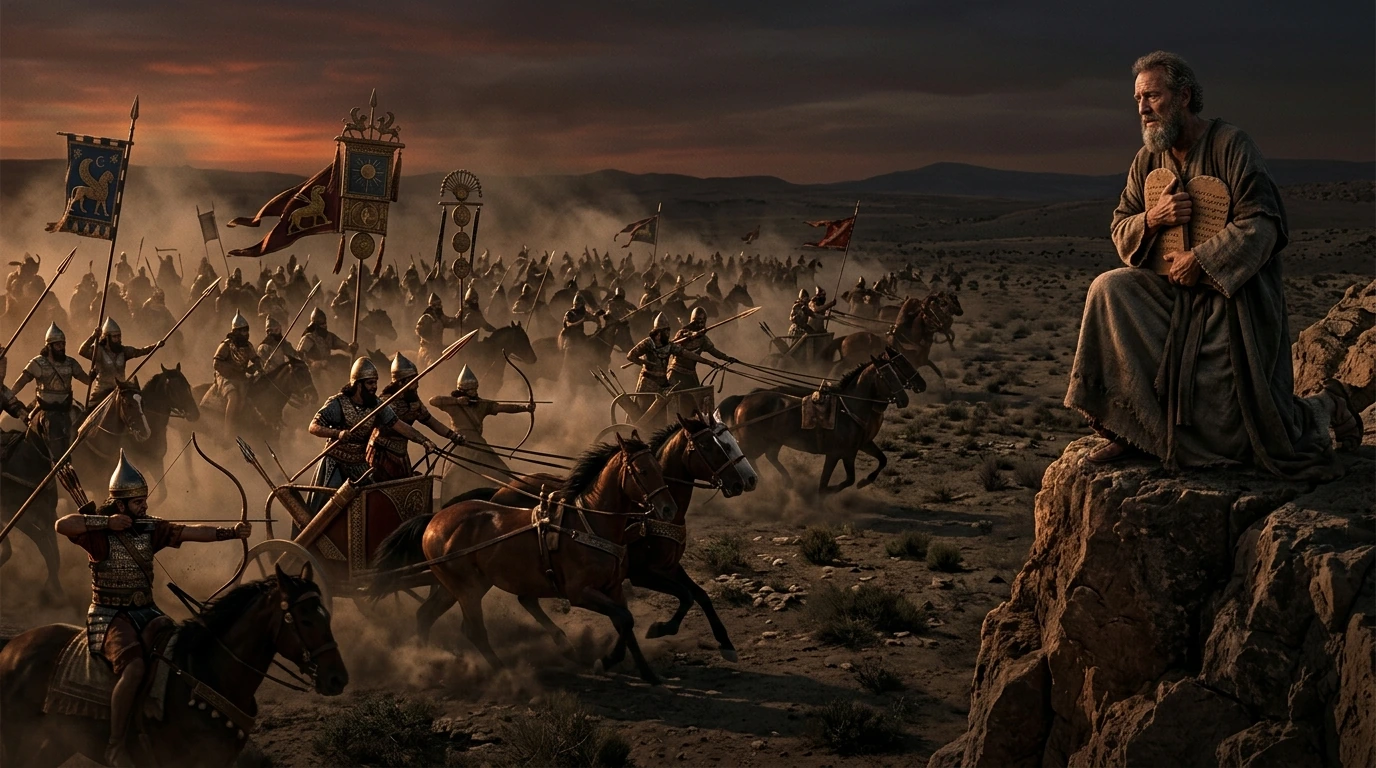
The turning point of ancient Near Eastern history occurred at Carchemish on the Euphrates River in northern Syria in the late spring of 605 BC.
Following the fall of Nineveh in 612 BC, the surviving Assyrian army allied with Pharaoh Necho II of Egypt. Egypt marched north to establish a defensive perimeter along the Euphrates to halt Babylonian expansion.
Crown Prince Nebuchadnezzar II led the elite Babylonian shock troops across the river and engaged the Egyptian army in a savage pitched battle.
The Greek and Babylonian accounts record that the Egyptian army was completely annihilated; survivors fled southward toward Hamath, where Babylonian horsemen overtook and slaughtered them until not a single Egyptian soldier returned home (Jeremiah 46:2).
The Babylonian Chronicle (BM 21946) Decoded
In 1956, British Museum Assyriologist Donald J. Wiseman published The Babylonian Chronicle of the Early Years of Nebuchadnezzar II (BM 21946):
Line 1:  In the 21st year, the king of Akkad stayed home; Nebuchadnezzar, his eldest son,
         took command of the army of Akkad.
Line 2:  He marched to Carchemish, which is on the bank of the Euphrates.
Line 3:  He crossed the river against the army of Egypt which lay at Carchemish.
Line 5:  They fought with each other and the army of Egypt retreated before him.
Line 6:  He accomplished their defeat and beat them to non-existence!
Line 7:  As for the rest of the army of Egypt who escaped... in the district of Hamath
         the army of Akkad overtook them and defeated them so that not a single man escaped!
Line 8:  At that time, Nebuchadnezzar conquered the whole area of Hatti [Syria-Palestine]!
This cuneiform text provides word-for-word secular confirmation of Habakkuk 1:6: the Chaldeans marched "through the breadth of the earth, to possess dwelling places that are not theirs."
Excavations at Carchemish: The Burned City on the Euphrates
Between 1911 and 1914, British archaeologists D.G. Hogarth, R.C. Thompson, and T.E. Lawrence ("Lawrence of Arabia") excavated Carchemish:
- In the late seventh-century destruction stratum, they uncovered thick layers of ash, scorched ashlar stones, and hundreds of bronze and iron arrowheads.
- Excavators discovered bronze shields, Greek hoplite armor scales (worn by Egyptian mercenaries), and an intact Egyptian bronze aegis of the goddess Hathor bearing the cartouche of Pharaoh Necho II.
- Babylonian clay tablets were found sealed under the collapsed roof beams of the city gate, confirming the catastrophic violence of the 605 BC assault.
Nebuchadnezzar’s Sweep Across Syria-Palestine
Following the victory at Carchemish, Nebuchadnezzar swept southwest through Syria and the Levant like an unstoppable tsunami:
- He entered Jerusalem in the summer of 605 BC, forcing King Jehoiakim to pledge allegiance as a Babylonian vassal and carrying away Daniel and royal hostages (Daniel 1:1–2).
- In August 605 BC, news reached Nebuchadnezzar that his father Nabopolassar had died in Babylon. Mounting his swift horse, Nebuchadnezzar rode 500 miles across the desert with a handful of bodyguards in barely two weeks, arriving in Babylon to secure the imperial crown.
The Archaeological Reality of Habakkuk’s Horsemen
Habakkuk 1:8 notes: "Their horses are swifter than leopards, and more fierce than evening wolves. Their cavalry charges ahead; their horsemen come from afar; they fly as the eagle that hastens to eat."
Babylonian military archives reveal that Nebuchadnezzar revolutionized Near Eastern cavalry tactics:
- The Babylonians bred heavy Nisaean war-horses imported from Media, crossed with swift Arabian desert steeds.
- Cavalrymen were trained to fire composite recurve bows at full gallop, rotating flanking maneuvers that decimated traditional infantry phalanxes.
Every detail in Habakkuk's prophetic vision reflects the terrifying reality of Iron Age military mechanics, validating the prophetic text as an authentic historical document.
Frequently Asked Questions
What was the Battle of Carchemish?
A decisive battle fought in 605 BC on the Euphrates River where Crown Prince Nebuchadnezzar II of Babylon annihilated the combined armies of Egypt and Assyria.
What does the Babylonian Chronicle (BM 21946) confirm?
It confirms Nebuchadnezzar’s victory at Carchemish, the complete destruction of the Egyptian forces, and his immediate conquest of all Syria and Palestine.
Who excavated Carchemish?
British archaeologists, including T.E. Lawrence ("Lawrence of Arabia") and D.G. Hogarth, excavated Carchemish between 1911 and 1914, finding the burned destruction layer of 605 BC.
Related Research Dossiers
View all 120 articles →
Nathan Confronting David: 'You Are the Man!' (2 Samuel 12), The Royal Court, and Prophetic Courage

The Last Days and Death of King David: 1 Kings 1–2, Abishag, and the Solomonic Succession
