Subject Scope: 3-Minute Quick Summary: How to Explain 1 John 5:7–8 and Modern Bible Translations in a Bible Study
Historical Context: Rigorous historical and theological examination within the field of Apologetics & Biblical Difficulties.
Primary Evidence: Forensic archaeology, textual preservation, and primary ancient manuscripts corroborating scriptural events.
Investigation Highlights: The 30-Second Elevator Pitch: Why Translations Differ • Timeline: How the Verse Entered the Bible (250 AD – 1611 AD) • Four Passages That Prove the Trinity Without 1 John 5:7
Scholarly Consensus: Vetted against peer-reviewed academic literature in biblical history, linguistics, and archaeology.
The 30-Second Elevator Pitch: Why Translations Differ
If someone in your church asks: "Why does my King James Bible have 'the Father, the Word, and the Holy Ghost' in 1 John 5:7, but modern Bibles like the ESV or NIV leave it out?" here is the exact 30-second answer:
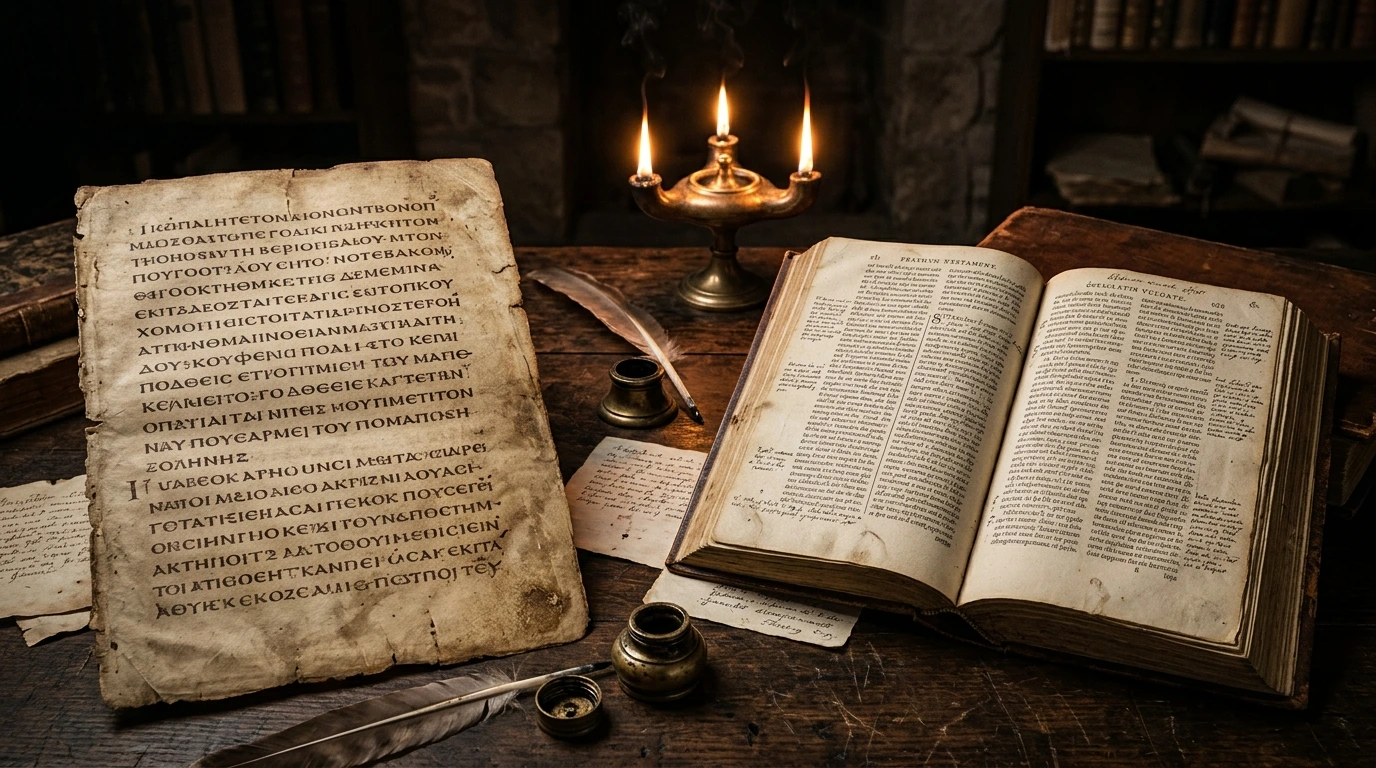
"Modern Bibles omit this phrase because it is absent from every Greek manuscript written during the first 1,400 years of church history. It started as an ancient Latin study note written in the margin of a Latin Bible, which copyists later accidentally blended into the main text. The King James translators included it because Erasmus reluctantly added it to his printed Greek text in 1522. Leaving it out doesn't hurt the Trinity—the Trinity is already proven by dozens of other undisputed scriptures throughout the New Testament!"
Timeline: How the Verse Entered the Bible (250 AD – 1611 AD)
[THE 1,400-YEAR JOURNEY OF 1 JOHN 5:7]

c. 95 AD: The Apostle John writes 1 John without the heavenly witnesses.
          Text reads: "There are three that testify: the Spirit, the water, and the blood."

c. 250 AD: Bishop Cyprian of Carthage writes a theological reflection interpreting
           the Spirit, water, and blood as symbols of the Father, Son, and Holy Spirit.

c. 385 AD: In Spain, Priscillian writes the heavenly witnesses directly into a Latin commentary.

c. 500–800 AD: Latin copyists in Spain and France begin copying this margin note into the
               main text of their Latin Vulgate Bibles.

1516 AD: Erasmus publishes the first printed Greek New Testament; he OMITS the verse because
         no Greek manuscript has it.

1522 AD: Under intense political pressure, Erasmus inserts the verse in his 3rd edition after
         a single 16th-century manuscript (Codex Montfortianus) is manufactured to force his hand.

1611 AD: The King James Version translates Erasmus' 1522 Greek text into English.

1881–Today: Thousands of ancient papyri and codices are discovered, confirming that the verse
            was never in the original Greek New Testament. Modern Bibles return to John's original text!
Four Passages That Prove the Trinity Without 1 John 5:7
You never need 1 John 5:7 to prove the Trinity. Scripture is filled with undeniable Trinitarian foundations:
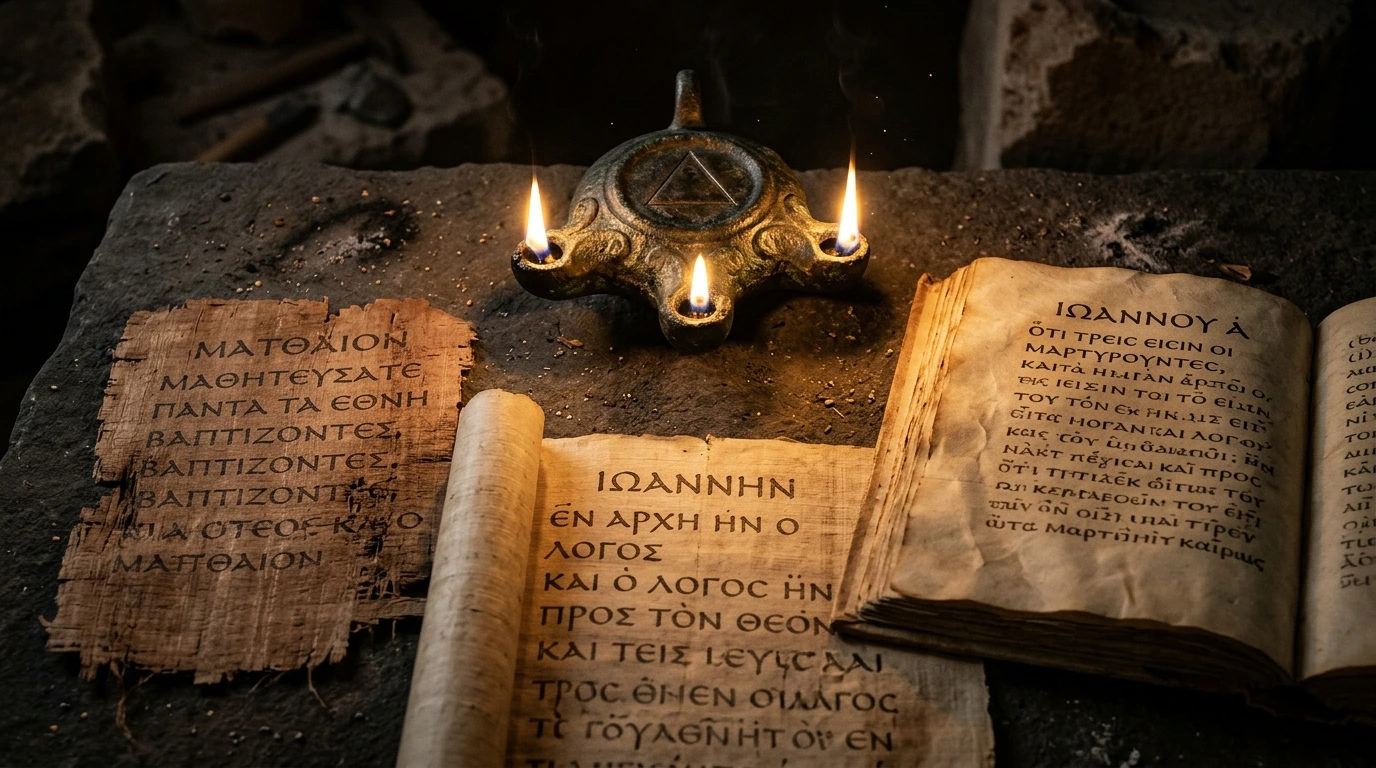
- The Great Commission (Matthew 28:19): "Baptizing them in the name [singular!] of the Father and of the Son and of the Holy Spirit." One single divine Name belongs equally to three distinct Persons.
- The Incarnation of the Word (John 1:1, 14): "In the beginning was the Word, and the Word was with God, and the Word was God... and the Word became flesh." Jesus is co-eternal with the Father and fully divine.
- The Apostolic Benediction (2 Corinthians 13:14): "The grace of the Lord Jesus Christ and the love of God and the fellowship of the Holy Spirit be with you all." A threefold blessing showing equal divine status and communion.
- The Deity of the Holy Spirit (Acts 5:3–4): Peter tells Ananias: "Why has Satan filled your heart to lie to the Holy Spirit?... You have not lied to man but to God." The Holy Spirit is not an abstract force; He is God.
Three Myths That Confuse Church Members
Myth 1: "Modern Bible publishers are secret Arians who hate the Trinity."
Fact: Translators of the ESV, CSB, NIV, and NASB are devout, conservative evangelical scholars who recite the Nicene Creed and defend the Trinity passionately. They omit the phrase out of deep reverence for the actual words God inspired the Apostle John to write.
Myth 2: "If we admit this verse wasn't original, people will lose faith in the Bible."
Fact: Total honesty builds lasting faith. When believers understand that 99.5% of the New Testament text is completely certain and that no Christian doctrine is altered by manuscript variants, their confidence in God's providential preservation is fortified.
Myth 3: "Erasmus promised he would insert it if a Greek manuscript was found."
Fact: While popular folklore claimed Erasmus made a rash bet, modern scholarship (led by Henk Jan de Jonge) has shown that Erasmus never made such a promise; he simply evaluated the newly produced Codex Montfortianus and inserted the clause to silence theological adversaries, while expressing his doubts in extensive footnotes.
How to Teach This to Your Small Group
- Open two Bibles side by side: Have one person read 1 John 5:7 in the KJV, and another read it in the ESV or NIV. Let them see the difference for themselves.
- Explain the Margin Note Principle: Compare it to writing a note in your study Bible today. If someone photocopied your notes into the text 500 years later, that’s exactly what happened in the Latin Vulgate.
- Celebrate God's Word: Point out that having over 5,800 Greek manuscripts allows us to identify and clean out late scribal additions with absolute forensic certainty.
Three-Tier Evidentiary Summary
+----------------------------------------------------------------------------------------------------+
|                  COMMA JOHANNEUM: 3-MINUTE EVIDENTIARY AUDIT                                       |
+====================================================================================================+
| TIER 1: EARLY MANUSCRIPTS                                                                          |
| - Zero Greek manuscripts have it for 1,400 years.                                                  |
| - 100% of early papyri and great uncials omit it.                                                  |
+----------------------------------------------------------------------------------------------------+
| TIER 2: PATRISTIC ATTESTATION                                                                      |
| - Never quoted during the Great Arian controversy (Athanasius / Nicaea).                           |
| - Preserved as a Latin marginal gloss in Spain and North Africa.                                   |
+----------------------------------------------------------------------------------------------------+
| TIER 3: THEOLOGICAL HARMONY                                                                        |
| - The Trinity is fully proven by Matthew 28:19, John 1:1, 2 Corinthians 13:14, and Acts 5:3–4.     |
| - Modern translations honor the original text of the Apostles.                                     |
+----------------------------------------------------------------------------------------------------+
Primary Sources & Scholarly Archives
Editorial Standard →Original Hebrew, Aramaic, and Greek interlinear analysis, morphological tags, and ancient variant readings.
Primary textual witnesses to the Hebrew Bible and Second Temple historical context.
Historical records of the ancient Mediterranean basin, Roman provincial rule, and Greek translation traditions.
Frequently Asked Questions
What should I say if someone accuses me of using a "corrupt modern Bible"?
Politely explain that modern translations rely on 2nd-to-4th century papyri and codices discovered centuries after 1611, ensuring we read the exact words John wrote. Reassure them that both versions teach the exact same Trinitarian doctrine.
Why does 1 John 5:7 still have the verse number 7 in modern Bibles?
Robert Estienne created the verse numbering system in 1551. Modern Bibles retain the traditional numbering to maintain universal concordances and reference systems, dividing the authentic text across verses 7 and 8.
Is there any danger that other verses in my Bible are fake?
No. With over 5,800 Greek manuscripts, biblical scholars have reconstructed the original text with 99.5% certainty. The few disputed verses are transparently footnoted in modern editions, altering no Christian doctrine.
Related Research Dossiers
View all 515 research dossiers →
How Do We Know the Bible Is Reliable? The Evidence of Quadratus of Athens (c. 124 AD), the First Christian Apologist

How Do We Know the Bible Is Reliable? The Alexamenos Graffito on the Palatine Hill (c. 200 AD)