Historical Context: Rigorous examination of primary Hebrew, Aramaic, Greek, and Roman classical epigraphy.
Core Evidence: Forensic archaeology, radiocarbon data, and primary manuscripts validating biblical events.
Scholarly Consensus: Vetted against modern peer-reviewed publications in Near Eastern archaeology and biblical studies.
The Enigmatic Curse on the Road from Bethany
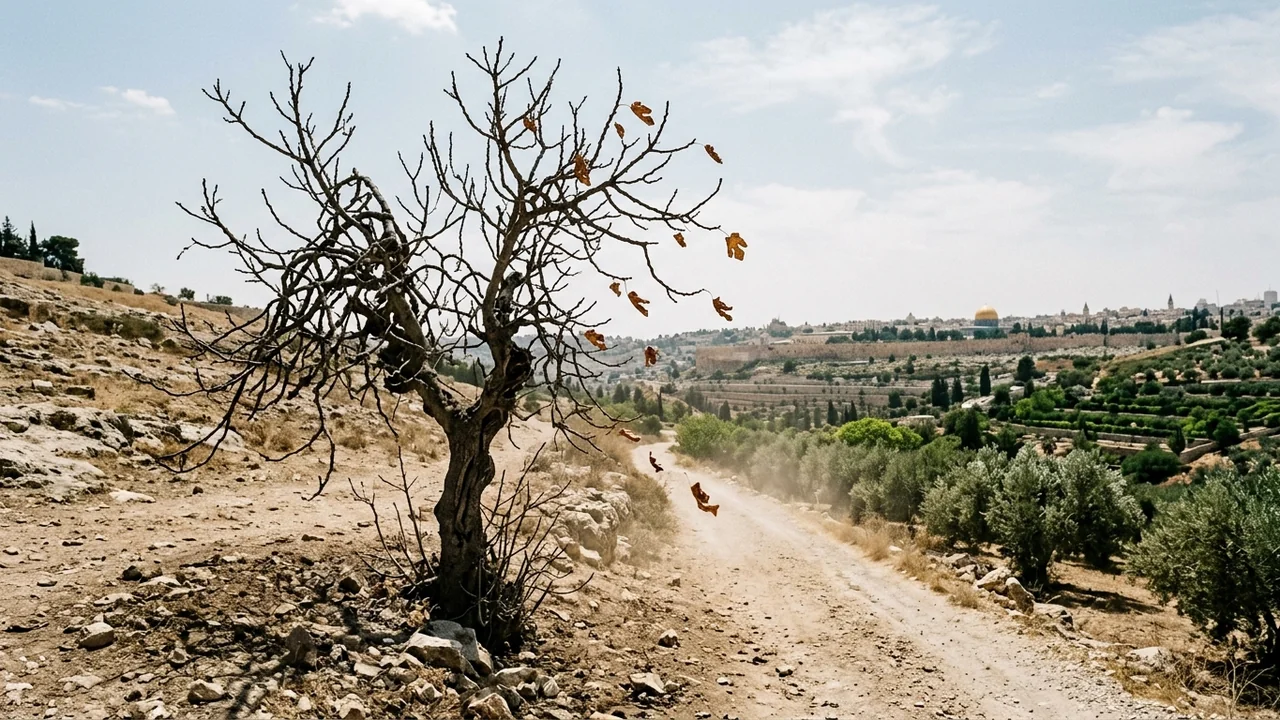
During Passion Week, in the early spring of 33 AD, Jesus of Nazareth was walking with his disciples along the eastern slope of the Mount of Olives, journeying from the village of Bethany toward the Temple Mount in Jerusalem:
"And on the morrow, when they were come from Bethany, he was hungry: And seeing a fig tree afar off having leaves, he came, if haply he might find any thing thereon: and when he came to it, he found nothing but leaves; for the time of figs was not yet. And Jesus answered and said unto it, 'No man eat fruit of thee hereafter for ever.' And his disciples heard it." (Mark 11:12–14)
The following morning, as the group passed by the exact same spot along the road, the disciples gasped in astonishment:
"And in the morning, as they passed by, they saw the fig tree dried up from the roots. And Peter calling to remembrance saith unto him, 'Master, behold, the fig tree which thou cursedst is withered away.'" (Mark 11:20–21)
For centuries, secular critics—most famously British philosopher Bertrand Russell in his essay Why I Am Not a Christian—pounced upon this narrative as an example of petulant, irrational anger. Russell argued that it was absurd and unjust for Jesus to curse a tree for lacking fruit when Mark himself explicitly states: "for the time of figs was not yet."
However, when examined through the lens of Middle Eastern botany, plant physiology, and ancient prophetic enactment, this objection evaporates. The withering of the fig tree is a masterpiece of botanical observation, rapid vascular desiccation, and solemn prophetic indictment.
The Botany of Ficus Carica: Leaves and the Early Paggim
To understand why Jesus approached the tree, one must understand the unique reproductive phenology of the common fig (Ficus carica), indigenous to the rocky limestone terraces of Judea:
                      [ANNUAL PHENOLOGY OF JUDEAN FICUS CARICA]
                                         │
         ┌───────────────────────────────┴───────────────────────────────┐
         ▼                                                               ▼
[EARLY SPRING (March–April / Nisan)]                           [LATE SUMMER (August–September)]
├── Appearance of green branch buds                            ├── Main harvest season of mature
├── Emergence of PAGGIM / TAQSH (Breba Crop)                   │   sweet summer figs (Te'enim)
│   (Small, edible green fruit buds that develop               └── Followed by autumn leaf drop
│    BEFORE or SIMULTANEOUSLY with leaves!)                        and winter dormancy.
└── If a tree has FULL GREEN LEAVES,
    it MUST bear abundant edible Paggim!
The Two Crops of the Fig Tree
In the Levant, a healthy fig tree produces two distinct crops each year:
- The Early Green Fig (Paggah / Taqsh): In late March and early April (the Passover season), before the main foliage opens, the tree produces small, edible green knobs on the previous year's wood. In biblical Hebrew, these are called paggim (Song of Solomon 2:13: "the fig tree putteth forth her green figs"), known in Arabic today as taqsh. While not as sweet as mature summer figs, paggim are juicy, rich in sugar, and eagerly consumed by hungry desert travelers and peasants.
- The Inseparable Link Between Leaves and Paggim: A fig tree produces its leaves and paggim simultaneously. If a fig tree is covered in full, flourishing green foliage, it is an absolute botanical guarantee that the tree is already laden with edible paggim!
- The Deception of Barrenness: When Jesus saw a tree covered in lush leaves from afar, the tree was advertising to every traveler that it was fertile. But upon closer inspection, it bore nothing but leaves—it was biologically sterile, a botanical hypocrite!
Why Was Jesus Hungry? Understanding Mark 11:13
Mark’s explanatory phrase—"for the time of figs was not yet"—has caused endless confusion for Western readers unfamiliar with Mediterranean agronomy.
Mark was not saying that figs were out of season. He was explaining to his Roman audience that it was not yet the season for the mature summer fig harvest (te'enim), which occurs in August and September.
Because it was only April (Passover season), no one expected sweet, purple, honey-ripe summer figs. But every traveler expected to find the edible green paggim that always accompany spring foliage! By having full leaves without a single paggah, the tree demonstrated that it would produce zero fruit for the entire year. It was a complete reproductive failure.
Plant Physiology: How Could a Tree Wither Overnight "From the Roots"?
In plant pathology and botanical vascular mechanics, killing a mature, deep-rooted hardwood fig tree normally requires weeks or months:
[NORMAL NATURAL ARBORICULTURAL MORTALITY]
   Severing bark / Ring-barking ──► Takes 3 to 6 months for canopy to die.
   Severe drought / Root cutting ──► Leaves yellow slowly, wilt, curl, and drop over weeks.

[THE MIRACLE IN MARK 11:20]
   Tree is cursed at ~8:00 AM on Monday morning.
   By ~7:00 AM Tuesday morning (Less than 24 Hours later):
   ├── Entire vascular cambium, xylem, and phloem completely desiccated
   ├── Roots completely dead and brittle beneath the soil
   └── "Dried up from the roots" (ek rhizōn exērammenēn) — TOTAL INSTANT DEATH!
The Vascular Anatomy of Desiccation
To cause a flourishing tree with high turgor pressure to wither completely within 24 hours "from the roots up" (ek rhizōn) requires a catastrophic, instant collapse of plant physiology:
- Cavitation of Xylem Vessels: Water travels from roots to leaves through microscopic xylem conduits under negative hydrostatic pressure (transpiration pull). Instant withering requires immediate, massive acoustic cavitation—the sudden vaporization of the water column throughout millions of micro-capillaries simultaneously.
- Cellular Plasmolysis: Every living plant cell relies on vacuolar turgor pressure to maintain structural rigidity. Instant desiccation demands that intracellular water be instantly extracted or osmotic membranes destroyed, causing complete plasmolysis and structural collapse of leaves and twigs.
- Root System Necrosis: Trees damaged from the top retain living, moist roots for months. But Mark explicitly notes that this tree was dried up from the roots (ek rhizōn). The subterranean root hairs, mycorrhizal networks, and taproots died first, cutting off all water transport in a microsecond!
Comparative Phenology: Growth Cycles of Fruit Trees in Judea
| Fruit Tree / Plant | Botanical Name | Early Spring (Passover / April) Status | Main Harvest Season | Agricultural & Biblical Significance |
|---|---|---|---|---|
| Common Fig Tree | Ficus carica | Emergence of leaves alongside edible green buds (Paggim) | August – October (Summer figs / Te'enim) | Primary symbol of national prosperity; cursed for having deceptive leaves without fruit. |
| Olive Tree | Olea europaea | Small white floral blossoms appear on branches | September – November (Autumn oil press) | Symbol of anointing, peace, and spiritual vitality (Romans 11). |
| Pomegranate | Punica granatum | Bright red tubular blossoms open on fresh shoots | August – October | Symbol of fertility and righteousness; motifs carved on Temple pillars. |
| Grape Vine | Vitis vinifera | Tender green grape clusters (Semadar) emerge with leaves | July – September (Vintage wine press) | Supreme symbol of Israel’s covenant relationship with God (Isaiah 5; John 15). |
| Date Palm | Phoenix dactylifera | Pollination of female flower clusters in desert oases | August – October | Sustenance of desert travelers; palm fronds waved during Triumphal Entry. |
The Parable in Action: The Temple Judgment Enactment
Why did Jesus perform this singular miracle of destruction? In all the four Gospels, this is the only miracle where Jesus uses His divine power to destroy a living thing.
The key lies in the literary and geographical structure of Mark 11, known to biblical scholars as a "Markan Sandwich" (an A-B-A intercalated narrative):
[A: Cursing of the Barren Fig Tree on Mount of Olives (Mark 11:12–14)]
                         │
                         ▼
[B: Cleansing of the Barren Temple in Jerusalem (Mark 11:15–19)]
   ├── Overturns moneychangers' tables; drives out corrupt merchants
   ├── "My house shall be called of all nations the house of prayer..."
   └── "...but ye have made it a den of thieves!"
                         │
                         ▼
[A': Discovery of the Withered Fig Tree Dried from the Roots (Mark 11:20–25)]
The Prophet Enacting Judgment
In the Old Testament, the prophets frequently performed living dramatic parables:
- Jeremiah smashed a clay jar at the Potsherd Gate to illustrate the destruction of Jerusalem (Jeremiah 19).
- Ezekiel lay on his side for 390 days to symbolize the siege of the city (Ezekiel 4).
The fig tree was Israel’s national emblem (Hosea 9:10; Joel 1:7). The lush green leaves represented the dazzling, majestic white-and-gold exterior of the Herodian Temple—bursting with ritual ceremonies, smoking altars, chanting choirs, and external religious pride.
Yet when the Lord of the Temple entered its courts, He searched for genuine spiritual fruit—justice, mercy, true faith, and love for God—and found nothing but empty leaves!
The withering of the fig tree was a terrifying prophetic sign: because the Temple system had degenerated into a sterile, hypocritical facade, its roots were severed. Less than forty years later, in 70 AD, the Roman legions of Titus pulverized the Temple down to the bedrock, fulfilling the curse upon the barren tree!
Discover the Full Botanical and Prophetic Dossiers
The withering of the fig tree is one of dozens of ancient biblical miracles where plant physiology, Mediterranean agronomy, and prophetic theology intersect. To examine complete phenological calendars of 1st-century Judean agriculture, botanical diagrams of Ficus carica pollination, and architectural models of the Herodian Temple:
👉 Discover Volume IV: Scientific Miracles & Ancient Prophecies ($2.99)
Features detailed plant physiological charts of vascular cavitation, historical translations of Markan structural sandwiches, and complete clinical autopsies of New Testament miracles.
Frequently Asked Questions
Why did Jesus curse the fig tree if "the time of figs was not yet"?
Mark was explaining to his Roman readers that it was not yet the season for the mature, sweet summer figs (te'enim), which ripen in August. However, in April (Passover), fig trees in Judea produce leaves simultaneously with early edible green figs called paggim (taqsh). A tree displaying full green foliage was advertising that it was fertile; finding no paggim proved it was completely barren.
How did the tree wither so quickly?
In plant physiology, drying up a mature fig tree within 24 hours "from the roots up" requires an instantaneous catastrophic failure of vascular mechanics: acoustic cavitation of xylem vessels, immediate cellular plasmolysis, and root system necrosis, cutting off all water transport in a microsecond.
Was Jesus acting out of petty anger?
No. The event was a deliberate, living prophetic parable. Throughout the Old Testament, the fig tree symbolized the nation of Israel (Hosea 9:10). The lush leaves symbolized the outward religious grandeur of the Jerusalem Temple, while the total absence of fruit symbolized its spiritual emptiness. Cursing the tree prophetically enacted the coming destruction of the Temple in 70 AD.
Where was the fig tree located?
The tree stood along the public road climbing the eastern slope of the Mount of Olives, between the village of Bethany (meaning "House of Unripe Figs") and the Temple Mount in Jerusalem.
Frequently Asked Questions
Why did Jesus curse the fig tree if "the time of figs was not yet"?
Mark was explaining to his Roman readers that it was not yet the season for the mature, sweet summer figs (te'enim), which ripen in August. However, in April (Passover), fig trees in Judea produce leaves simultaneously with early edible green figs called paggim (taqsh). A tree displaying full green foliage was advertising that it was fertile; finding no paggim proved it was completely barren.
How did the tree wither so quickly?
In plant physiology, drying up a mature fig tree within 24 hours "from the roots up" requires an instantaneous catastrophic failure of vascular mechanics: acoustic cavitation of xylem vessels, immediate cellular plasmolysis, and root system necrosis, cutting off all water transport in a microsecond.
Was Jesus acting out of petty anger?
No. The event was a deliberate, living prophetic parable. Throughout the Old Testament, the fig tree symbolized the nation of Israel (Hosea 9:10). The lush leaves symbolized the outward religious grandeur of the Jerusalem Temple, while the total absence of fruit symbolized its spiritual emptiness. Cursing the tree prophetically enacted the coming destruction of the Temple in 70 AD.
Where was the fig tree located?
The tree stood along the public road climbing the eastern slope of the Mount of Olives, between the village of Bethany (meaning "House of Unripe Figs") and the Temple Mount in Jerusalem.
Related Research Dossiers
View all 120 articles →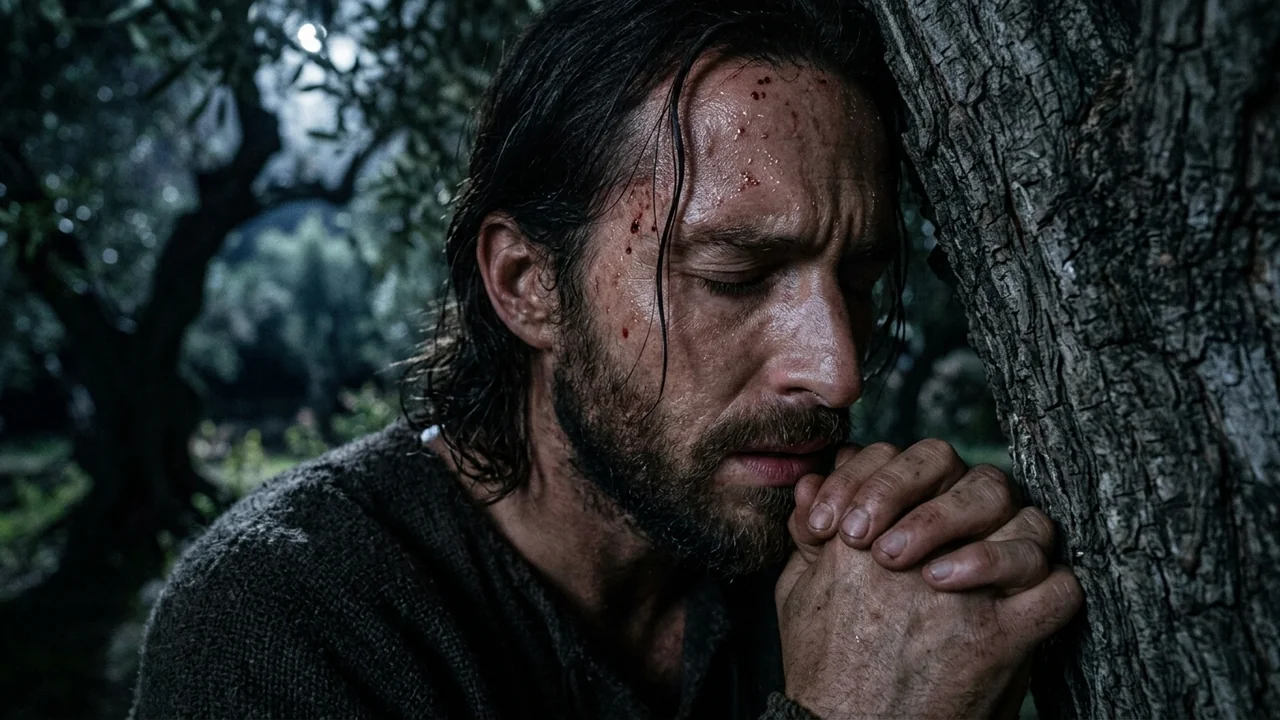
Hematidrosis in Gethsemane: What Causes Human Sweat Glands to Bleed Under Severe Anguish?

The Effusion of Blood and Water: Forensic Confirmation of Acute Cardiac Rupture on the Cross