Subject Scope: The Community Rule (1QS): Dual Messianism, Ritual Immersion, and Biblical Transmission at Qumran
Historical Context: Second Temple Jewish literature, Dead Sea Scrolls (Qumran caves), and early Christian papyrological codices.
Primary Evidence: Palaeographical dating, textual criticism, and bilingual Greek, Hebrew, and Coptic transmission lines.
Investigation Highlights: The Monastic Constitution: Cave 1 Discovery of 1QS • The Treatise on the Two Spirits (Columns 3–4) • Ritual Immersion (Miqva’ot) vs. Inward Repentance
Scholarly Consensus: Validated through critical editions of the Septuagint, Pseudepigrapha, and Nag Hammadi codices.
The Monastic Constitution: Cave 1 Discovery of 1QS
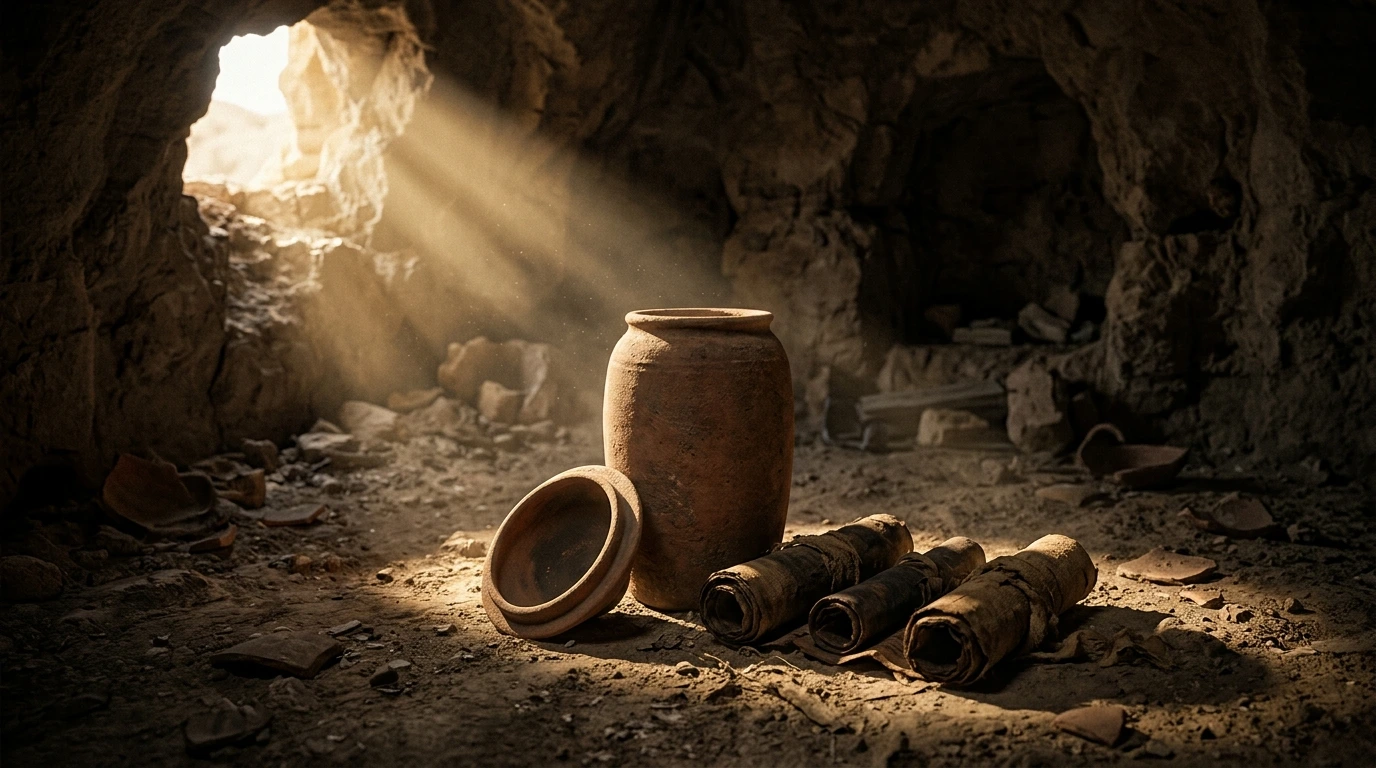
Among the foundational manuscripts recovered from Cave 1 in 1947, The Community Rule (cataloged as 1QS for Serek Ha-Yahad - סֶרֶךְ הַיַּחַד) stands as the supreme administrative, theological, and liturgical constitution of the Qumran movement.
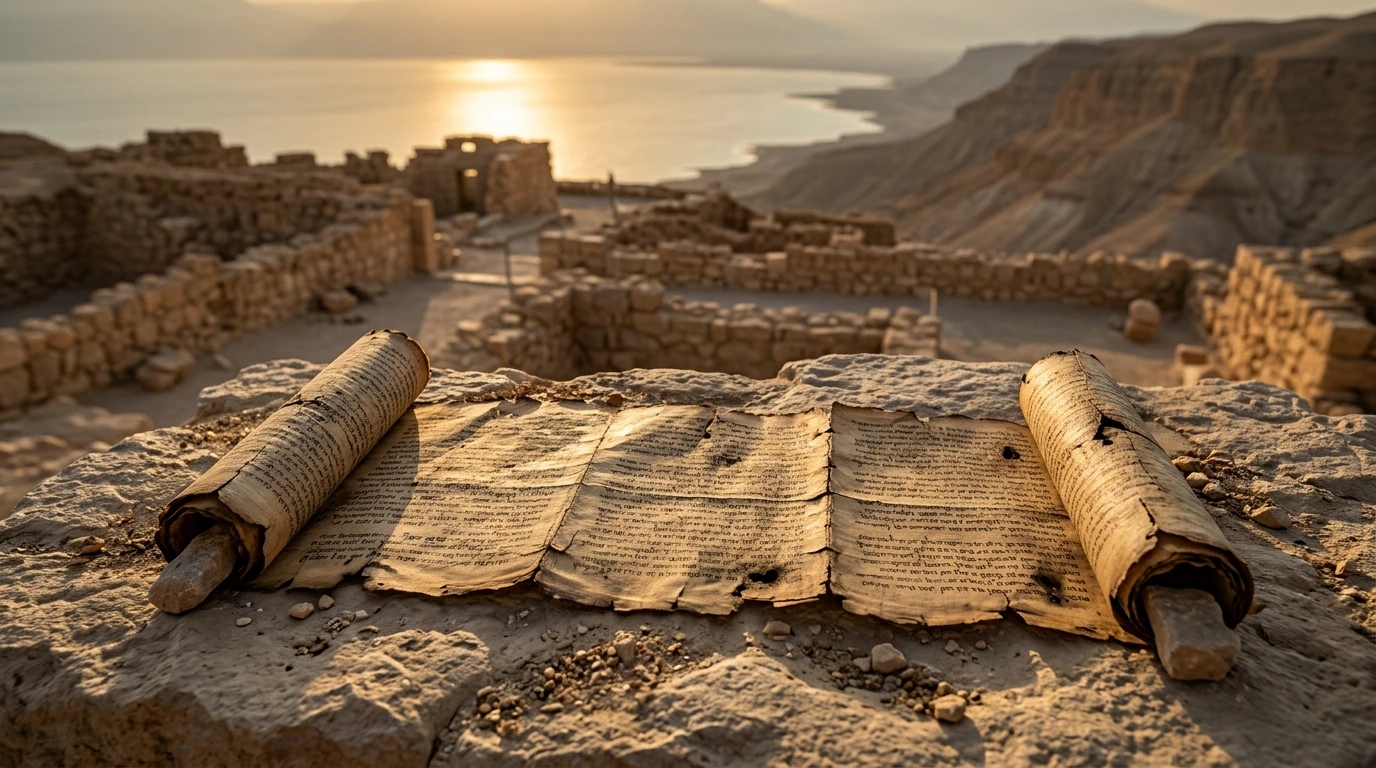
Measuring 1.86 meters in length, the scroll is composed of five parchment sheets containing 11 intact columns of dense Hebrew prose. Paleographical and radiocarbon analyses date the manuscript to c. 100–75 BC, with companion copies from Cave 4 (4QSᵃ through 4QSʲ) proving that the rule underwent active development and refinement across two centuries.
The scroll defined life within the Yahad (The Unity / The Community)—a radical separatist collective of Zadokite priests and devoted laymen who abandoned Jerusalem to "prepare in the wilderness the way of the Lord" (quoting Isaiah 40:3 in Column 8:14).
The Treatise on the Two Spirits (Columns 3–4)
The theological core of 1QS is found in Columns 3:13 through 4:26, known as The Treatise on the Two Spirits. It presents the most articulate system of cosmic dualism in ancient Jewish literature:
[COSMIC DUALISM IN 1QS, COLUMN 3:17–21]
"He created man to have dominion over the world, and He appointed for him
two spirits that he might walk by them until the appointed time of His visitation:
the spirits of TRUTH (Emet) and INJUSTICE (Avel).

In the hand of the Prince of Lights (Sar Urim) is the dominion of all
the Sons of Righteousness; in the ways of light they walk.
And in the hand of the Angel of Darkness (Mal'akh Choshekh) is all the dominion
of the Sons of Injustice; in the ways of darkness they walk."
According to 1QS:
- Every human soul is allotted a specific proportion of light and darkness.
- The cosmic struggle will rage until God's final apocalyptic intervention, when He will purge the earth with purifying fire and destroy the dominion of Belial forever.
- This theology directly parallels the language of the Apostle John: "The light shines in the darkness, and the darkness has not overcome it" (John 1:5) and "walk as children of light" (Ephesians 5:8).
Ritual Immersion (Miqva’ot) vs. Inward Repentance
Archaeological excavations at Khirbet Qumran revealed over 16 monumental stepped ritual immersion pools (miqva'ot), fed by an ingenious aqueduct system capturing winter flash floods from the Judean hills.
Skeptics often claim the Essenes were shallow ritualists obsessed with external washing. However, Column 3 of 1QS provides a profound corrective: physical water cannot cleanse a hypocritical heart:
"He cannot be cleansed by water of purification, nor sanctified by seas and rivers, nor washed clean with any water for ablution, so long as he rejects the precepts of God... For it is by the Spirit of the true counsel of God that the ways of man are atoned... and by the Holy Spirit that he is cleansed from all his iniquities." (1QS 3:4–9)
The scroll insists that water immersion is efficacious only if preceded by genuine ethical repentance and submission to the divine covenant—a theological stance identical to John the Baptist’s "baptism of repentance for the forgiveness of sins" in the Jordan River (Mark 1:4).
Dual Messianism: The Messiah of Aaron and the Messiah of Israel
One of the most consequential discoveries in 1QS is its explicit expectation of not one, but two distinct eschatological Messiahs:
[THE MESSIANIC PARADIGM OF 1QS, COLUMN 9:10–11]
"They shall be governed by the primitive precepts in which the men of the
Community began to be instructed, until there shall come:
1. THE PROPHET (Ha-Navi - Deuteronomy 18:18)
2. THE MESSIAH OF AARON (Mashiach Aharon - Priestly Ruler)
3. THE MESSIAH OF ISRAEL (Mashiach Yisrael - Davidic Military King)"
Why two Messiahs?
- The Messiah of Aaron (Priestly): A high priest from the line of Zadok who presides over the eschatological banquet, blesses the bread and new wine, and oversees the purified Temple liturgy.
- The Messiah of Israel (Kingly): A Davidic warrior-monarch who commands the armies of the Sons of Light in the final battle against Rome and the nations.
This dual expectation illuminates the revolutionary genius of the New Testament Epistle to the Hebrews, which synthesized both offices into the single person of Jesus Christ, who is simultaneously the Lion of the Tribe of Judah (Davidic King) and the Great High Priest after the order of Melchizedek (Hebrews 7).
Three-Tier Evidentiary Evaluation: Historical Validity
| Evidentiary Tier | Scientific & Field Proof | Theological Significance |
|---|---|---|
| Tier 1: Material Manuscript | 1QS parchment, 1.86 m, Cave 1, carbon-14 dated c. 100–75 BC; multiple Cave 4 copies. | Proves that complex monastic covenants operated in Judea a century before the ministry of Jesus. |
| Tier 2: Textual Stability | Preserves Isaiah 40:3 as the community's foundational motto, matching the Masoretic Text. | Confirms the antiquity of the prophetic text used to legitimize desert ascetical movements. |
| Tier 3: Theological Parallels | Dual spirits, communal meals, ritual baptism, and dual messianism parallel New Testament themes. | Provides the indispensable historical background for the preaching of John the Baptist and the early church. |
Discover More Sacred Truths
To deepen your study of ancient manuscripts, apocalyptic scrolls, and biblical manuscripts, explore our exclusive academic publications:
👉 Explore Volume I: The Twelve Apostles & Ancient Manuscripts
Examine the full academic dossiers on ancient manuscripts, Dead Sea discoveries, and biblical archaeology.
🎁 Or Unlock The Sacred Keys Trilogy Master Collection ($7.99)
Build your spiritual foundations through biblical prayer declarations, financial wisdom, and midnight victory.
Frequently Asked Questions
Was John the Baptist a member of the Qumran community?
While the New Testament never states that John was an Essene, the circumstantial parallels are striking: John lived in the Judean wilderness near Qumran (Luke 1:80), quoted the exact same motto (Isaiah 40:3), preached a baptism connecting repentance to water, and came from a priestly family (Luke 1:5). Most scholars conclude John may have spent time among the Essenes in his youth before receiving his prophetic call.
How did someone join the Qumran community according to 1QS?
Admission was an arduous three-year probationary process:
- Year One: Examination by the Overseer (Mevaqqer); candidate surrendered his lifestyle but kept his private property outside.
- Year Two: The novice was admitted to the purity of the community (Taharah) but barred from the communal meal (Mashqeh).
- Year Three: Full vote by the assembly; candidate took a fearful oath, handed over all personal wealth into the common treasury, and was admitted to the sacred banquet.
What penalties were enforced in the 1QS penal code?
The penal code (Cols. 6–7) prescribed severe punishments:
- Lying in matters of property: 1 year exclusion and a 25% reduction in daily food rations.
- Falling asleep in the assembly: 30 days penalty.
- Spitting in the middle of the assembly: 30 days penalty.
- Speaking out of turn: 10 days penalty.
- Slandering the community: permanent, irreversible expulsion.
Primary Sources & Scholarly Archives
Editorial Standard →Multi-spectral ultra-high-resolution digital archive of Qumran cave biblical and sectarian fragments.
Direct high-resolution digital photographs of ancient Greek New Testament papyri and uncial codices.
Critical academic editions, textual criticism guidelines, and ancient Near Eastern linguistic tools.
Frequently Asked Questions
Was John the Baptist a member of the Qumran community?
While direct membership is unproven, John operated in the same geographical wilderness, utilized the same key verse (Isaiah 40:3), and shared an identical theology connecting inward repentance to water immersion.
How did someone join the Qumran community according to 1QS?
Joining required a strict three-year probationary sequence involving rigorous moral testing, progressive access to ritual washings, and total surrender of personal property into the common pool.
What penalties were enforced in the 1QS penal code?
Infractions incurred ration reductions and temporary banishment; offenses ranged from interrupting a speaker (10 days) and falling asleep in session (30 days) to slandering the community (permanent expulsion).
Related Research Dossiers
View all 515 research dossiers →
The Damascus Document (CD & 4QD) Research Guide: Cairo Genizah, Museum Repositories, and Essential Passages

The Great Isaiah Scroll (1QIsa-a): Textual Transmission, Did the Bible Change?, and Isaiah 53