What was the Tyrian Shekel and why did the Temple require it?
The Tyrian Shekel was a silver tetradrachm minted in Tyre containing 94%–97% pure silver. The Temple authorities required it for the annual half-shekel temple tax (Exodus 30:13) because Roman coins had lower silver purity, despite the Tyrian coin bearing the pagan image of Melqart.
Ancient patristic witnesses, Second Temple manuscripts, and classical annals.
Stratigraphic digs, monumental epigraphy, and artifact forensics in the Levant.
Distinguishing canonical Scripture text from historical patristic traditions.
Subject Scope: The 30 Pieces of Silver: Why the Tyrian Shekel Was the Only Coin Accepted in the Temple
Historical Context: Primary Roman legal transcripts, imperial annals (Tacitus, Suetonius), and early patristic martyrologies.
Primary Evidence: Forensic trauma biomechanics, historical Roman execution praxis, and classical epigraphic inscriptions.
Investigation Highlights: The Transaction of Treason (Matthew 26:15) • The Numismatic Irony of the Tyrian Shekel • The Prophetic Mathematics of 30 Silver Pieces
Scholarly Consensus: Cross-referenced against Roman imperial records and Mediterranean early Christian archaeological sites.
The Transaction of Treason (Matthew 26:15)
Few historical transactions carry such chilling, dark infamy as the clandestine meeting between Judas Iscariot and the chief priests in the palace of Caiaphas:
- Matthew 26:14–15: 'Then one of the twelve, called Judas Iscariot, went unto the chief priests, And said unto them, What will ye give me, and I will deliver him unto you? And they covenanted with him for thirty pieces of silver.'
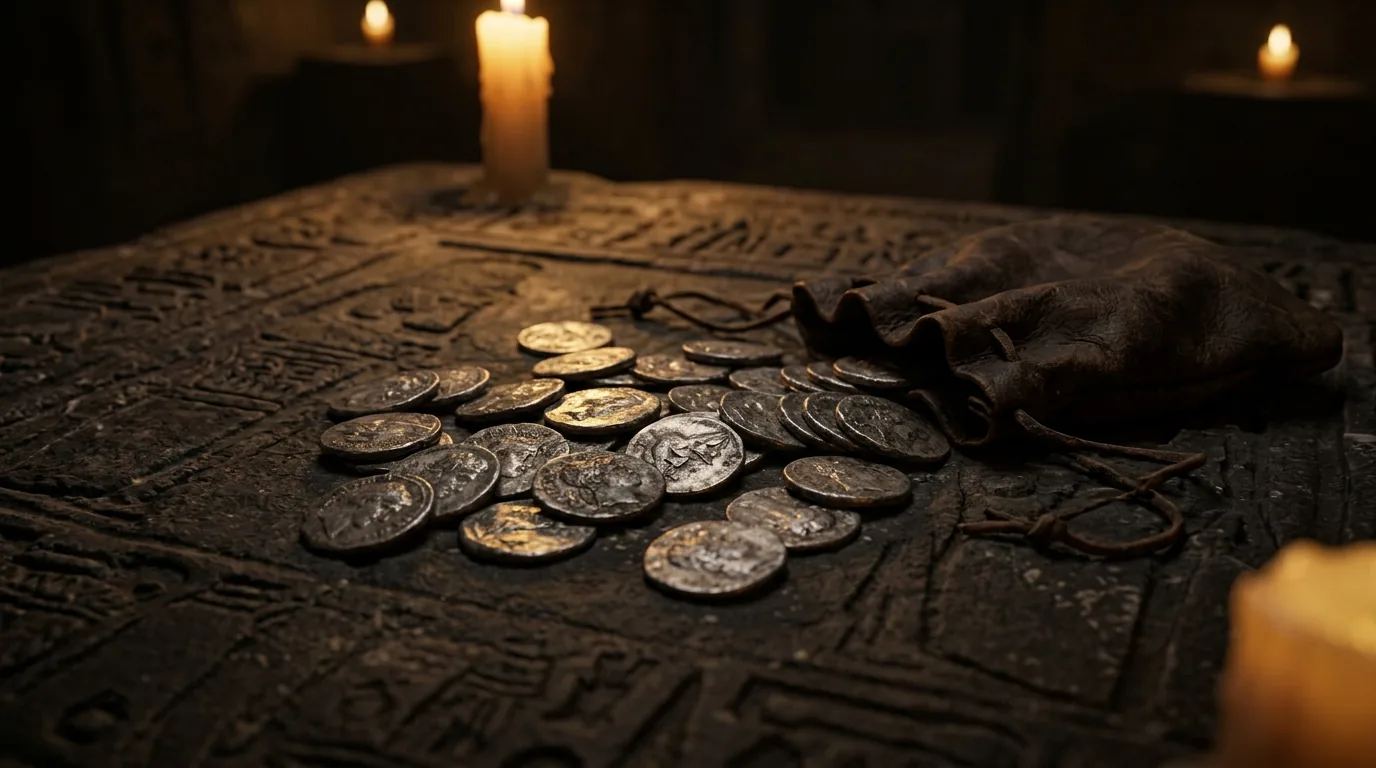
In modern pop culture, people envision thirty nondescript silver coins thrown across a table. Yet in first-century Judean numismatics and Temple administration, the identity of these coins was strictly governed by rigid religious law. The chief priests could not pay Judas out of their personal pockets with common Roman imperial denarii; they paid him from the sacred Corban treasury of the Second Temple.
Direct Historical Answer Box:
First-century numismatics and the Talmud (Bekhorot 8:7) confirm that the Tyrian Shekel (the silver tetradrachm of Tyre) was the only official currency accepted by the Jerusalem Temple Treasury for the annual sanctuary tax (Exodus 30:13) because of its unmatched 94% to 97% silver purity. Despite bearing the blasphemous pagan portrait of the Phoenician god Melqart on the obverse and the Ptolemaic eagle on the reverse, the Temple leadership compromised theological purity for metallurgical purity—weighing out 30 Tyrian shekels to betray the Son of God.
The coins that clinked in Judas' leather purse were the exact coins deposited into the temple treasury by faithful Jewish pilgrims as their annual sacred temple tax.
The Numismatic Irony of the Tyrian Shekel
Look at the astonishing hypocrisy of the Sanhedrin leadership:
- The Purity Paradox: Roman imperial silver denarii minted in Rome or Antioch contained between 80% and 85% silver, which temple priests rejected as debased. The Phoenician city of Tyre minted silver shekels (sheqel tzor) weighing approximately 14 grams of almost pure silver.
- The Second Commandment Violation: On the front of every Tyrian shekel was the crowned, bearded portrait of Melqart (the Phoenician god Baal, worshiped as Hercules). On the reverse was a majestic eagle standing on a ship's prow with the Greek inscription: TYROU HIERAS KAI ASYLOU ('Of Tyre the holy and inviolable city').
- The Hypocrisy of the Moneychangers: The Sadducees stationed moneychangers in the Court of the Gentiles to force pilgrims to exchange their everyday Roman currency for Tyrian shekels at an exorbitant commission.
The priests who condemned Jesus for alleged blasphemy had no moral qualms about filling the Holy of Holies treasury with coins bearing the image of a pagan fertility god—and then using that exact money to hire a traitor.
The Prophetic Mathematics of 30 Silver Pieces
Why exactly thirty pieces of silver? The number was not a random negotiation; it was a devastating covenant statement:
1. The Value of a Gored Slave (Exodus 21:32)
Under the Mosaic Law, if an ox gored a male or female slave to death, the owner of the ox was legally required to pay thirty silver shekels to the slave's master as compensation. By offering Judas thirty pieces of silver, the Sanhedrin sent a deliberate insult: they valued the King of kings as the price of a disposable, gored slave.
2. The Prophetic Drama of Zechariah 11:12–13
Five centuries before Calvary, the prophet Zechariah acted out an eerie prophetic scene:
- Zechariah 11:12–13: 'So they weighed for my price thirty pieces of silver. And the Lord said unto me, Cast it unto the potter: a goodly price that I was prised at of them. And I took the thirty pieces of silver, and cast them to the potter in the house of the Lord.'
Look at the extraordinary precision of Zechariah's prophecy:
- The exact price: 30 pieces of silver.
- The location: Cast down in the house of the Lord (the Temple).
- The final destination: Given to the potter to buy the potter's field (Hakeldama — Matthew 27:3–7).
Human betrayal operated under the absolute, sovereign foreknowledge of God.
The 3-Step Protocol for Evaluating Kingdom Value
To guard your heart against the spirit of Judas:
1. Never Trade Eternal Calling for Temporary Silver
Judas walked with Jesus for three years. He saw dead men raised, blind eyes opened, and storms quieted. Yet when offended by Christ's refusal to launch a political rebellion, he traded the Son of God for thirty days' wages of manual labor. Guard your heart against selling out your integrity for short-term financial relief.
2. Recognize That Ill-Gotten Gain Burns the Soul
In Matthew 27:3, Judas was seized with remorse, brought the thirty coins back to the priests, and screamed: 'I have sinned in that I have betrayed the innocent blood.' The money that seemed so desirable on Tuesday felt like burning coals in his hands on Friday. Money acquired through deceit, compromise, or betrayal brings zero lasting satisfaction.
3. Celebrate Your Price in Christ
The world valued Jesus at thirty silver shekels. But 1 Peter 1:18–19 declares the price God paid to redeem your soul: 'Not with corruptible things, as silver and gold... But with the precious blood of Christ, as of a lamb without blemish and without spot.' You are of infinite worth in the eyes of heaven.
Spoken Prayer Against Greed and Betrayal
Proclaim this prayer of covenant fidelity:
"Lord Jesus Christ, True Shepherd of My Soul, You were priced at thirty pieces of silver—the wage of a gored slave—so that I could be redeemed as a joint-heir of heaven. I worship You for Your humble, sacrificial love.
Tonight, I examine my heart. Search me, O God, and know my thoughts. Uproot every seed of compromise, greed, and discontentment. Deliver me from the spirit of Judas that trades eternal treasure for temporary silver. Keep my eyes fixed upon Your cross, establish my home in unshakeable integrity, and let my life be a living sacrifice of praise to You. In Your holy name, Amen."
Forensic Medicine & Scientific Inquests
Contemporary clinical pathologists and forensic medical examiners analyzing traumatic biomechanics and physical phenomena in Scripture. Each investigation in this pillar is corroborated by primary classical manuscripts, epigraphy, and peer-reviewed historical forensics.
Pillar Dossiers in this Corpus
The Death of King Herod Agrippa I: First-Century Medical Accounts in Acts and Josephus
9 min read · Verified Primary DossierHematidrosis: The Medical Science Behind Jesus Sweating Blood in Gethsemane
10 min read · Verified Primary DossierThe Effusion of Blood and Water: Forensic Confirmation of Acute Cardiac Rupture on the Cross
15 min read · Verified Primary DossierThe Forensic Truth About Roman Scourging: Why Flagrum Whips Were Lethal Before the Cross
14 min read · Verified Primary DossierThe Unwritten Gospel: Volume IV — Scientific Miracles
Modern medical forensics analyzing microvascular hemorrhage, physiological asphyxiation, and geo-physical events in Scripture.
Primary Sources & Scholarly Archives
Editorial Standard →Primary source corpus including Tacitus (Annales), Suetonius, and early Roman provincial administrative records.
Complete verified English translations of Eusebius Pamphili, Clement of Rome, Polycarp, and Tertullian.
Subterranean Roman necropolis documentation, epigraphic graffiti, and early Christian funerary stelae.
Frequently Asked Questions
What was the Tyrian Shekel and why did the Temple require it?
The Tyrian Shekel was a silver tetradrachm minted in Tyre containing 94%–97% pure silver. The Temple authorities required it for the annual half-shekel temple tax (Exodus 30:13) because Roman coins had lower silver purity, despite the Tyrian coin bearing the pagan image of Melqart.
How much would 30 pieces of silver be worth today?
Thirty silver Tyrian shekels contained approximately 13.5 ounces of pure silver (worth about $400 in raw metal bullion today). In first-century purchasing power, thirty shekels equaled approximately 120 days' wages for an agricultural laborer (about $15,000–$20,000 in modern purchasing value)—the legal price of an indentured slave in Exodus 21:32.
What happened to the 30 coins after Judas threw them down?
According to Matthew 27:6–7, the chief priests took the coins from the Temple sanctuary floor and, determining that it was unlawful to put 'blood money' back into the treasury, used them to purchase the Potter's Field (Hakeldama) to bury foreigners, fulfilling Zechariah 11:13.
Numismatic & Forensic Gospel Resources {#numismatic-gospel-resources}
Explore the comprehensive library of forensic archaeological and numismatic investigations:- Discover all four volumes of forensic biblical evidence in The Unwritten Gospel: 4-Volume Master Bundle ($9.00).
- Investigate 40 examined historical challenges in Is That Really in the Bible? ($9.00).
- For the full set of digital study guides, explore The Sacred Keys Trilogy Master Bundle ($7.99).
Related Research Dossiers
View all 568 research dossiers →
The Death of King Herod Agrippa I: First-Century Medical Accounts in Acts and Josephus

Hematidrosis: The Medical Science Behind Jesus Sweating Blood in Gethsemane