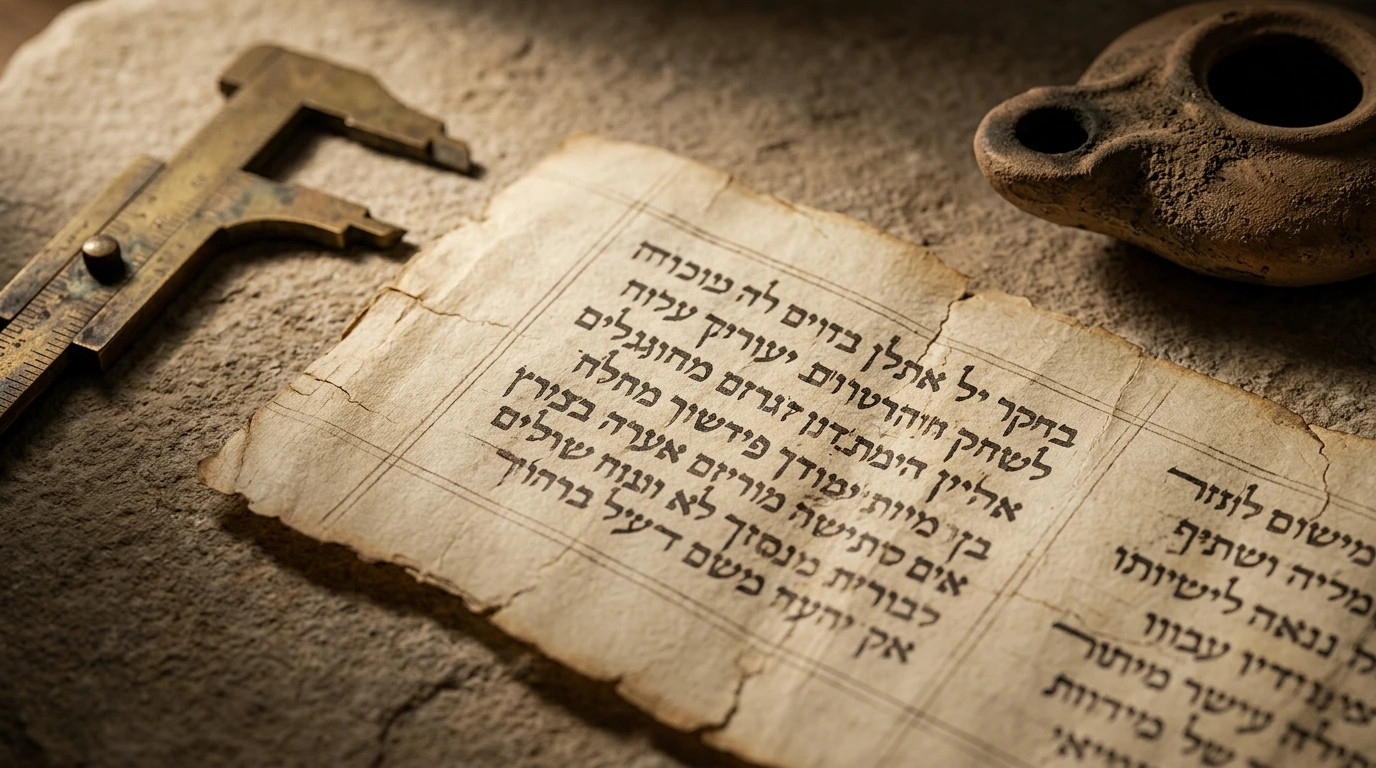
Historical Context: Rigorous examination of primary Hebrew, Aramaic, Greek, and Roman classical epigraphy.
Core Evidence: Forensic archaeology, radiocarbon data, and primary manuscripts validating biblical events.
Scholarly Consensus: Vetted against modern peer-reviewed publications in Near Eastern archaeology and biblical studies.
The World’s Oldest New Testament Manuscript: Size, Discovery, and Date
Preserved in the John Rylands Research Institute and Library in Manchester, England (cataloged as P. Rylands Greek 457), lies the most famous fragment of papyrus in biblical scholarship: Papyrus 𝔓52.
Despite its monumental historical weight, the physical artifact is astonishingly small:
- Dimensions: A mere 8.9 cm by 6.0 cm (3.5 x 2.4 inches)—no larger than a modern credit card.
- Material: Fibers of the Nile papyrus reed (Cyperus papyrus).
- Format: Written on both sides (recto and verso), proving beyond doubt that it originated from a bound book (codex) rather than an unrolled scroll.
Discovery and Decipherment
The scrap was acquired in 1920 on the Egyptian antiquities market by British Egyptologist Bernard Grenfell. For fifteen years, it lay uncataloged among hundreds of miscellaneous Greek and Coptic papyri in Manchester.
In 1934, young classical scholar Colin H. Roberts was sorting through the library's Greek papyri collection when he recognized Greek phrases from the trial of Jesus.
Roberts immediately consulted the world's leading papyrologists—including Sir Frederic Kenyon, Ulrich Wilcken, and Wilhelm Schubart. Their unanimous forensic verdict dated the handwriting (ductus) to the first half of the 2nd century AD, c. 117–138 AD (during the reign of Roman Emperor Hadrian).
[ARTIFACT METADATA: PAPYRUS 𝔓52]
Repository: The John Rylands Library, Manchester (Gr. P. 457)
Provenance: Oxyrhynchus or the Fayum oasis, Egypt
Paleographical Handwriting: Hadriano-Antonine severe literary hand
Lines per Page: Reconstructed at 18 lines per page
Date of Production: c. 125 AD (± 25 years)
Text Preserved: Gospel of John 18:31–33 (front), 18:37–38 (back)
The Textual Content: John 18:31–33 and 18:37–38
The fragment preserves portions of seven lines on each side, capturing the dramatic climax of Jesus' interrogation by the Roman governor Pontius Pilate:
Recto (Front Side - John 18:31–33)
The Jewish leaders explain why they brought Jesus to the Roman praetorium:
[GREEK TRANSCRIPTION: RECTO]
...ΟΙ ΙΟΥΔΑΙ[ΟΙ ΗΜΙΝ ΟΥΚ ΕΞΕΣΤΙΝ] (The Jews said, "To us it is not lawful)
[ΑΠΟΚΤΕΙΝΑΙ] ΟΥΔΕΝΑ ΙΝΑ Ο [ΛΟΓΟΣ ΤΟΥ ΙΗΣΟΥ] (to kill anyone," so that the word of Jesus)
[ΠΛΗΡΩΘΗ Ο]Ν ΕΙΠΕΝ ΣΗΜΑΙ[ΝΩΝ ΠΟΙΩ ΘΑΝΑΤΩ] (might be fulfilled which He spoke indicating what death)
[ΗΜΕΛΛΕΝ Α]ΠΟΘΝΗΣΚΕΙΝ [ΕΙΣΗΛΘΕΝ ΟΥΝ] (He was about to die. Entered then)
[ΠΑΛΙΝ ΕΙΣ] ΤΟ ΠΡΑΙΤΩΡΙ[ΟΝ Ο ΠΙΛΑΤΟΣ] (again into the Praetorium Pilate)
[ΚΑΙ ΕΦΩΝ]ΗΣΕΝ ΤΟΝ ΙΗΣ[ΟΥΝ ΚΑΙ ΕΙΠΕΝ] (and called Jesus and said)
[ΑΥΤΩ ΣΥ Ε]Ι Ο ΒΑΣΙΛΕΥ[Σ ΤΩΝ ΙΟΥΔΑΙΩΝ] (to Him, "Are you the King of the Jews?")
Verso (Back Side - John 18:37–38)
Jesus testifies to the nature of His divine kingdom, concluding with Pilate's immortal cynical retort:
[GREEK TRANSCRIPTION: VERSO]
[ΒΑΣΙΛΕΥΣ ΕΙΜΙ ΕΓΩ ΕΙΣ] ΤΟΥΤΟ ΓΕ[ΓΕΝΝΗΜΑΙ] ("A King I am. For this I have been born,)
[ΚΑΙ ΕΙΣ ΤΟΥΤΟ ΕΛΗΛ]ΥΘΑ ΕΙΣ ΤΟΝ Κ[ΟΣΜΟΝ] (and for this I have come into the world,)
[ΙΝΑ ΜΑΡΤΥΡΗΣΩ] ΤΗ ΑΛΗΘΕΙΑ Π[ΑΣ Ο ΩΝ] (that I should bear witness to the truth. Everyone who is)
[ΕΚ ΤΗΣ ΑΛΗΘΕ]ΙΑΣ ΑΚΟΥΕΙ ΜΟΥ [ΤΗΣ ΦΩΝΗΣ] (of the truth hears my voice.")
[ΛΕΓΕΙ ΑΥΤΩ] Ο ΠΙΛΑΤΟΣ ΤΙ [ΕΣΤΙΝ ΑΛΗΘΕΙΑ] (Says to Him Pilate, "What is truth?")
[ΚΑΙ ΤΟΥΤΟ] ΕΙΠΩΝ ΠΑΛΙΝ [ΕΞΗΛΘΕΝ] (And this having said, again he went out)
[ΠΡΟΣ ΤΟΥΣ] ΙΟΥΔΑΙΟΥ[Σ...] (to the Jews...)
How P52 Smashed the Tübingen Myth of a Late 2nd-Century John
In the mid-19th century, radical theological skepticism led by Ferdinand Christian Baur and the Tübingen School argued that the fourth Gospel was not written by the apostle John or any eyewitness.
Baur posited that the Gospel of John was a late 2nd-century theological romance:
- They argued John was written no earlier than 160–170 AD in Asia Minor to support early Catholic orthodoxy against Gnosticism.
- Therefore, the fourth Gospel possessed zero historical or biographical value for the life of Jesus.
The Archaeological Verdict of 𝔓52
The publication of 𝔓52 in 1935 completely demolished this hypothesis:
- Dating of the Copy: The physical manuscript was penned in Egypt around 125 AD.
- Geographical Transmission Time: The Gospel was originally authored in Ephesus (Asia Minor).
- The Necessary Time Lag: For a manuscript to be written in Ephesus, gain apostolic authority, be hand-copied, transported hundreds of miles across the Mediterranean to Egypt, copied again in provincial Egypt, and circulated to the Fayum oasis, a time window of at least 20 to 30 years is required.
This physical artifact demands that the Gospel of John was written and circulating before the close of the 1st century (c. 90 AD), perfectly aligning with early church fathers like Irenaeus of Lyon who stated that John wrote his Gospel in Ephesus during his old age.
Forensic Codicology: The Revolutionary Codex Format
Beyond dating the Gospel, 𝔓52 provides invaluable evidence for the technological revolution championed by the Early Church: The Codex.
In the Greco-Roman world of the early 2nd century, 99% of literary texts were written on scrolls (volumina). Only rough business accounts or student tablets used bound leaves.
Yet, 𝔓52 has writing on both the recto (horizontal fibers) and verso (vertical fibers). Mathematical reconstruction of the text proves:
- The original codex page measured approximately 21 cm high by 20 cm wide.
- The entire Gospel of John filled approximately 130 pages (65 leaves / folios).
While pagan writers resisted the codex until the 4th century, Christians adopted the bound book immediately. Why? A codex was far cheaper, portable, allowed instant cross-referencing between passages, and could hold all four Gospels in a single, compact volume.
Three-Tier Evidentiary Evaluation: Historical Validity
| Evidentiary Tier | Scientific Data | Textual Conclusion |
|---|---|---|
| Tier 1: Physical Manuscript | 𝔓52 preserved at John Rylands Library; papyrus fibers, two-sided ink script. | Oldest known New Testament artifact in existence, securely anchored to c. 125 AD. |
| Tier 2: Textual Stability | Verbatim agreement with the standard Byzantine and Alexandrian Greek texttypes. | Confirms that not a single syllable of John 18:31–38 changed over 1,900 years of copying. |
| Tier 3: Historical Impact | Refutation of the 19th-century Tübingen late-date school (Baur). | Restores the fourth Gospel to its rightful 1st-century apostolic eyewitness milieu. |
Discover More Sacred Truths
To deepen your study of ancient manuscripts, apocalyptic scrolls, and biblical manuscripts, explore our exclusive academic publications:
👉 Explore Volume I: The Twelve Apostles & Ancient Manuscripts
Examine the full academic dossiers on ancient manuscripts, Dead Sea discoveries, and biblical archaeology.
🎁 Or Unlock The Sacred Keys Trilogy Master Collection ($7.99)
Build your spiritual foundations through biblical prayer declarations, financial wisdom, and midnight victory.
Frequently Asked Questions
Could P52 date to the late 2nd or early 3rd century?
In recent decades, a few revisionist scholars (such as Brent Nongbri) have suggested wider date ranges (c. 125–200 AD) because handwriting styles can span decades. However, leading paleographers (like Pasquale Orsini, Willy Clarysse, and Peter Head) maintain that 𝔓52 shares its closest morphological affinities with Hadrianic and Antonine documentary papyri dated securely between 110 and 140 AD.
How do we know P52 was part of a codex and not a scroll?
On a scroll, only one side of the papyrus was written upon (with very rare exceptions called opisthographs). Furthermore, the text on the front of 𝔓52 directly matches the mathematical distance to the text on the back if written on the reverse side of a standard codex leaf of 18 lines.
Where was P52 discovered in Egypt?
The exact excavation locus was unrecorded because it was purchased on the antiquities market by Bernard Grenfell in 1920. However, papyrological internal evidence links it to the Fayum oasis or Oxyrhynchus in Middle Egypt, regions where desert dry sand preserved thousands of ancient papyri.
Frequently Asked Questions
Could P52 date to the late 2nd or early 3rd century?
While some modern scholars note handwriting styles can persist, comparative paleography against dated Roman administrative papyri strongly anchors 𝔓52 to c. 117–138 AD.
How do we know P52 was part of a codex and not a scroll?
It has text penned on both sides (recto and verso), and line-length reconstruction confirms it was a single leaf from an 18-line bound codex.
Where was P52 discovered in Egypt?
It was purchased by Bernard Grenfell in Egypt in 1920 and traced to either Oxyrhynchus or the Fayum oasis, where arid desert sand preserved ancient papyri.
Related Research Dossiers
View all 120 articles →
The "Son of God" Scroll (4Q246): The Aramaic Apocalypse, Luke 1:32–35, and Messianic Titles Before the New Testament

The Temple Scroll (11Q19 / 11QT): Textual Transmission, Divine Architecture, and Did the Bible Change?