What if my child resists giving up their tablet for coloring?
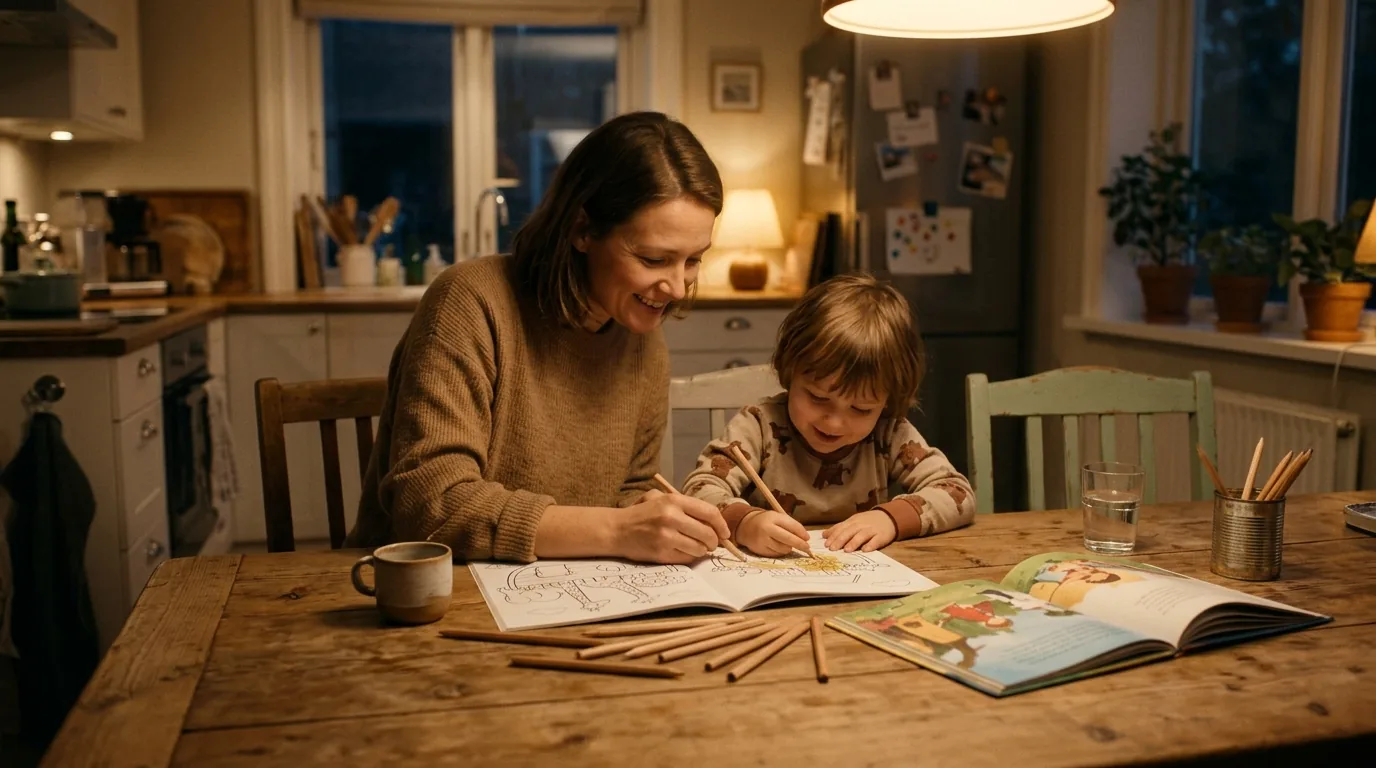
Do not frame coloring as a punishment or deprivation. Introduce it positively as a special evening ritual: 'Tonight is our family art night at the kitchen table.' Start with just 15 minutes of joint coloring with fun, vibrant coloring pages of exciting Bible stories (Daniel in the lions' den, Samson, the parting of the Red Sea) and sit beside them with warm tea or cocoa.
Ancient patristic witnesses, Second Temple manuscripts, and classical annals.
Stratigraphic digs, monumental epigraphy, and artifact forensics in the Levant.
Distinguishing canonical Scripture text from historical patristic traditions.
Subject Scope: How to Replace 30 Minutes of Screen Time With Joyful Bible Coloring Tonight
Historical Context: Rigorous historical and theological examination within the field of Christian Family, Kids & Biblical Play.
Primary Evidence: Forensic archaeology, textual preservation, and primary ancient manuscripts corroborating scriptural events.
Investigation Highlights: The Neurobiology of the Post-Tablet Bedtime Meltdown • Why Tactile Coloring Resets a Child's Nervous System • The 3-Step 'First-Dinner, Then-Color' Evening Protocol
Scholarly Consensus: Vetted against peer-reviewed academic literature in biblical history, linguistics, and archaeology.
The Neurobiology of the Post-Tablet Bedtime Meltdown
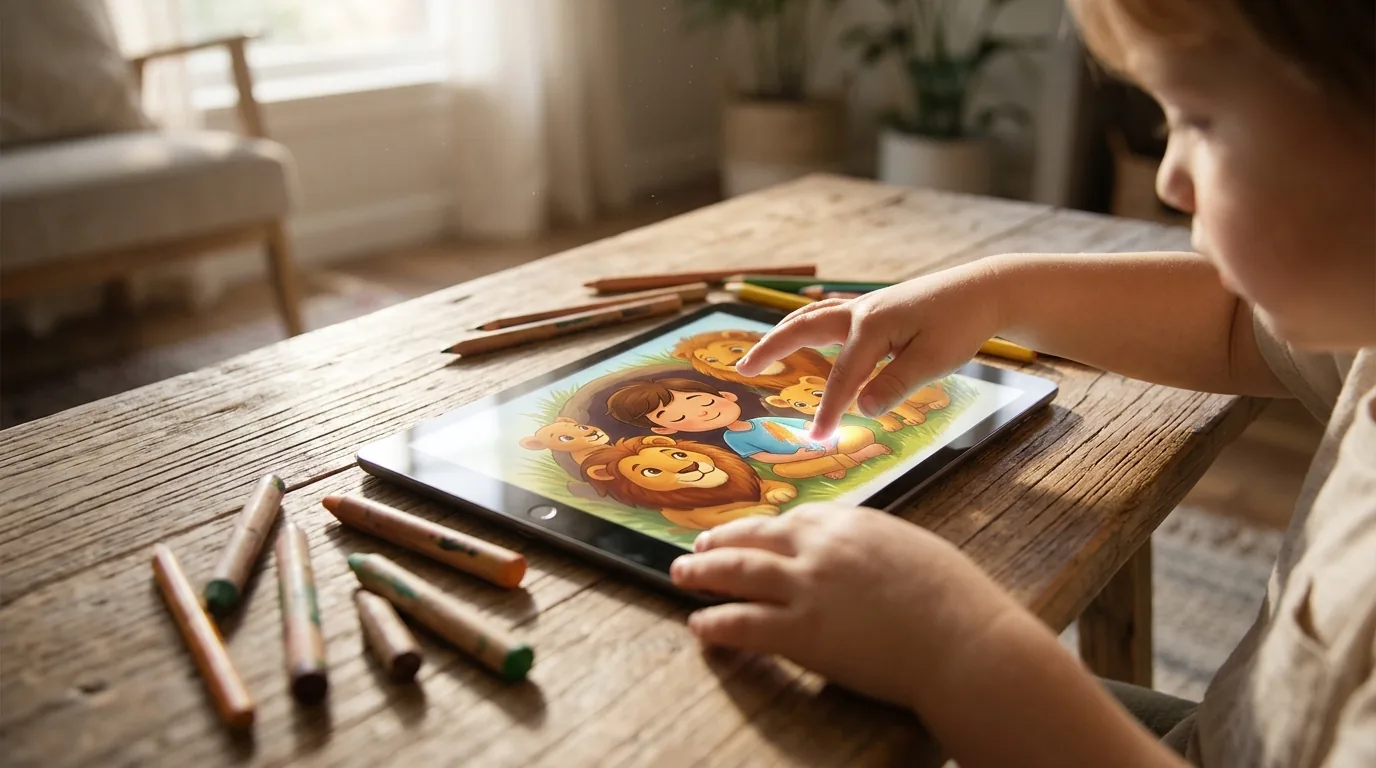
Every evening in millions of Christian households, an identical battle unfolds between 6:30 and 8:00 PM. Parents, exhausted from the workday, hand a tablet or smartphone to a four- or six-year-old child to secure thirty minutes of domestic quiet. Yet when the time arrives to turn off the screen for bath and bedtime, the peaceful house erupts into tears, screams, defiant tantrums, and prolonged bedtime resistance.
Well-meaning parents often assume this friction is a moral failure or willful disobedience. In reality, it is a predictable neurochemical crash.
Modern children's mobile games, streaming animations, and short-form video algorithms are engineered with rapid visual cuts (every 1.8 to 2.5 seconds), saturated primary colors, and high-frequency auditory cues. This sensory barrage floods the developing brain's ventral striatum with massive, artificial spikes of dopamine:
- The Dopamine Drop: When the tablet is abruptly clicked off, synaptic dopamine levels plummet below baseline within 90 seconds, producing physical sensations of irritability, dysphoria, and acute loss.
- Cortisol and Melatonin Suppression: Blue light emitted from digital LED screens suppresses the pineal gland's production of melatonin—the natural sleep hormone—while elevating cortisol (the stress hormone).
- Sensory Dysregulation: A child transitioning directly from a 120Hz digital screen to a dim, silent bedroom cannot down-regulate their nervous system; their prefrontal cortex is overwhelmed.
Direct Parental Answer Box:
You cannot cure a digital dopamine crash by demanding immediate stillness; you must bridge the sensory gap with a slower, tactile creative activity. Replacing 30 minutes of tablet use between dinner and bedtime with hand-drawn Bible story coloring pages engages bilateral fine motor coordination, lowers heart rate by activating the parasympathetic nervous system, and anchors Scripture narratives into long-term visual memory before sleep without blue light.
Why Tactile Coloring Resets a Child's Nervous System
Occupational therapists and pediatric neurologists have long recognized that coloring is not passive 'busywork'—it is a powerful developmental and neurological regulator:
- Bilateral Hemispheric Integration: Gripping a wax crayon or wooden colored pencil, stabilizing the paper with the non-dominant hand, and coordinating strokes within borders requires communication between the left hemisphere (logic, spatial planning) and the right hemisphere (creativity, color harmony).
- Proprioceptive and Tactile Grounding: The physical resistance of paper, the texture of the crayon, and rhythmic back-and-forth arm motions provide calming proprioceptive feedback to muscles and joints, signaling to the brain’s amygdala that the child is physically safe.
- Conversational Receptivity: When a child’s hands are engaged in physical rhythm, the defensive barriers of the ego soften. While coloring David facing Goliath, Noah's ark resting on Mount Ararat, or Jesus calming the storm, children naturally begin asking spontaneous spiritual questions: 'Mom, was David scared of the giant?' or 'Did God really keep all those animals safe?'
The 3-Step 'First-Dinner, Then-Color' Evening Protocol
To transition your home away from chaotic screen battles without tears, establish this predictable three-step evening ritual:
- Step 1: Set the Physical Sanctuary Table: Immediately following dinner, clear the dishes and lay out a dedicated coloring station: a basket of wooden colored pencils, twistable crayons, and single-sided printed biblical story sheets. Keep screens entirely out of the dining room.
- Step 2: Put On Gentle Instrumental Hymns or Scripture Lullabies: Sound sets the atmosphere. Play soft acoustic guitar hymns or quiet orchestral worship at low volume. Auditory entrainment encourages the child’s brain waves to shift from high-frequency beta waves (active alertness) into alpha waves (relaxed, creative calm).
- Step 3: Sit Beside Your Child for Just Seven Minutes: You do not need to oversee the entire half-hour. Sit down, pick up a crayon, and color alongside them for the first seven minutes. Your calm physical presence and calm breathing co-regulate your child's nervous system, anchoring a feeling of emotional security that dissolves anxiety.
Turning Coloring Sheets Into Scripture Memory Discipleship
Coloring provides the ultimate anchor for Scripture memorization (Deuteronomy 6:6–7). While your child colors a biblical scene, read the corresponding key memory verse aloud three times in a warm, melodic cadence:
- Observation: 'Look at the stone in David's sling. What color should we make the river stones?'
- Verbal Repetition: 'David said, 'The Lord is my strength and my shield.' Let's say that together while we color the shield.'
- Bedtime Tucking-In Anchor: Once the page is completed, pin it to the bedroom wall beside their bed. When you tuck them in and turn out the main light, point to the colored page: 'Remember what David knew: the same God who protected him is guarding your bedroom tonight.'
Spoken Bedtime Blessing Over Your Child
Speak this calming blessing over your son or daughter before they fall asleep:
"Heavenly Father, I thank You for the precious gift of this child. As they lay their head down to sleep tonight, I speak Your supernatural peace over their mind, their heart, and their body.
Just as You watched over David in the shepherd’s fields and kept Noah safe inside the ark, place Your holy angels around this bedroom tonight. Silence every bad dream, quiet every anxious thought, and let them rest securely in the knowledge of Your love. May the truths of Your Word take deep root in their spirit. In the name of Jesus Christ, Amen."
Christian Family, Kids & Biblical Play
Screen-free Christian parenting, COPPA-safe children’s devotionals, Bible games, and Sunday school curriculum. Each investigation in this pillar is corroborated by primary classical manuscripts, epigraphy, and peer-reviewed historical forensics.
Pillar Dossiers in this Corpus
5 Zero-Prep Bible Games Your Kids and Teens Will Actually Beg to Play
9 min read · Verified Primary Dossier10 'Who Am I?' Bible Riddles With 3 Progressive Clues (Family Night Edition)
9 min read · Verified Primary DossierWhy Ad-Free, COPPA-Safe Digital Spaces Matter for Christian Kids
9 min read · Verified Primary DossierHow to Teach Young Children About Courage Using David, Daniel, and Baby Moses
9 min read · Verified Primary DossierColor Through the Bible & Family Game Night
Inspiring coloring devotionals, 100 screen-free games, and COPPA-safe activities that anchor kids in God’s Word.
Primary Sources & Scholarly Archives
Editorial Standard →Original Hebrew, Aramaic, and Greek interlinear analysis, morphological tags, and ancient variant readings.
Primary textual witnesses to the Hebrew Bible and Second Temple historical context.
Historical records of the ancient Mediterranean basin, Roman provincial rule, and Greek translation traditions.
Frequently Asked Questions
What if my child resists giving up their tablet for coloring?
Do not frame coloring as a punishment or deprivation. Introduce it positively as a special evening ritual: 'Tonight is our family art night at the kitchen table.' Start with just 15 minutes of joint coloring with fun, vibrant coloring pages of exciting Bible stories (Daniel in the lions' den, Samson, the parting of the Red Sea) and sit beside them with warm tea or cocoa.
What art supplies work best for children ages 4 to 8?
For preschoolers (ages 4–5), triangular chunky crayons or thick washable markers prevent hand fatigue and foster the correct pencil grip. For early elementary kids (ages 6–8), twistable colored pencils or soft-core artist pencils give them fine control over shading and details without breaking easily.
How does coloring before bed affect a child's sleep quality?
Eliminating screen blue light for 30 to 60 minutes before bedtime allows the brain to release melatonin naturally. Combining that with the repetitive, rhythmic motor activity of coloring lowers cortisol and resting heart rate, allowing children to fall asleep up to 45 minutes faster with significantly fewer night wakings.
Family Discipleship & Creative Bible Resources {#family-discipleship-resources}
Explore creative, screen-free discipleship materials for your household:- Equip your children with Color Through the Bible: 52-Week Creative Devotional ($4.99), featuring 52 hand-illustrated story pages, memory verses, and discussion guides.
- Bring the whole family together with Bible Family Game Night: 100 Screen-Free Games & Trivia ($4.99).
- For digital screen time that is 100% wholesome and ad-free, explore our interactive web apps at The Bible Flow Games & Bible Arcade.
Related Research Dossiers
View all 568 research dossiers →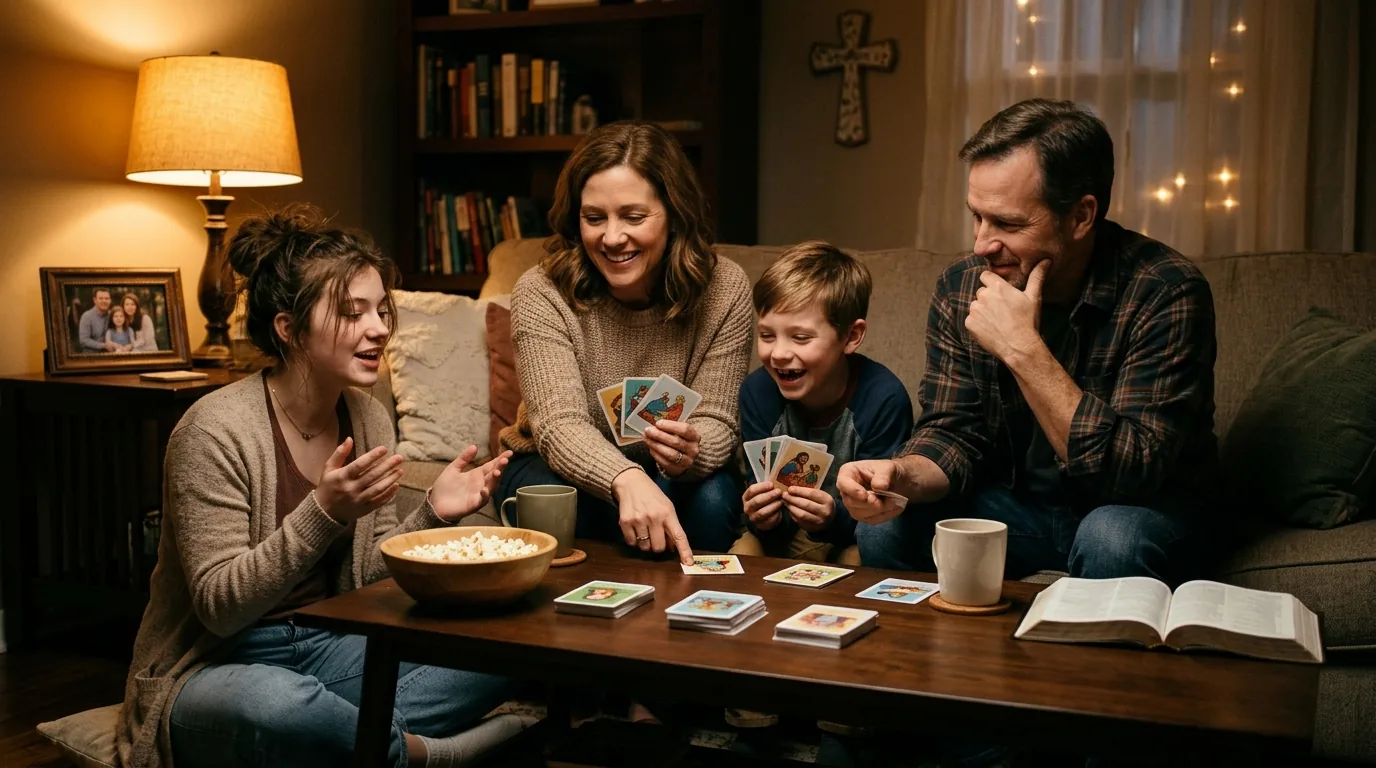
5 Zero-Prep Bible Games Your Kids and Teens Will Actually Beg to Play

10 'Who Am I?' Bible Riddles With 3 Progressive Clues (Family Night Edition)