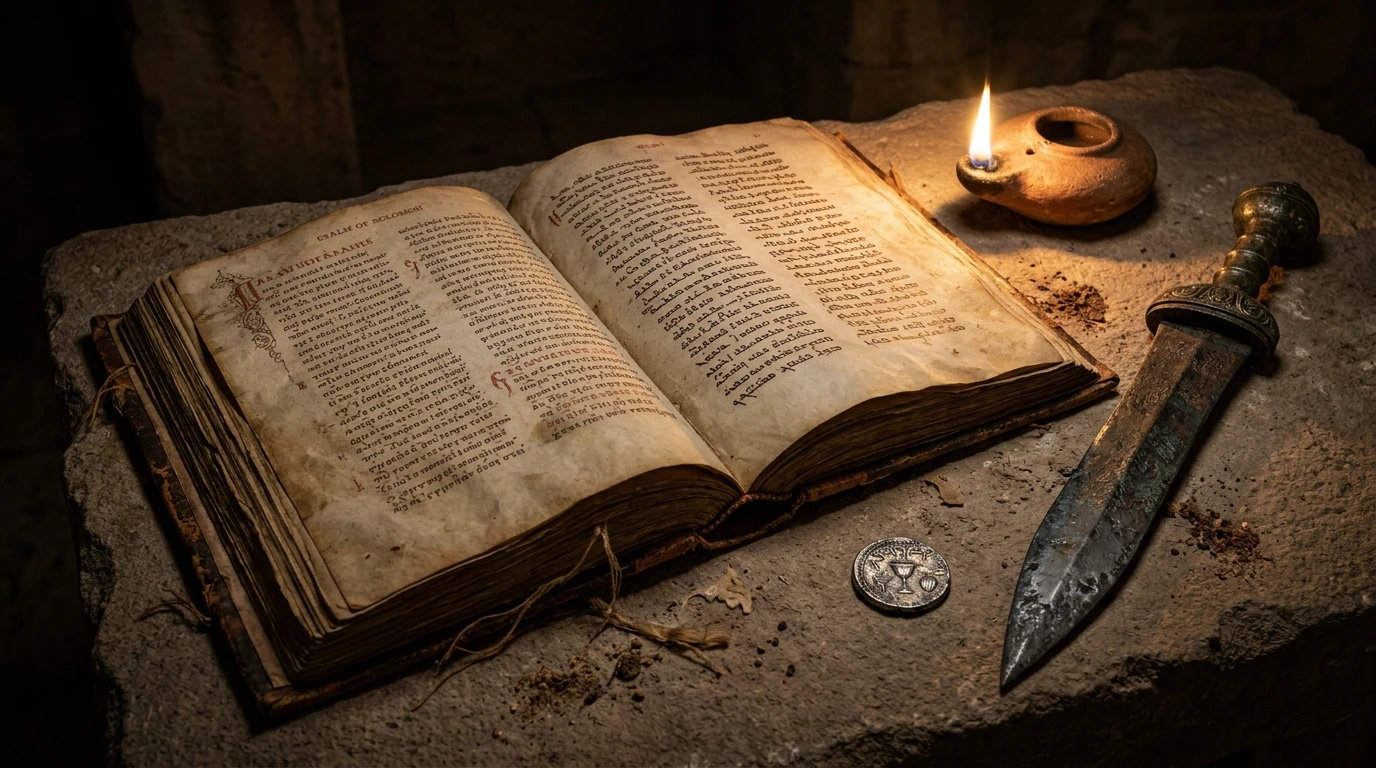
Historical Context: Rigorous examination of primary Hebrew, Aramaic, Greek, and Roman classical epigraphy.
Core Evidence: Forensic archaeology, radiocarbon data, and primary manuscripts validating biblical events.
Scholarly Consensus: Vetted against modern peer-reviewed publications in Near Eastern archaeology and biblical studies.
The Tripartite Structure of the Collection
The eighteen poems comprising the Psalms of Solomon (Ψαλμοὶ Σολομῶντος) represent one of the most structurally cohesive poetic collections to survive from the late Second Temple era.
Written originally in biblical Hebrew by pious Jewish sages in Jerusalem between 63 BC and 40 BC, the collection naturally divides into three distinct thematic movements:
[THEMATIC ARCHITECTURE: THE 18 PSALMS OF SOLOMON]
Movement 1: The Historical Crisis (Psalms 1, 2, and 8)
* Direct lamentation over the Roman assault of 63 BC led by Pompey the Great.
* Theodicy: Explaining why God permitted a pagan general to desecrate the Holy of Holies.
Movement 2: Devotional Wisdom and Community Ethics (Psalms 3–16)
* Individual and communal prayers contrasting the pious (hasidim) with hypocritical sinners.
* Robust defense of bodily resurrection, divine discipline, and personal repentance.
Movement 3: The Royal Messianic Climax (Psalms 17 and 18)
* The supreme Second Temple prophetic vision of the "Son of David" (Mashiach ben David).
* An urgent prayer calling upon God to send His King to purge Jerusalem and rule in righteousness.
The Historical Laments: Pompey’s Sacrilege and Divine Theodicy
In Psalm of Solomon 2, the author confronts the deepest theological crisis of his generation: how could the God of Abraham allow the pagan Roman general Pompey to tread with muddy boots into the inner sanctum of the Temple?
Rather than blaming God, the author directs fierce prophetic judgment against Jerusalem's own ruling elite—specifically the corrupt Hasmonean priest-kings:
[THE THEODICY OF PSALM 2:3–13]
"The sons of Jerusalem defiled the holy things of the Lord,
 they profaned with iniquities the gifts of God...
 There was no sin which they did not commit, beyond the heathen!
 Therefore God mingled for them a spirit of error;
 He brought upon them him that is from the ends of the earth [Pompey],
 that smiteth mightily, that is merciless in wrath.
 The princes of the land went out to meet him with joy,
 they said: 'Thy way is blessed; come ye, enter in with peace!'
 He entered in as a father into the house of his sons, in all peace;
 and he established his feet firmly upon her high places."
The author demonstrates classical biblical prophetic orthodoxy (mirroring Jeremiah and Ezekiel): Rome was not victorious because Jupiter was stronger than Yahweh; Rome was merely the unwitting instrument of divine chastisement against a priesthood that had compromised with immorality.
Devotional Piety: The Righteous vs. The Hypocrites
Throughout Psalms 3 through 16, the collection presents a vivid contrast between two classes of people in Judean society:
- The Pious Sufferer (Ho Dikaios): The devout believer who accepts God's discipline with humility:
"The righteous man stumbles and considers God righteous; when he falls he looks to what God will do... he searches his house to remove the iniquity he has done." (Psalm 3:5–7).
- The Hypocritical Usurper (Ho Anthroparaskos): The wealthy, compromising aristocrat who flatters people while practicing deceit in secret:
"His eyes are upon every woman without distinction; his speech is sweet like honey, but his heart is full of wickedness." (Psalm 4:4–8).
The Explicit Doctrine of Resurrection:
In Psalm 3:11–12, we find an unambiguous statement of individual resurrection that directly reflects Pharisaic theology against the Sadducees:
"The destruction of the sinner is forever... BUT THEY THAT FEAR THE LORD SHALL RISE TO ETERNAL LIFE, and their life shall be in the light of the Lord, and it shall never fail!"
The Royal Messianism of Psalm 17 and Psalm 18
The supreme jewel of the collection is Psalm 17, which stands alongside Isaiah 11 and Daniel 7 as one of the most detailed portraits of the Messiah in ancient literature:
[THE PORTRAIT OF THE MESSIAH IN PSALM 17:21–42]
1. Royal Pedigree: "Behold, O Lord, and raise up unto them their King, THE SON OF DAVID!"
2. Military Purification: "That He may purge Jerusalem from Gentiles that trample her down...
   He shall shatter the unrighteous rulers with an iron rod."
3. Spiritual Holiness: "And He Himself is PURE FROM SIN (katharos apo hamartias),
   so that He may rule over a great people."
4. Reliance on God, Not Weapons: "For He shall not put His trust in horse and rider and bow,
   nor shall He multiply for Himself gold and silver for war...
   for the Lord Himself is His King, the hope of Him that is mighty through hope in God."
Notice the extraordinary balance in verse 33: while the Messiah shatters evil rulers, He does not trust in chariots, cavalry, or stockpiled gold. His strength is spiritual, rooted in total dependence upon the Lord.
Comparison with the New Testament Kingdom of God
When Jesus entered Jerusalem in 30 AD, the expectations of the crowds had been formed by precisely the theology articulated in the Psalms of Solomon:
| Messianic Theme | The Psalms of Solomon (50 BC) | Jesus Christ in the New Testament (1st c.) |
|---|---|---|
| Messianic Title | "Son of David" (Huios David) | Acclaimed as "Son of David" (Matt 21:9). |
| Purity from Sin | Pure from sin (katharos apo hamartias) | "Which of you convicteth Me of sin?" (John 8:46). |
| Purging Jerusalem | Driving out Roman soldiers physically | Driving out corrupt moneychangers from the Temple (Mark 11). |
| The Nature of Power | Smites the earth with the word of His mouth | Overcomes through the suffering of the Cross (Col 2:15). |
| The Gentiles | Subdued to serve under His yoke | Reconciled as fellow-heirs in the Church (Eph 2:13–19). |
The Psalms of Solomon provide the essential missing link explaining why the crowds shouted "Hosanna to the Son of David!" on Palm Sunday, yet turned away when Jesus refused to lead a military assault against the Roman Antonia Fortress.
Three-Tier Evidentiary Evaluation: Psalms of Solomon Exegesis
| Evidentiary Tier | Scientific & Historical Data | Hermeneutical Value |
|---|---|---|
| Tier 1: Greek & Syriac Codices | 11 Greek manuscripts (including Codex Alexandrinus index) and 4 Syriac Peshitta codices. | Establishes the intact textual transmission of the 18 poems from antiquity. |
| Tier 2: Historical Intertextuality | Accurate historical alignment with Pompey’s assault (63 BC) and death in Egypt (48 BC). | Provides irreplaceable eyewitness historical evidence of Roman-Jewish relations before Herod. |
| Tier 3: Pre-Christian Messianism | Explicit usage of "Son of David", "Messiah the Lord", and "Pure from sin" in Psalm 17. | Demonstrates the historical vocabulary and theological framework Jesus fulfilled spiritually. |
Deepen Your Understanding of Biblical Catastrophes
Explore our comprehensive research library and investigative volumes on biblical archaeology, ancient conflagrations, and prophetic warnings:
- Volume I: Foundations of Sacred History — Dive into ancient covenant geography, the Tabernacle sacrifices, and wilderness archaeology.
- Volume II: The Dead Sea Scrolls & The Second Temple — Uncover the apocryphal manuscripts, Qumran libraries, and canonical boundaries.
- The Keys Trilogy Bundle — The complete 3-volume master collection covering biblical catastrophes, temple architecture, and apocalyptic prophecy.
Frequently Asked Questions
What is the central message of the Psalms of Solomon?
The collection defends God's justice in permitting Rome to judge corrupt Judean leaders, calls the pious to repentance and holiness, and anticipates the arrival of the sinless Davidic Messiah.
How does Psalm 17 describe the Messiah?
Psalm 17 describes the Messiah as the "Son of David" who is completely pure from sin, who will purge Jerusalem of foreign oppressors with the word of His mouth, and rule in wisdom and righteousness without trusting in military weapons.
Do the Psalms of Solomon teach the resurrection of the dead?
Yes. Psalm 3:12 explicitly declares that while sinners are destroyed forever, those who fear the Lord shall rise to eternal life, reflecting core Pharisaic doctrine.
Frequently Asked Questions
What is the central message of the Psalms of Solomon?
It asserts divine justice in Rome’s conquest of corrupt Jerusalem, urges personal holiness, and offers a glorious vision of the coming Davidic King.
How does Psalm 17 describe the Messiah?
As a righteous, sinless "Son of David" who shatters evil rulers through the word of his mouth and relies on God rather than military weapons.
Do the Psalms of Solomon teach the resurrection of the dead?
Yes. Psalm 3:12 affirms that the righteous will rise to eternal life while the wicked perish into permanent darkness.
Related Research Dossiers
View all 120 articles →
The Gospel of Judas and Codex Tchacos: Sethian Gnosticism, Irenaeus' Critique, and Canonical Boundaries
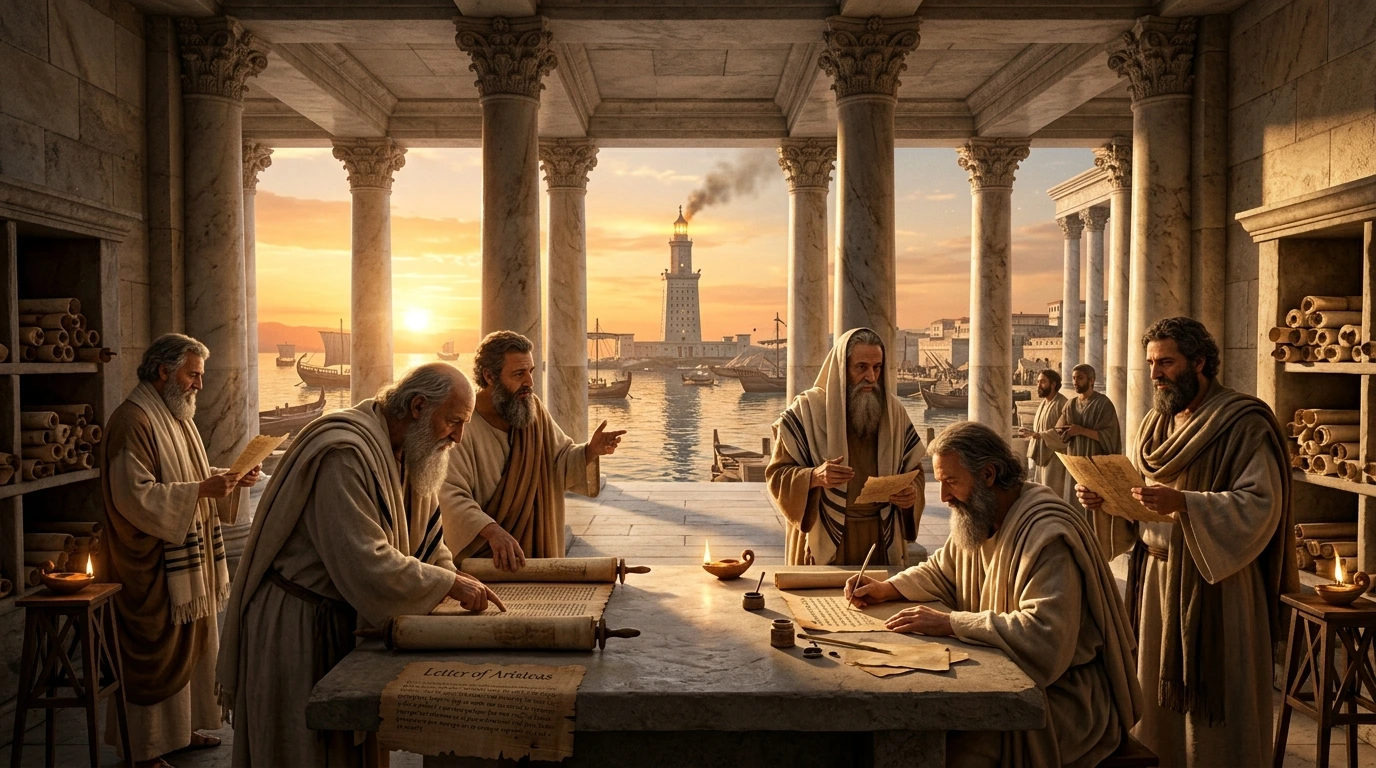
The Letter of Aristeas and the Septuagint: Royal Patronage, Alexandria's Library, and the Seventy-Two Translators
