Historical Context: Rigorous examination of primary Hebrew, Aramaic, Greek, and Roman classical epigraphy.
Core Evidence: Forensic archaeology, radiocarbon data, and primary manuscripts validating biblical events.
Scholarly Consensus: Vetted against modern peer-reviewed publications in Near Eastern archaeology and biblical studies.
The Illusion of Silent Faith
Millions of devout believers live under a subtle, paralyzing misconception regarding how spiritual authority operates.
They say: “God knows my heart. I don't need to speak out loud. I just quietly meditate on Scripture in my mind. God hears my thoughts, and that is enough.”
While God certainly searches the human heart and understands our unspoken groanings (Romans 8:26–27), nowhere in the entire biblical canon is silent thought presented as the primary weapon for confronting darkness, shifting atmospheres, or releasing breakthroughs.
- God did not think the creation into existence; He said: "Let there be light" (Genesis 1:3).
- Joshua did not march around Jericho in mental meditation on the seventh day; he commanded the priests to blow the rams' horns and the people to shout with a great voice (Joshua 6:20).
- Jesus did not mentally contemplate Lazarus’ resurrection; He stood before the stone tomb and cried out with a loud voice: "Lazarus, come forth!" (John 11:43).
- Jesus did not silently resist Satan during forty days in the wilderness; three consecutive times He spoke aloud to the tempter’s face: "It is written!" (Matthew 4:4, 7, 10).
Thinking truth renovates your intellect; but speaking truth establishes cosmic government.
If you are fighting depression, family turmoil, chronic fear, or financial stagnation solely within the silent corridors of your private thoughts, you are attempting to fight a physical duel with your hands tied behind your back.
The Hebrew Forensic: B’Yad Lashon (In the Hand of the Tongue)
Look at the extraordinary anatomical metaphor Solomon provides in Proverbs 18:21:
"Death and life are in the power of the tongue, and those who love it will eat its fruit."
In biblical Hebrew, this verse reads:
"Mavet v’chayyim b’yad-lashon, v’ohaveyha yokhal piryah."
Notice the phrase B’yad-lashon (בְּיַד־לָשׁוֹן).
The word Yad literally means "in the hand of."
Solomon is not presenting the tongue as a soft, passive muscle of digestion and speech. He describes the tongue as an armed hand holding weapons of life and death.
Every morning when you wake up, your tongue reaches into the invisible armory. With your words, you either hand a weapon to the enemy to torment your children, sabotage your confidence, and poison your health; or you hand a celestial sword to angels to enforce the covenant blessings of God over your household.
And notice the closing phrase: "Those who love it will eat its fruit."
Words are not ephemeral vibrations that vanish into thin air; words are seeds that take root in the spiritual and physical soil of your life. If you sow words of defeat (“I’ll never get ahead; my marriage is doomed; this sickness will kill me”), you will inevitably harvest a crop of despair. But when you sow the incorruptible seed of God’s Word, you feast upon the fruit of life.
The Greek Revelation: Homologia (Saying the Same Thing as God)
In the New Testament, the Apostle Paul reveals the dual mechanics of salvation and authority:
"For with the heart one believes unto righteousness, and with the mouth confession is made unto salvation." (Romans 10:10)
Notice the two chambers of the covenant:
- Heart Faith (Kardia): Believing internally produces righteousness before God (dikaiosynē).
- Mouth Confession (Stoma): Speaking verbally produces actual salvation, deliverance, and victory (sōtēria).
The Greek word translated "confession" is Homologia (ὁμολογία).
It is a compound of two words:
- Homo: "The same."
- Logos: "Word, statement, decree."
Literally, homologia means: "To say the exact same thing."
Biblical confession is not positive thinking or motivational self-talk. It is entering the courtroom of heaven, looking at your bank account, your body, your marriage, or your calling, and saying the exact same thing that Almighty God has already declared in His eternal Word!
- When your feelings say, “You are abandoned,” Homologia says: “He will never leave me nor forsake me!” (Hebrews 13:5).
- When your symptoms say, “You are broken,” Homologia says: “By His stripes I was healed!” (1 Peter 2:24).
- When your debt says, “You are ruined,” Homologia says: “My God shall supply all my need according to His riches in glory!” (Philippians 4:19).
Why the Demonic Realm Only Responds to Sound
There is a crucial reason why vocal declaration is mandatory in spiritual warfare:
Satan and demonic spirits are not omniscient; they cannot read your private human thoughts!
Only Almighty God possesses the divine attribute of searching the hearts and testing the minds of men (Jeremiah 17:10; 1 Chronicles 28:9). Satan is a created being. He cannot peer into the internal chambers of your soul.
The enemy gauges your state of mind by listening to what comes out of your mouth, watching your body language, and testing your emotional reactions to his fiery darts!
When you silently tolerate fear in your mind, the enemy assumes you have accepted his premise. But when you stand up in your living room and vocalize Scripture aloud with holy conviction, demonic principalities hear the exact voice of their Conqueror echoing through your vocal cords.
Light does not negotiate with darkness; light dispels darkness simply by showing up. And in the spiritual realm, light travels on the sound waves of spoken biblical truth.
The 3 Daily Vocal Habits That Reshape Your Reality
To transition from passive mental belief into active vocal authority, implement these three daily protocols:
1. The Morning Threshold Declarations (First 3 Minutes)
Never allow your feet to leave the bedroom until you have spoken five scriptural decrees over your mind, your schedule, and your family. Command the dawn to align with the purposes of God (Job 38:12).
2. The Midday Renunciation of Negative Self-Talk
The moment you catch yourself saying, “I’m so stupid; I’m sick of this; nothing ever works out for me,” immediately arrest the sentence. Repent aloud: “I cancel that careless word in Jesus’ name. I declare that I have the mind of Christ, and the favor of God surrounds me like a shield!”
3. The Evening Sanctuary Seal (Before Sleep)
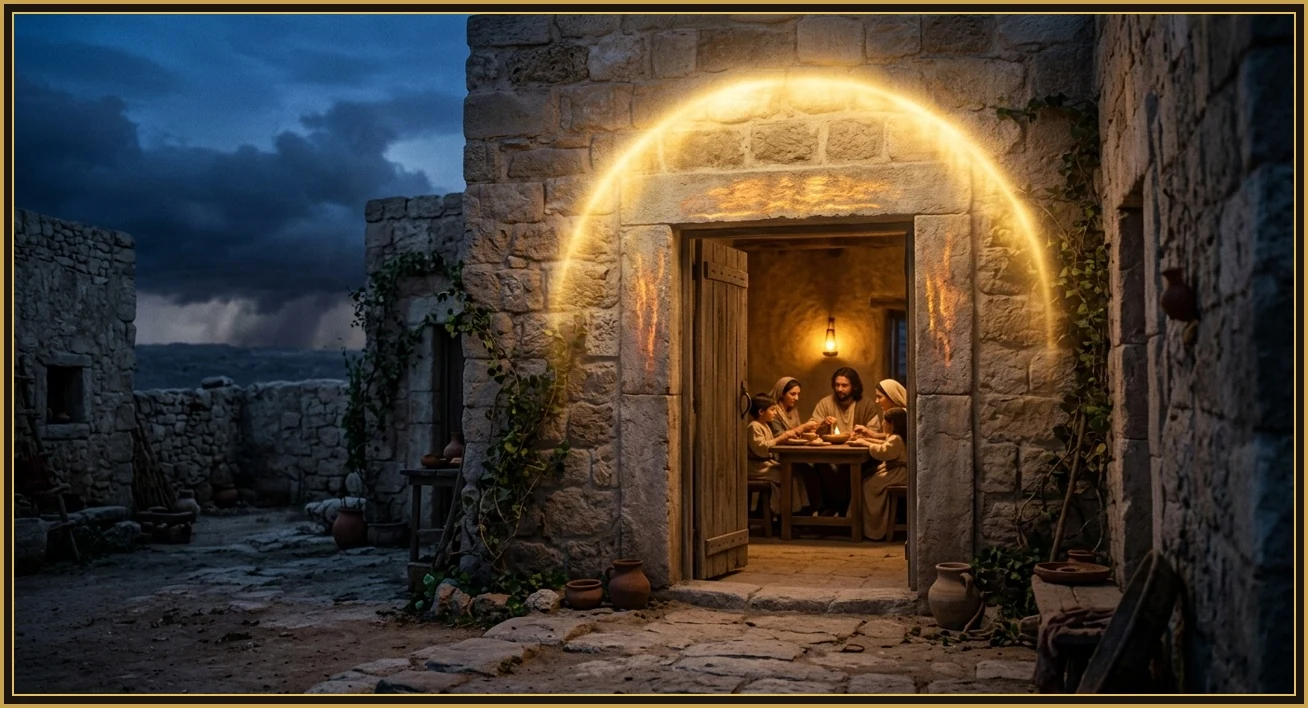
Before turning off your lamp, speak Psalm 4:8 and Psalm 91 over your bedroom door. Declare peace over your spouse, your children, and your home, sealing your night against the terror by night.
Complete Your Armor: The Sacred Keys Complete Trilogy
The power of the spoken word is the crowning revelation of The Sacred Keys Trilogy. Do not leave your home unarmed. Equip your life, your marriage, and your family with the complete digital library:
👉 Download Command Your Morning and Night: 60 Scriptural Declarations ($3.99)
Gain instant access to all 60 spoken declarations, 4 fine-art sacred plates, original Hebrew roots, and the 90-second crisis emergency index.
🎁 Or Claim The Entire Sacred Keys Complete Trilogy Bundle ($7.99 — Save 33%)
Own all three foundational collector's manuals in one unified digital vault:
- Volume I: The 7 Biblical Keys for Silent Battles (16-Page Night Warfare Protocol)
- Volume II: The Solomon Code: Biblical Laws for Discipline and Provision (9-Page Wealth & Order Blueprint)
- Volume III: Command Your Morning and Night: 60 Scriptural Declarations (7-Page Spoken Authority Manual)
- Includes all 19 museum-grade fine-art sacred plates and instant digital download.
Frequently Asked Questions
Does God hear silent prayers?
Yes. Scripture affirms that God knows our thoughts before we speak them (Psalm 139:4) and hears the silent cries of our hearts, as demonstrated in Hannah’s silent prayer (1 Samuel 1:13). However, while silent prayer is precious for personal communion and intimacy with God, vocal declaration is the biblically mandated weapon for exercising delegated covenant authority and resisting demonic warfare.
What should I do if I feel ridiculous speaking out loud in an empty room?
Recognize that your discomfort is merely carnal self-consciousness. Spiritual realities are far more concrete than physical matter. When you speak Scripture aloud in an empty room, the triune God, the angelic hosts, and demonic observers all hear the Word of God being declared. Consistency transforms self-consciousness into holy boldness.
How does speaking Scripture aloud affect emotional trauma?
Trauma often locks the human brain into repetitive loops of silent dread. Vocalizing the promises of God forces the brain to process objective external truth through the auditory system, helping to break subconscious panic patterns and anchoring the soul in the unshakable reality of Christ's finished work.
Frequently Asked Questions
Does God hear silent prayers?
Yes. Scripture affirms that God knows our thoughts before we speak them (Psalm 139:4) and hears the silent cries of our hearts, as demonstrated in Hannah’s silent prayer (1 Samuel 1:13). However, while silent prayer is precious for personal communion and intimacy with God, vocal declaration is the biblically mandated weapon for exercising delegated covenant authority and resisting demonic warfare.
What should I do if I feel ridiculous speaking out loud in an empty room?
Recognize that your discomfort is merely carnal self-consciousness. Spiritual realities are far more concrete than physical matter. When you speak Scripture aloud in an empty room, the triune God, the angelic hosts, and demonic observers all hear the Word of God being declared. Consistency transforms self-consciousness into holy boldness.
How does speaking Scripture aloud affect emotional trauma?
Trauma often locks the human brain into repetitive loops of silent dread. Vocalizing the promises of God forces the brain to process objective external truth through the auditory system, helping to break subconscious panic patterns and anchoring the soul in the unshakable reality of Christ’s finished work.
Related Research Dossiers
View all 120 articles →
The First 15 Minutes: Why Your Morning Thoughts Are a Spiritual Battlefield
The Bedtime Siege: Eradicating Midnight Anxiety with Psalm 4 and Psalm 91