Table of Contents (Summary)
## Roman Citizenship Rights and Execution by Sword {#citizenship-execution}
Unlike Apostle Peter, who was a Jewish fisherman subject to gruesome crucifixion, Apostle Paul possessed **Roman citizenship** by birth in Tarsus (Acts 22:28).
Under Roman law (*Lex Julia de Majestate*), Roman citizens condemned to death could not be subjected to crucifixion, torture, or exposure to wild beasts. Instead, they were granted the swift execution method of **decapitation by sword (*decollatio*)**.
The Execution Site at Aquae Salviae (Tre Fontane)
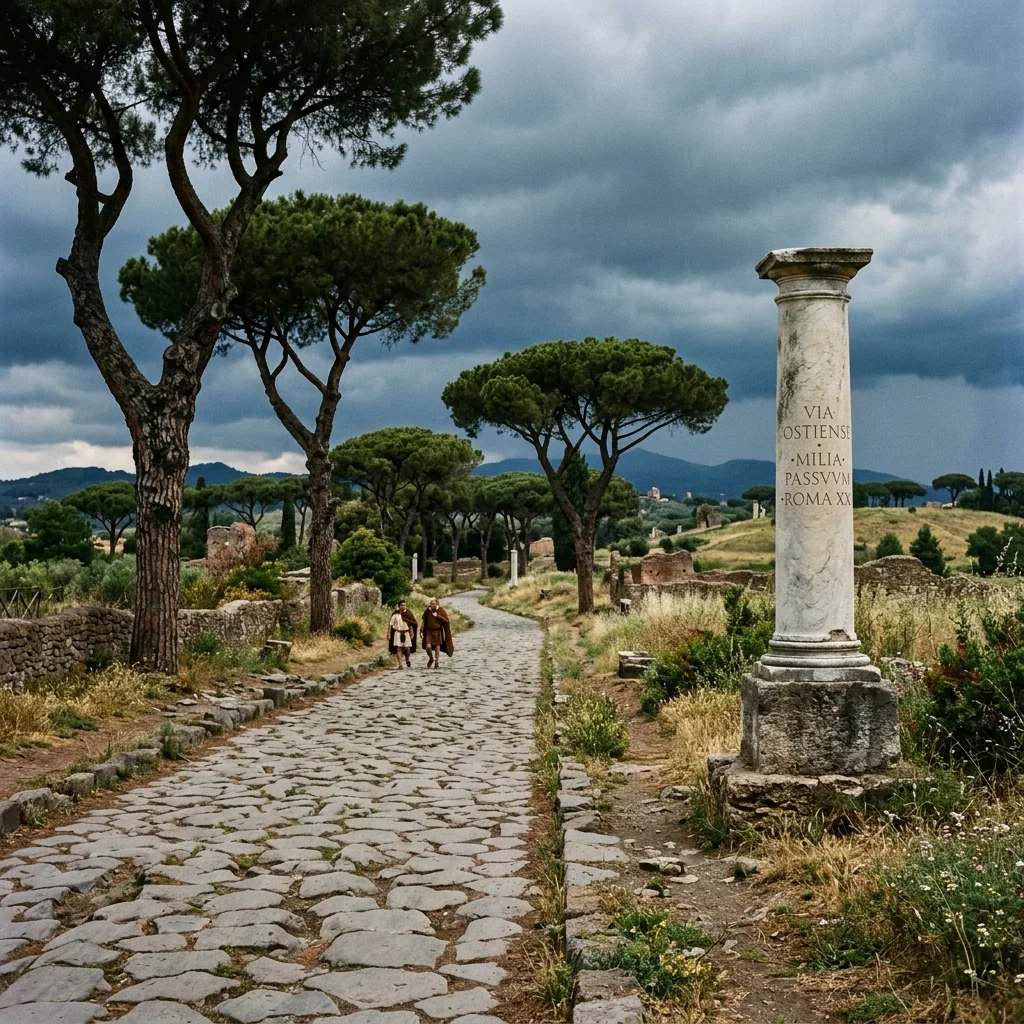
In approximately 67 AD, during the final year of Emperor Nero’s reign, Paul was led out of the Mamertine Prison along the **Via Ostiense**, three miles outside the city walls of Rome.
At a place called *Aquae Salviae* (modern Tre Fontane), Paul was bound to a marble pillar and executed by lictors using a Roman short sword (*gladius*).
Legend holds that Paul’s severed head bounced three times, causing three freshwater springs to bubble forth—a site marked today by the Church of San Paolo alle Tre Fontane.
Historical Records: Clement, Tertullian, and Eusebius
Paul’s martyrdom is verified by early 1st and 2nd-century Christian historians:
- **Clement of Rome** (c. 96 AD, *1 Clement 5:5-7*): Writes that Paul *"bore witness before the rulers"* and departed to the holy place. - **Tertullian** (c. 200 AD, *Prescription Against Heretics 36*): *"How happy is that church... where Paul wins his crown in a death like John’s [beheaded]!"* - **Eusebius of Caesarea** (*Ecclesiastical History* II.25): Quotes Gaius of Rome (c. 198 AD): *"I can show the trophies of the apostles. For if you will go to the Vatican or to the Ostian Way, you will find the trophies of those who laid the foundations of this church."*
The 2006 Vatican Archaeology Excavation
For centuries, a marble sarcophagus rested beneath the high altar of the **Basilica of Saint Paul Outside the Walls** (*San Paolo Fuori le Mura*) on the Via Ostiense.
Between 2002 and 2006, Vatican chief archaeologist Giorgio Filippi conducted excavations under the basilica altar, revealing a large **4th-century white marble sarcophagus** measuring 2.5 meters in length.
Directly on top of the sarcophagus lay a marble inscription plate dated to the reign of Emperor Constantine (c. 325 AD), bearing the Latin uncial inscription:
$$ ext{ extbf{PAULO APOSTOLO MART}}$$ *(“To Paul Apostle Martyr”)*
The inscription plate contained three funnel openings (*cataractae*) where early pilgrims poured incense and oil directly onto the tomb.
Radiocarbon C-14 Bone Dating Results
In June 2009, Pope Benedict XVI announced the results of a scientific micro-probe insertion into the sealed sarcophagus.
Scientists extracted minute fragments of bone, purple linen cloth infused with gold thread, and red incense grains. Radiocarbon C-14 analysis performed by independent laboratories confirmed that the bone fragments belonged to a person who lived during the **1st or 2nd century AD**.
Combined with the 4th-century Constantine inscription plate and continuous 1st-century burial tradition along the Via Ostiense, archaeological science confirms the authentic burial location of Apostle Paul.
Frequently Asked Questions
Why was Apostle Paul beheaded instead of crucified?
Paul was a Roman citizen by birth, and Roman law exempted citizens from crucifixion, granting them execution by sword.
Where is Apostle Paul buried today?
Paul is buried beneath the high altar of the Basilica of Saint Paul Outside the Walls along the Via Ostiense in Rome.
What did the 2006 Vatican archaeology excavation discover?
Archaeologists uncovered a 4th-century marble sarcophagus inscribed PAULO APOSTOLO MART with bone fragments radiocarbon-dated to the 1st/2nd century AD.