Historical Context: Rigorous examination of primary Hebrew, Aramaic, Greek, and Roman classical epigraphy.
Core Evidence: Forensic archaeology, radiocarbon data, and primary manuscripts validating biblical events.
Scholarly Consensus: Vetted against modern peer-reviewed publications in Near Eastern archaeology and biblical studies.
The Moabite Language: Sister Dialect of Biblical Hebrew
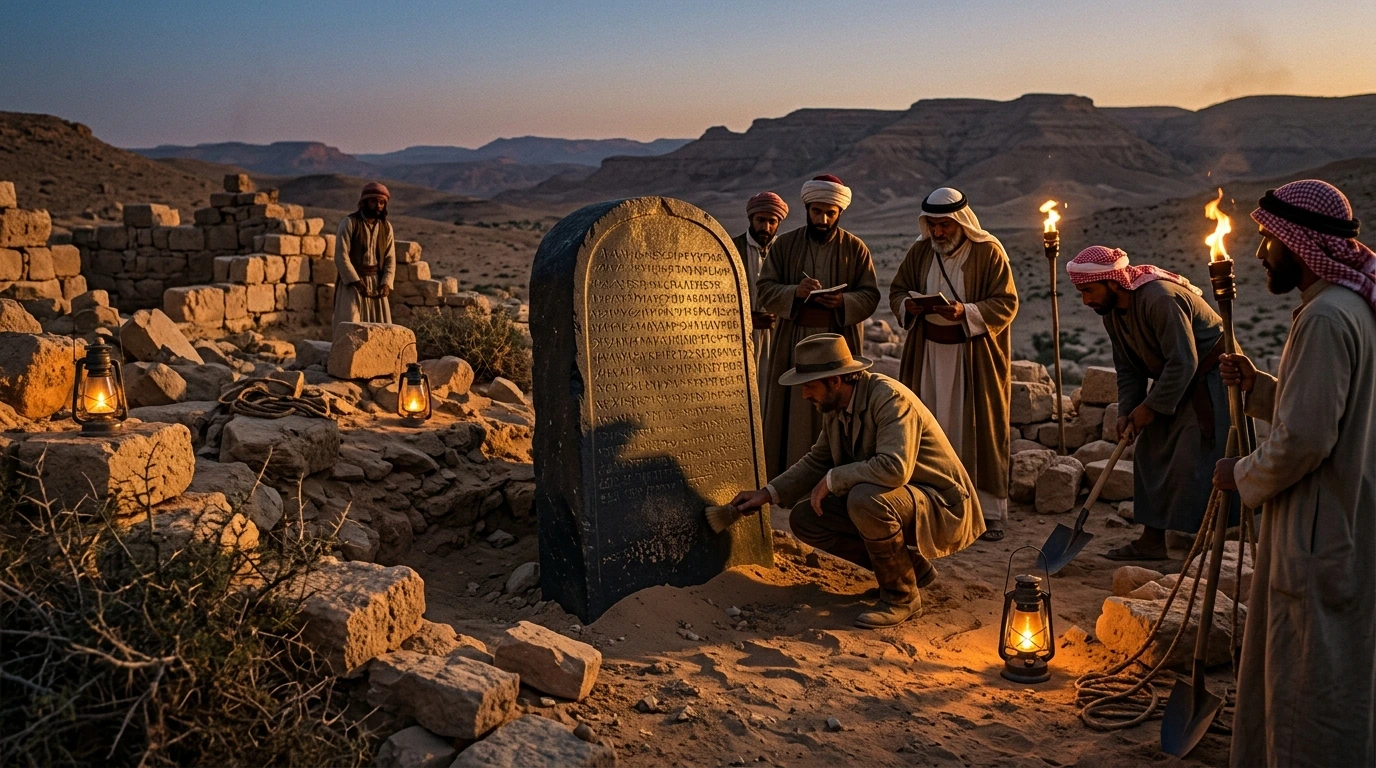
From a linguistic standpoint, the 34 lines of the Mesha Stele are indistinguishable from early Biblical Hebrew in grammar, syntax, and morphology. Written in the Phoenician-Old Hebrew alphabet, Moabite is classified by Semitic linguists as a Northwest Canaanite dialect.
An Israeli student fluent in classical Hebrew can read over 90% of the Mesha Stele without translation. Key linguistic features include:
- Identical vocabulary for warfare, sovereignty, and religious sacrifice (milk, ish, bayit, ereṣ, ra’ah, yashav).
- Use of the waw-consecutive (e.g., wa-e’es "and I made", wa-ya’an "and he oppressed"), a grammatical hallmark virtually unique to Biblical Hebrew and Moabite.
- The feminine singular ending -t (e.g., hab-bamah zot "this high place"), reflecting archaic Canaanite roots.
The text was composed by a royal scribe trained in royal chancery conventions, proving that complex literary and administrative scribal schools existed east of the Jordan River in the ninth century BC.
The Geographical Landscape: Mapping Mesha’s Kingdom
The inscription serves as an extraordinary geographical gazetteer, mentioning over a dozen biblical cities that can be precisely mapped in modern Jordan:
| City in Inscription | Biblical Reference | Modern Location | Archaeological Finds |
|---|---|---|---|
| Dibon (דיבן) | Numbers 32:34; Isaiah 15:2 | Dhiban | City gate, royal acropolis, Mesha’s palace |
| Medeba (מהדבא) | Joshua 13:9; Isaiah 15:2 | Madaba | Iron Age fortifications beneath Byzantine city |
| Ataroth (עטרת) | Numbers 32:3, 34 | Khirbat Ataruz | Iron II Moabite temple with inscribed incense altar |
| Baal-Meon (בעלמען) | Joshua 13:17; Ezekiel 25:9 | Ma’in | Massive Iron Age water reservoirs |
| Kiriathaim (קריתן) | Jeremiah 48:1, 23 | Al-Qurayyat | Iron II fortifications atop strategic ridge |
| Aroer (ערער) | Deuteronomy 2:36 | Khirbat Ara’ir | Fortified outpost overlooking the Arnon Gorge |
| Horonaim (חורנן) | Isaiah 15:5; Jeremiah 48:3 | Al-Iraq / Edom border | Strategic valley guarding royal ascents |
In 2012, excavations directed by Dr. Chang-Ho Ji at Khirbat Ataruz unearthed a cylindrical stone incense altar incised with early Moabite inscriptions dating to the late ninth/early eighth century BC, confirming Mesha’s claim that he captured the cultic sanctuary of Ataroth from the tribe of Gad.
Synchronizing Mesha’s Inscription with 2 Kings 3
A superficial reading leads some commentators to perceive a contradiction between the biblical account in 2 Kings 3 and the triumphal claims of the Mesha Stele. However, a rigorous military analysis reveals they describe complementary phases of the same brutal conflict.
The Biblical Narrative (2 Kings 3:4–27):
- Following Ahab’s death, Mesha rebels against Israel.
- King Jehoram of Israel forms an alliance with King Jehoshaphat of Judah and the King of Edom.
- The coalition attacks Moab from the south (through the Wilderness of Edom).
- The allied armies ravage Moabite cities and besiege King Mesha in his final mountain stronghold of Kir-Hareseth (Kerak).
- Mesha makes a horrific royal sacrifice on the city wall, prompting "great wrath against Israel", causing the allies to lift the siege and withdraw.
The Mesha Stele’s Account:
- Mesha celebrates his liberation from Israelite vassalage.
- Mesha recounts his northern offensive: capturing Ataroth, Nebo, and Jahaz from Israelite garrisons.
- Mesha fortifies his cities with prisoners of war and rebuilds temples to Chemosh.
Mesha erected the stele after the Israelite coalition had retreated. Ancient Near Eastern royal monarchs never recorded their own retreats or sieges; they commemorated the final geopolitical outcome—which was that Moab retained its independence and Samaria never regained control over Transjordan.
The Human Sacrifice of the Royal Heir at Kir-Hareseth
The most harrowing nexus between the biblical record and Moabite religion concerns the climax of the siege of Kir-Hareseth:
"When the king of Moab saw that the battle was too fierce for him, he took with him seven hundred swordsmen to break through to the king of Edom, but they could not. Then he took his eldest son who was to reign in his place and offered him for a burnt offering on the wall. And there was great indignation against Israel. And they withdrew from him and returned to their own land." (2 Kings 3:26–27)
Mesha’s stele illuminates the theological rationale behind this atrocity:
- Throughout the inscription, Mesha declares that territory is gained or lost depending on whether Chemosh is pleased or angry.
- In lines 16–17, Mesha devotes 7,000 Israelite captives to Ashtar-Chemosh as a herem (devotional slaughter).
- Sacrificing his own crown prince upon the ramparts in full view of the besieging armies was the ultimate apocalyptic appeasement of Chemosh, terrifying the besiegers and inciting a psychological revulsion that dissolved the alliance.
The Civil Engineering and Public Works of King Mesha
Lines 21–30 shift from military chronicles to a catalogue of monumental municipal engineering projects undertaken by Mesha:
- The Royal Acropolis (QRḤH): Building palaces, walls, towers, and gate complexes.
- Water Security Infrastructure: Mesha mandated: "Let every man make a cistern in his house!" (Line 24). He then constructed public water reservoirs using Israelite prisoners of war to dig the drainage trenches.
- The Arnon Highway: Paving a military road across the precipitous canyon of the River Arnon (Wadi Mujib), the "Grand Canyon of the Middle East".
The Mesha Stele is thus far more than a victory monument; it is the constitutional foundation charter of the Iron Age nation of Moab, preserved by providence to illuminate the world of the Old Testament prophets.
Frequently Asked Questions
What language is the Mesha Stele written in?
It is written in the ancient Moabite language, a Northwest Semitic Canaanite dialect virtually identical in grammar, alphabet, and vocabulary to Biblical Hebrew.
How does the Mesha Stele relate to 2 Kings 3?
Both describe the 9th-century BC war of independence fought by King Mesha of Moab against the House of Omri (Israel). The Bible records the southern allied campaign against Kir-Hareseth, while the stele records Mesha’s northern reconquest and final independence.
What is Khirbat Ataruz and why does it matter?
Khirbat Ataruz is the biblical city of Ataroth mentioned in both Numbers 32 and the Mesha Stele. Modern excavations there uncovered an Iron Age Moabite temple and an inscribed incense altar confirming Mesha’s victory.
Related Research Dossiers
View all 120 articles →
Solomon’s Archaeology: Six-Chambered City Gates at Hazor, Megiddo, and Gezer, and the Royal Copper Mines

The Caiaphas Ossuary: The Peace Forest Discovery, Aramaic Epigraphy, and the High Priest of the Passion
