Subject Scope: The Martyrdom of the Apostle Philip in Hierapolis: Archaeology of the Martyrium and Historical Evidence
Historical Context: Primary Roman legal transcripts, imperial annals (Tacitus, Suetonius), and early patristic martyrologies.
Primary Evidence: Forensic trauma biomechanics, historical Roman execution praxis, and classical epigraphic inscriptions.
Investigation Highlights: The Canonical Distinction: Apostle vs. Evangelist • Polycrates of Ephesus and the Early Patristic Witnesses • The 2011 Archaeological Breakthrough at Hierapolis (Francesco D’Andria)
Scholarly Consensus: Cross-referenced against Roman imperial records and Mediterranean early Christian archaeological sites.
The Canonical Distinction: Apostle vs. Evangelist
In early Christian historiography, few figures generated as much initial confusion as Philip. The New Testament presents two distinct men bearing this Hellenistic name:
- Philip the Apostle: One of the original Twelve, from Bethsaida in Galilee (Matthew 10:3, John 1:43–46, John 14:8–9), who served as a core pillar of Christ’s ministry.
- Philip the Evangelist (or Deacon): One of the Seven chosen in Jerusalem to supervise daily food distribution (Acts 6:5), who later preached in Samaria and baptized the Ethiopian eunuch along the desert road to Gaza (Acts 8:26–40).
By the late 2nd century, even prominent church fathers occasionally conflated the two because both were associated with prophetic daughters. However, Polycrates of Ephesus and Eusebius of Caesarea (Historia Ecclesiastica III.31) explicitly identify Philip of the Twelve Apostles as the one who settled, ministered, and died in Hierapolis of Phrygia (modern Pamukkale, Turkey).
Polycrates of Ephesus and the Early Patristic Witnesses
Around 190 AD, Bishop Polycrates of Ephesus addressed a famous letter to Pope Victor I of Rome regarding the Quartodeciman Easter controversy. In defending Asian apostolic tradition, Polycrates enumerated the apostolic luminaries buried in Anatolia:
"For in Asia great luminaries have fallen asleep, and they shall rise again on the day
of the Lord's coming... I speak of Philip, one of the twelve apostles, who sleeps at
Hierapolis, along with two of his daughters who grew old as virgins, and another daughter
who lived in the Holy Spirit and rests at Ephesus."
— Polycrates of Ephesus, cited in Eusebius, Hist. Eccl. III.31.3
This crucial 2nd-century witness confirms:
- Philip was indisputably one of the Twelve (tōn dōdeka apostolōn).
- His definitive resting place was Hierapolis.
- The local Christian assembly in Phrygia carefully preserved the physical memory of his sepulcher.
Further patristic corroboration appears in Clement of Alexandria (Stromata III.4) and the ancient apocryphal text known as the Acts of Philip (Acta Philippi), a 4th-century document that, despite fanciful embellishments, accurately reflects Phrygian topography and local Roman administrative friction.
The 2011 Archaeological Breakthrough at Hierapolis (Francesco D’Andria)
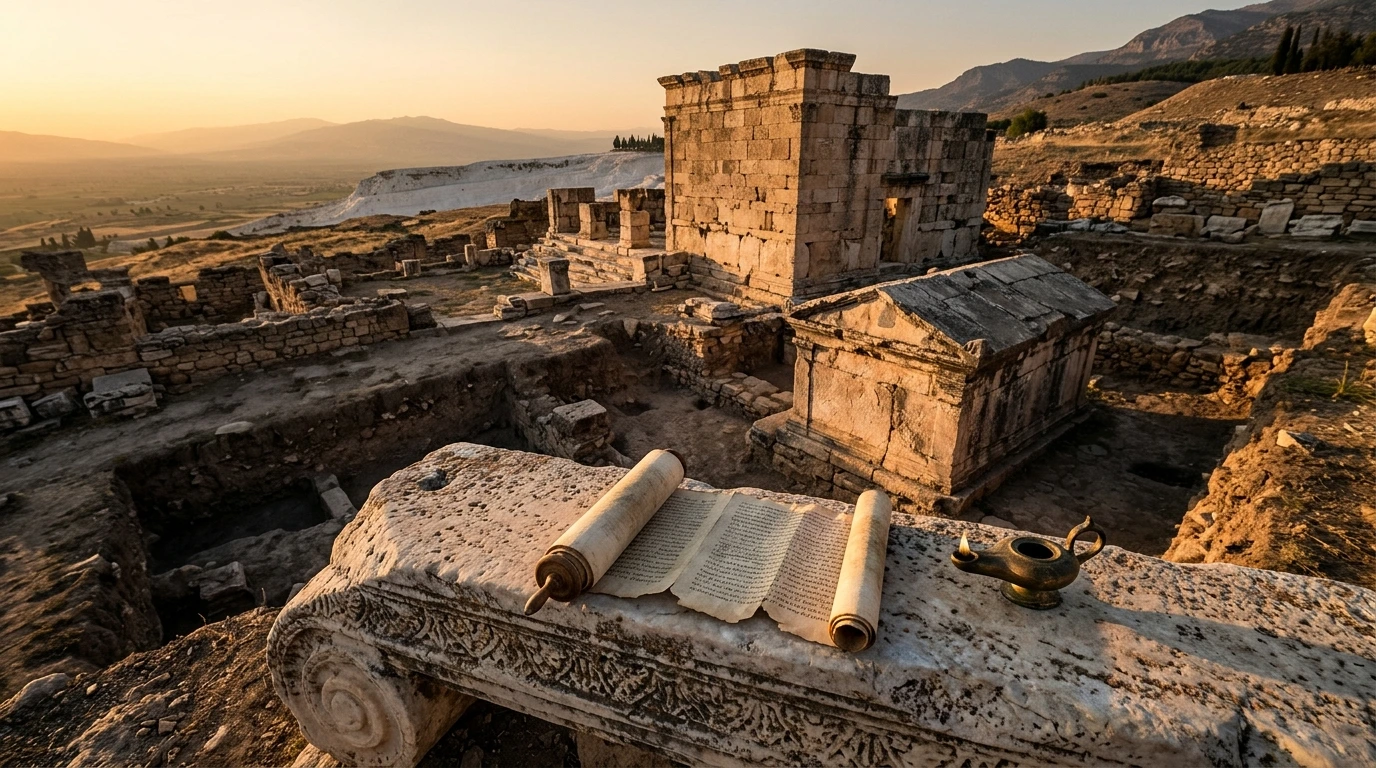
For decades, skeptics argued that the tradition of Philip's burial at Hierapolis was a medieval fiction. That narrative collapsed in July 2011, when an Italian archaeological expedition led by Professor Francesco D’Andria of the University of Salento made a discovery of global importance.
[HIERAPOLIS SACRED HILL TOPOGRAPHY: D'ANDRIA EXCAVATION]
                       ___________________
                      /                                        /    5th-Century                          |   Octagonal Martyrium |
                        (Pilgrimage Hub)  /
                      ___________________/
                                |
                                | (Processional Sacred Bridge)
                                v
               [1st-Century Roman Gable-Roof Tomb]
               * High-status Herodian/Roman masonry
               * Inscriptions to Saint Philip the Apostle
               * Deep pilgrimage oil channels & votive graffiti
Key Archaeological Findings:
- The Central 1st-Century Roman Tomb: D’Andria excavated a pre-existing 1st-century AD Roman gable-roofed stone tomb located outside the original pagan necropolis.
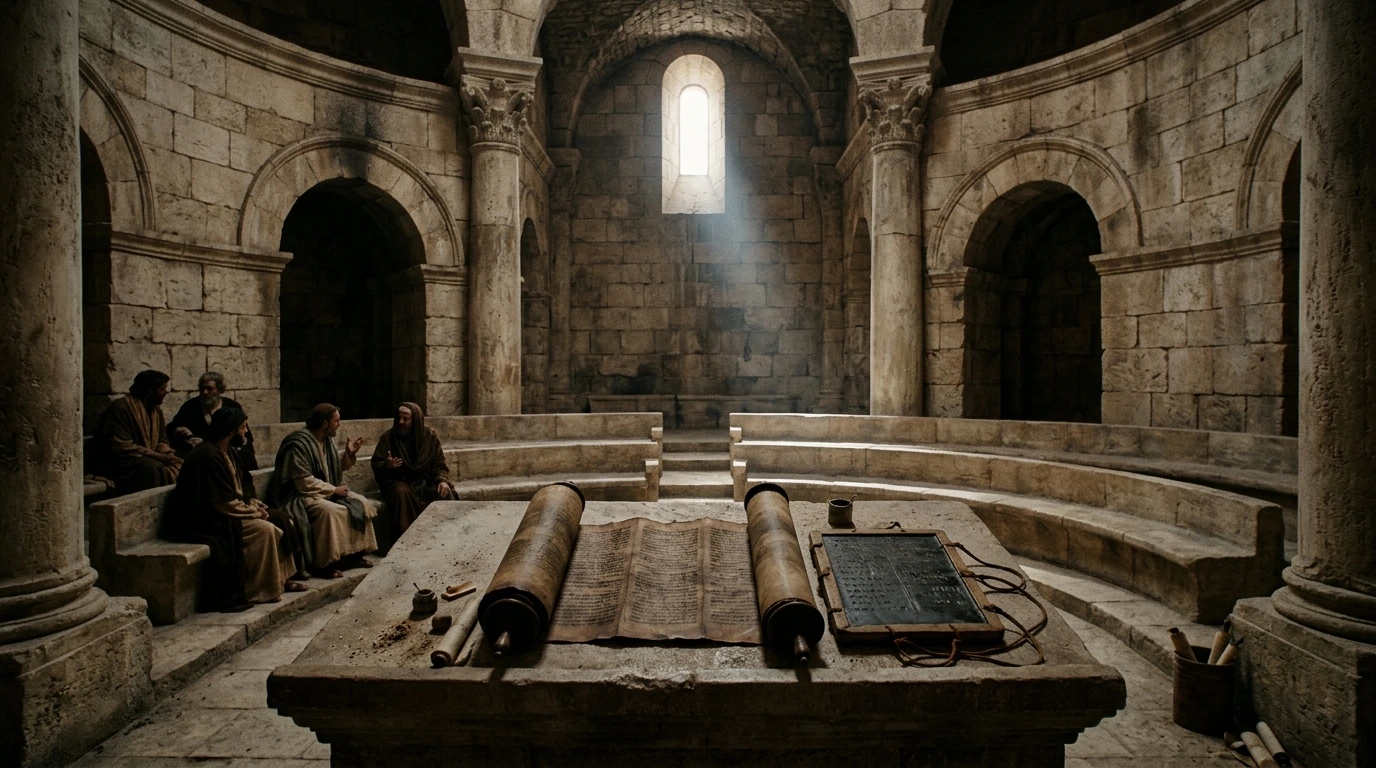
- The 5th-Century Martyrium Complex: In the Byzantine period, architects did not build directly over the tomb, but constructed an enormous octagonal Martyrium adjacent to it, connecting the tomb via a grand marble staircase and pilgrimage procession route.
- Epigraphic Votive Inscriptions: Byzantine graffiti and seals recovered from the site explicitly read "Philip the Holy Apostle" (ΦΙΛΙΠΠΟΣ ΑΠΟΣΤΟΛΟΣ), proving that this specific tomb was venerated continuously from antiquity as the resting place of Christ's disciple.
The Execution Method: Inverted Hanging in Phrygian Hierapolis
Hierapolis in the 1st century was a prosperous Greco-Roman thermal spa known for the Ploutonion—a cave venting lethal carbon dioxide gas, venerated by pagans as a gate to the underworld and associated with the worship of Apollo and sacred vipers (Echidna).
The Acts of Philip details that Philip's aggressive denunciation of serpent worship provoked the local Roman governor and pagan priesthood.
Forensic Examination of the Penalty:
- The Method: Unlike traditional Roman transfixion crosses, the Acts of Philip records that the apostle was hung upside down by his feet from a high wooden post or gallows structure (xylon), with iron hooks inserted through his ankles/heels (calcanei).
- Physiological Cause of Death: Inversion hanging produces severe cerebral venous congestion, elevated intracranial pressure, pulmonary edema, and gradual heart failure due to hydrostatic fluid overload in the thoracic cavity.
- Survival Interval: The accounts describe Philip surviving several hours, delivering his final theological exhortation before succumbing to cerebral ischemia and circulatory collapse.
Three-Tier Evidentiary Evaluation: The Tomb and Historical Texts
| Tier | Category | Historical Criterion | Evidentiary Verdict on Philip's Death |
|---|---|---|---|
| Tier 1: Canonical Scripture | New Testament Record | Direct Apostolic Writing | Attests Apostolic Ministry: Confirms Philip among the Twelve; no canonical record of his martyrdom. |
| Tier 2: Early Patristic & Archaeological | 2nd-Century Polycrates & D’Andria Excavation (2011) | Independent Textual & Physical Verification | Extremely High: Polycrates (190 AD) and the physical 1st-century tomb at Hierapolis confirm apostolic burial beyond reasonable doubt. |
| Tier 3: The Acts of Philip | 4th-Century Apocryphal Narrative | Legendary & Folk Elements | Mixed: Core historical memory of martyrdom by inverted suspension in Hierapolis is credible, but surrounding dragon and viper legends are mythical. |
Deepen Your Study: Archaeology & The Early Church
Explore how modern archaeology continues to confirm the historical geography, names, and tombs of the early apostolic martyrs:
👉 Explore Volume I: The Twelve Apostles & Eyewitness Testimonies
Examine the full academic dossiers on early Christian tombs, inscriptions, and apostolic missions.
🎁 Or Unlock The Sacred Keys Trilogy Master Collection ($7.99)
Discover ancient biblical principles of spiritual discipline, prayer strategies, and daily victory.
Frequently Asked Questions
Did archaeologists find the real tomb of the Apostle Philip?
Yes. In 2011, Italian archaeologist Professor Francesco D’Andria discovered a 1st-century Roman tomb at Hierapolis (Pamukkale, Turkey), surrounded by a massive 5th-century octagonal Byzantine martyrium. Inscriptions and pilgrimage graffiti at the site explicitly identify it as the venerated tomb of Saint Philip the Apostle.
What is the difference between Philip the Apostle and Philip the Evangelist?
Philip the Apostle was one of the original Twelve chosen by Jesus in Galilee (John 1:43). Philip the Evangelist was one of the Seven deacons ordained in Acts 6 to manage church benevolence and who later evangelized Samaria and baptized the Ethiopian eunuch (Acts 8). Early church historians (Polycrates, Eusebius) confirm it was Philip the Apostle who died in Hierapolis.
How was the Apostle Philip martyred?
According to early Christian records, particularly the Acts of Philip and patristic accounts, Philip was executed by order of the local Roman proconsul in Hierapolis by being suspended upside down by his ankles from a high wooden beam, dying of cerebral edema and respiratory arrest.
Primary Sources & Scholarly Archives
Editorial Standard →Primary source corpus including Tacitus (Annales), Suetonius, and early Roman provincial administrative records.
Complete verified English translations of Eusebius Pamphili, Clement of Rome, Polycarp, and Tertullian.
Subterranean Roman necropolis documentation, epigraphic graffiti, and early Christian funerary stelae.
Frequently Asked Questions
Did archaeologists find the real tomb of the Apostle Philip?
In 2011, an Italian archaeological mission led by Prof. Francesco D’Andria uncovered the 1st-century tomb of Saint Philip in Hierapolis, Turkey, substantiated by early Christian pilgrimage structures and inscriptions.
What is the difference between Philip the Apostle and Philip the Evangelist?
Philip the Apostle was one of the Twelve from Bethsaida, whereas Philip the Evangelist was a deacon appointed in Acts 6. Patristic testimony confirms the Apostle was martyred in Hierapolis.
How was the Apostle Philip martyred?
Historical accounts record that Philip was executed in Hierapolis, Phrygia, by being hung upside down by iron hooks driven through his heels/ankles, dying of circulatory and cerebral pressure collapse.
Related Research Dossiers
View all 515 research dossiers →
Canon vs. Patristic Tradition: The Historical Life and Death of Luke the Beloved Physician in Boeotia
The Stoning of Stephen: Primary Sources on the Sanhedrin Trial and Acts 7