Subject Scope: How Do We Know the Bible Is Reliable? The Evidence of John Chrysostom ("Golden Mouth", c. 347–407 AD)
Historical Context: Rigorous historical and theological examination within the field of Early Church & Patristic History.
Primary Evidence: Forensic archaeology, textual preservation, and primary ancient manuscripts corroborating scriptural events.
Investigation Highlights: The Preacher of Antioch: Who Was the "Golden Mouth"? • The School of Antioch: Historical-Grammatical Exegesis vs. Allegory • The Monumental Homiletical Corpus: 700+ Verbatim Sermons
Scholarly Consensus: Vetted against peer-reviewed academic literature in biblical history, linguistics, and archaeology.
The Preacher of Antioch: Who Was the "Golden Mouth"?
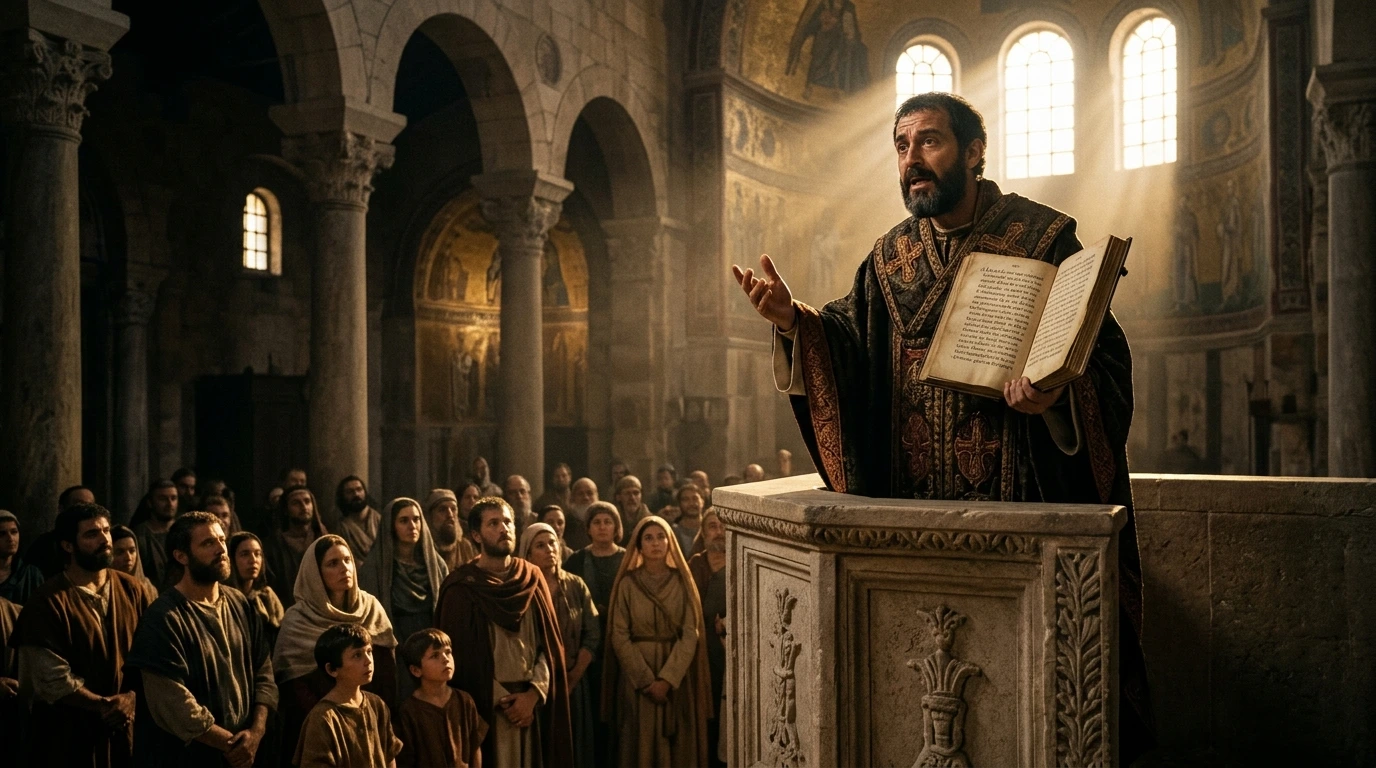
In the late 4th century, a diminutive, ascetic priest transformed the theological landscape of the Mediterranean world through the sheer power of biblical preaching. His contemporaries marveled at his eloquence, giving him the posthumous title Chrysostomos (Χρυσόστομος)—literally, "The Golden-Mouthed".
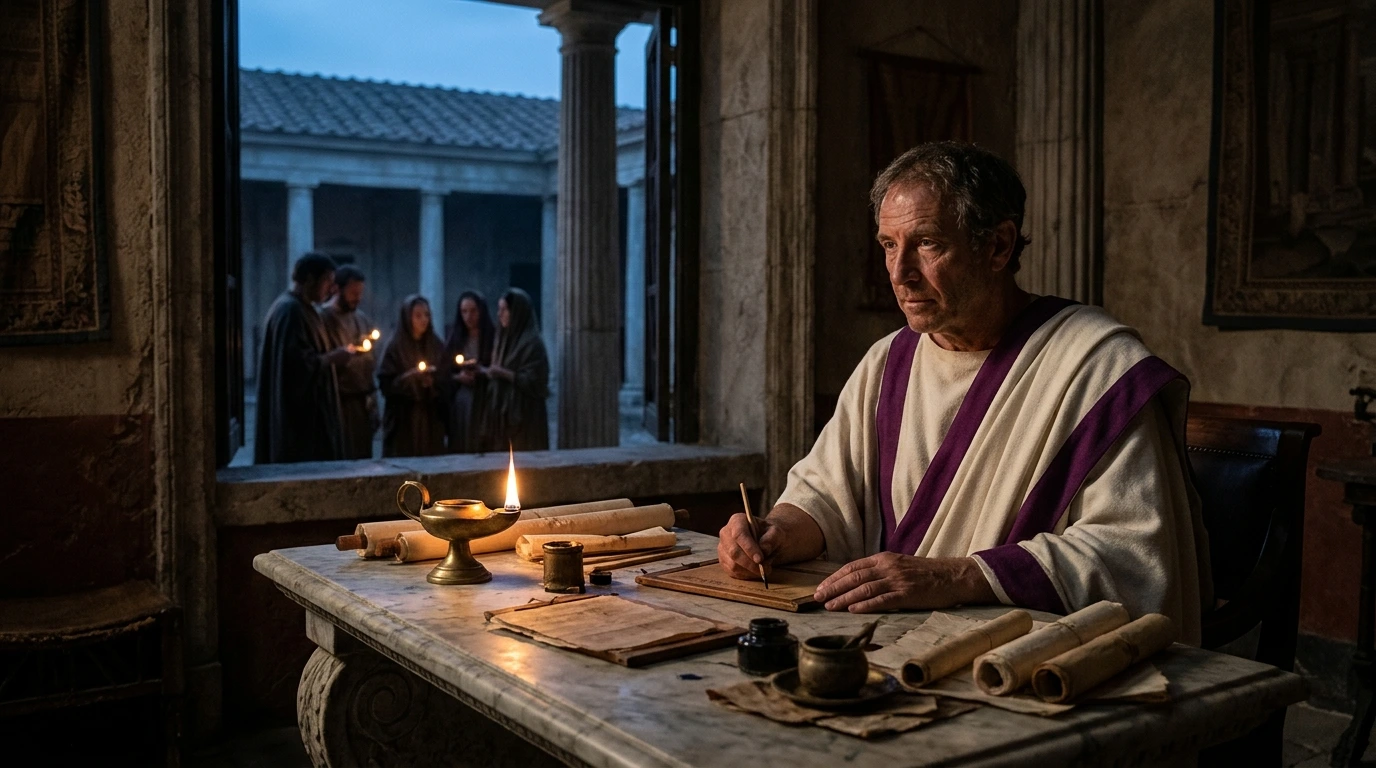
Born in Antioch around 347 AD, John Chrysostom was trained in classical Greek rhetoric by Libanius, the most famous pagan orator of antiquity. When Libanius lay on his deathbed and was asked who should succeed him as head of the prestigious rhetorical school, he famously replied: "John, if the Christians had not stolen him from us."
Yet John abandoned worldly political advancement, entered the rigorous monastic hermit life in the Syrian mountains, and returned to Antioch in 381 AD to dedicate his life to a single, singular mission: the verse-by-verse exposition of Holy Scripture to common people.
How do the life, writings, and sermons of John Chrysostom provide unshakeable historical evidence for the reliability and preservation of the Bible?
The School of Antioch: Historical-Grammatical Exegesis vs. Allegory
During the 4th century, Christian biblical interpretation was divided between two major intellectual centers:
- The School of Alexandria: Championed by Origen and Didymus the Blind, favoring elaborate allegorical and mystical interpretations that frequently bypassed the plain, historical meaning of the text.
- The School of Antioch: Championed by Diodore of Tarsus, Theodore of Mopsuestia, and John Chrysostom, pioneering what modern scholars call historical-grammatical exegesis (theoria).
[THE ANTIOCHIAN HERMENEUTICAL STANDARD]
Chrysostom insisted on three uncompromising rules when reading Scripture:
1. HISTORICAL CONTEXT: Who wrote it, to whom, when, and under what political conditions?
2. GRAMMATICAL ACCURACY: What do the Greek and Hebrew words mean in their original syntax?
3. ACCORDING TO SENSE (Kat' Oikonomian): God condescended to human language (synkatabasis)
   to communicate concrete, unalterable historical truth, not abstract philosophical riddles.
Chrysostom treated the narratives of the Old and New Testaments as real historical events occurring in real historical time. In his Homilies on Genesis, he argued that Moses recorded literal creation history, while his Homilies on Matthew and Acts dissected the geography of Palestine, Roman provincial administration, and eyewitness apostolic memory.
The Monumental Homiletical Corpus: 700+ Verbatim Sermons
While many ancient authors are known through fragmentary scraps, Chrysostom left behind the largest surviving literary corpus of any Greek Church Father:
- 90 Homilies on Matthew (preached sequentially in Antioch, c. 390 AD).
- 88 Homilies on the Gospel of John.
- 55 Homilies on the Acts of the Apostles (the only surviving continuous patristic commentary on Acts from antiquity!).
- Over 250 Homilies on the Epistles of Paul (Romans, 1–2 Corinthians, Galatians, Ephesians, Philippians, Colossians, 1–2 Thessalonians, 1–2 Timothy, Titus, Philemon, Hebrews).
Because stenographers (notarii) stood in the congregations of Antioch and Hagia Sophia in Constantinople taking down his words in shorthand, we possess Chrysostom’s spoken sermons virtually verbatim.
When modern scholars open Chrysostom's homilies, they are reading a real-time transcript of 4th-century church life, witnessing how ancient Christians heard, memorized, and debated the Bible.
Chrysostom as a Primary Textual Witness to the New Testament
In New Testament textual criticism, patristic quotations form the third critical leg of evidence alongside Greek manuscripts and ancient translations:
[PATRISTIC TEXTUAL CRITICISM ROLE]
1. MANUSCRIPTS: Tell us WHAT words were written on surviving physical parchments.
2. TRANSLATIONS: Tell us how texts were rendered into Syriac, Latin, and Coptic.
3. PATRISTIC CITATIONS: ANCHOR TEXTS IN EXACT DATES AND GEOGRAPHICAL LOCATIONS!
   When Chrysostom quotes Romans 8:28 in Antioch in 392 AD, we know with 100% certainty
   that this exact reading existed in the Greek Bibles of Antioch in 392 AD!
Chrysostom’s quotations are extraordinarily valuable because:
- He represents the Antiochian / Byzantine Text-Type: His homilies provide the earliest massive, dated witness to the Byzantine textual family, which would later become the foundation for the Greek Textus Receptus and the Reformation translations.
- He preserves ancient readings: In his commentary on Acts 8:37, 1 John 5:7, and John 7:53–8:11, Chrysostom’s systematic verse-by-verse sermons confirm exactly which variants were present in the lectionaries of Syria and Constantinople.
A Revolutionary Call: The Bible in Every Home and Hands of the Laity
Centuries before the Protestant Reformation, John Chrysostom led a radical campaign for universal lay Bible reading:
"I exhort you, and will not cease to exhort you, to buy bibles. Do not tell me that it is the business only of monks and priests! It is far more your business than theirs, for you live in the midst of the world’s conflicts and need the divine medicine daily."
— Homily 9 on Colossians
In his famous Homily 3 on Lazarus, Chrysostom dismantled every common excuse used by lay Christians:
- Excuse: "Bibles are too expensive." Chrysostom urged his listeners to sell unnecessary jewelry or fine clothes to purchase the New Testament.
- Excuse: "The Bible is too difficult to understand." Chrysostom replied: "The grace of the Spirit composed these books for laborers, servants, widows, and uneducated people; their plain sense is accessible to all who seek with prayer."
- Family Devotions: He commanded parents to gather their children after the evening meal, open the Gospels, and discuss the teachings of Jesus as a household.
This historical reality refutes the secular myth that the ancient Church tried to hide the Bible from the common people. The greatest bishop of Eastern Christianity demanded that every Christian hold the Scriptures in their own hands.
Exile, Integrity, and the Cost of Scriptural Truth
In 397 AD, Chrysostom was forcibly consecrated as Archbishop of Constantinople, the imperial capital. Rather than enjoying aristocratic luxury, John lived with monk-like austerity, purged corrupt clergy, sold gold church ornaments to build hospitals for the poor, and boldly denounced the ostentatious greed of the imperial court.
When Empress Aelia Eudoxia erected a silver statue of herself outside Hagia Sophia, whose noisy dedicatory celebrations disrupted church worship, Chrysostom allegedly opened his sermon with the explosive line: "Again Herodias dances, again she rages, again she demands the head of John on a platter!"
[THE FINAL MARCH OF THE GOLDEN MOUTH]
- 403 AD: Condemned by the corrupt, politically motivated Synod of the Oak.
- 404 AD: Exiled by Emperor Arcadius to Cucusus in the remote mountains of Armenia.
- 407 AD: Ordered to march on foot in winter to Pityus on the Black Sea;
  collapsed from physical exhaustion and exposure near Comana in Pontus.
- HIS DYING WORDS: "Doxa tō Theō pantōn heneken" (Δόξα τῷ Θεῷ πάντων ἕνεκεν)
  -> "GLORY BE TO GOD FOR ALL THINGS!"
Chrysostom died a martyr for biblical truth and pastoral integrity, proving that the ancient Church’s commitment to Scripture was sealed not by political power, but by sacrificial blood.
Three-Tier Evidentiary Evaluation: John Chrysostom
+----------------------------------------------------------------------------------------------------+
|               JOHN CHRYSOSTOM: THREE-TIER EVIDENTIARY EVALUATION                                   |
+====================================================================================================+
| TIER 1: PRIMARY HOMILETICAL CORPUS                                                                 |
| - 700+ surviving verse-by-verse homilies recorded verbatim by ancient stenographers.               |
| - Covers virtually the entire New Testament: Matthew, John, Acts, and all 14 Pauline epistles.     |
+----------------------------------------------------------------------------------------------------+
| TIER 2: TEXTUAL & HISTORIOGRAPHICAL VALUE                                                          |
| - Earliest massive dated witness to the Antiochian / Byzantine Greek text-type (c. 380–400 AD).   |
| - Pioneers historical-grammatical hermeneutics, rejecting fanciful allegorization.                 |
+----------------------------------------------------------------------------------------------------+
| TIER 3: RECEPTION & CANONICAL IMPACT                                                               |
| - Champions universal lay Scripture engagement centuries before the printing press.                |
| - Martyrdom under imperial tyranny confirms unyielding dedication to scriptural authority.         |
+----------------------------------------------------------------------------------------------------+
Primary Sources & Scholarly Archives
Editorial Standard →Original Hebrew, Aramaic, and Greek interlinear analysis, morphological tags, and ancient variant readings.
Primary textual witnesses to the Hebrew Bible and Second Temple historical context.
Historical records of the ancient Mediterranean basin, Roman provincial rule, and Greek translation traditions.
Frequently Asked Questions
Did John Chrysostom write a commentary on the Book of Revelation?
No. The School of Antioch was historically cautious regarding Revelation, and Chrysostom did not preach a dedicated series on it, though he quoted it occasionally. His commentaries cover Matthew, John, Acts, and all Pauline epistles.
How did Chrysostom's sermons survive in such extraordinary detail?
Trained stenographers (notarii) recorded his spoken sermons live in ancient Greek shorthand in Antioch and Constantinople, providing modern scholars with verbatim historical transcripts of his preaching.
Why is Chrysostom's commentary on Acts so important to historians?
It is the only complete continuous verse-by-verse commentary on the Book of Acts surviving from the early church, offering an invaluable 4th-century historical window into apostolic history.
Related Research Dossiers
View all 515 research dossiers →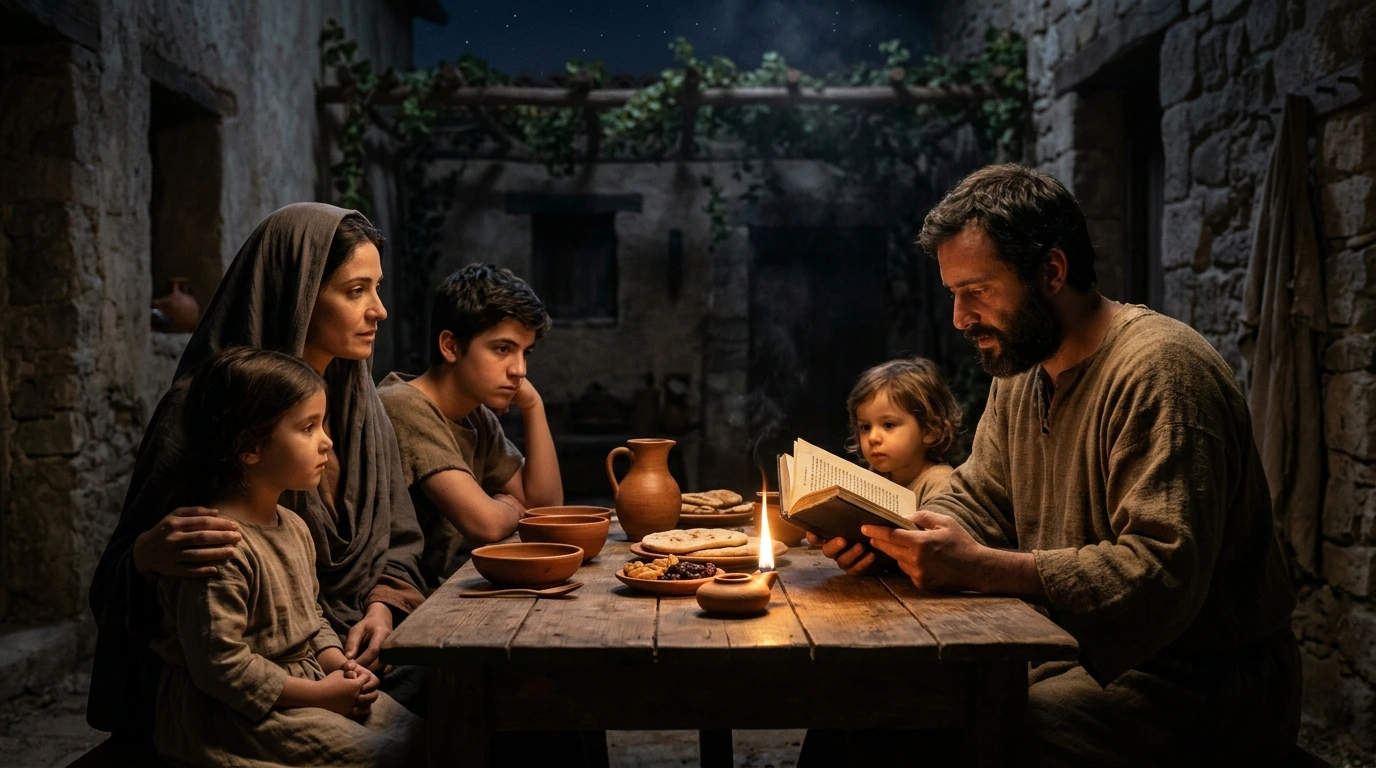
Patristic Reading Guide: Key Excerpts and Timeless Lessons from John Chrysostom (c. 347–407 AD)
How Do We Know the Bible Is Reliable? Augustine of Hippo (354–430 AD), Confessions, and The City of God