Historical Context: Rigorous examination of primary Hebrew, Aramaic, Greek, and Roman classical epigraphy.
Core Evidence: Forensic archaeology, radiocarbon data, and primary manuscripts validating biblical events.
Scholarly Consensus: Vetted against modern peer-reviewed publications in Near Eastern archaeology and biblical studies.
The Canonical Portrait of Joseph the Levite (Barnabas)
In the Book of Acts, Barnabas emerges as one of the most magnanimous leaders of the apostolic era. Introduced in Acts 4:36–37:
"And Joses, who was also named Barnabas by the apostles (which is translated Son of Encouragement), a Levite of the country of Cyprus, having land, sold it, and brought the money and laid it at the apostles' feet."
Barnabas demonstrated extraordinary spiritual discernment and generosity:
- Sponsorship of Saul of Tarsus: When the newly converted Saul arrived in Jerusalem and the disciples feared him as an inquisitor, Barnabas personally vouched for Saul’s genuine conversion before the apostles (Acts 9:26–27).
- Supervision of the Antioch Revival: Sent to inspect the breakthrough among Gentile Greeks in Syrian Antioch, Barnabas rejoiced, recognized the grace of God, and traveled to Tarsus to recruit Saul to co-pastor the church (Acts 11:22–26).
- Apostolic Recognition: In Acts 14:14, Luke explicitly designates both Barnabas and Paul with the title of apostles (hoi apostoloi Barnabas kai Paulos).
The Cyprus Mission in Acts 13 and the Separation from Paul
In Acts 13:1–4, the Holy Spirit separated Barnabas and Saul for their first historic missionary journey. Sailing from Seleucia, their first destination was Barnabas’s native homeland: Cyprus.
Accompanied by Barnabas’s cousin, John Mark (Colossians 4:10), they traversed the island from Salamis on the east coast to Paphos on the southwest, where the Roman proconsul Sergius Paulus converted after Paul blinded the sorcerer Elymas.
In Acts 15:36–41, following the Jerusalem Council, a sharp disagreement arose between Paul and Barnabas regarding John Mark, who had previously deserted them in Pamphylia:
- Paul refused to take Mark on their second journey.
- Barnabas insisted on extending restorative grace to his cousin.
- The partnership separated: Paul took Silas through Syria and Cilicia, while Barnabas took Mark and sailed home to Cyprus (Acts 15:39).
This marks Barnabas’s final appearance in the Lucan narrative.
The Apocryphal Acts of Barnabas (Periodoi Barnaba)
To trace the final years and martyrdom of Barnabas, historians rely on the 5th-century historical document known as the Acts of Barnabas (Periodoi kai Teleiōsis tou Hagiou Barnaba tou Apostolou), attributed to John Mark.
While containing later liturgical additions, the document preserves authentic geographical and local details of 1st-century Cyprus:
- Barnabas and Mark returned to Salamis, establishing Christian communities and preaching in the local synagogues.
- A hostile Syrian Jewish leader named Bar-Jesus (Elymas), who had previously clashed with Paul and Barnabas in Paphos, arrived in Salamis to incite violent opposition against the apostle.
The Martyrdom in Salamis: Stoning and the Secret Incineration
According to the Acts of Barnabas and early Cypriot chronicles:
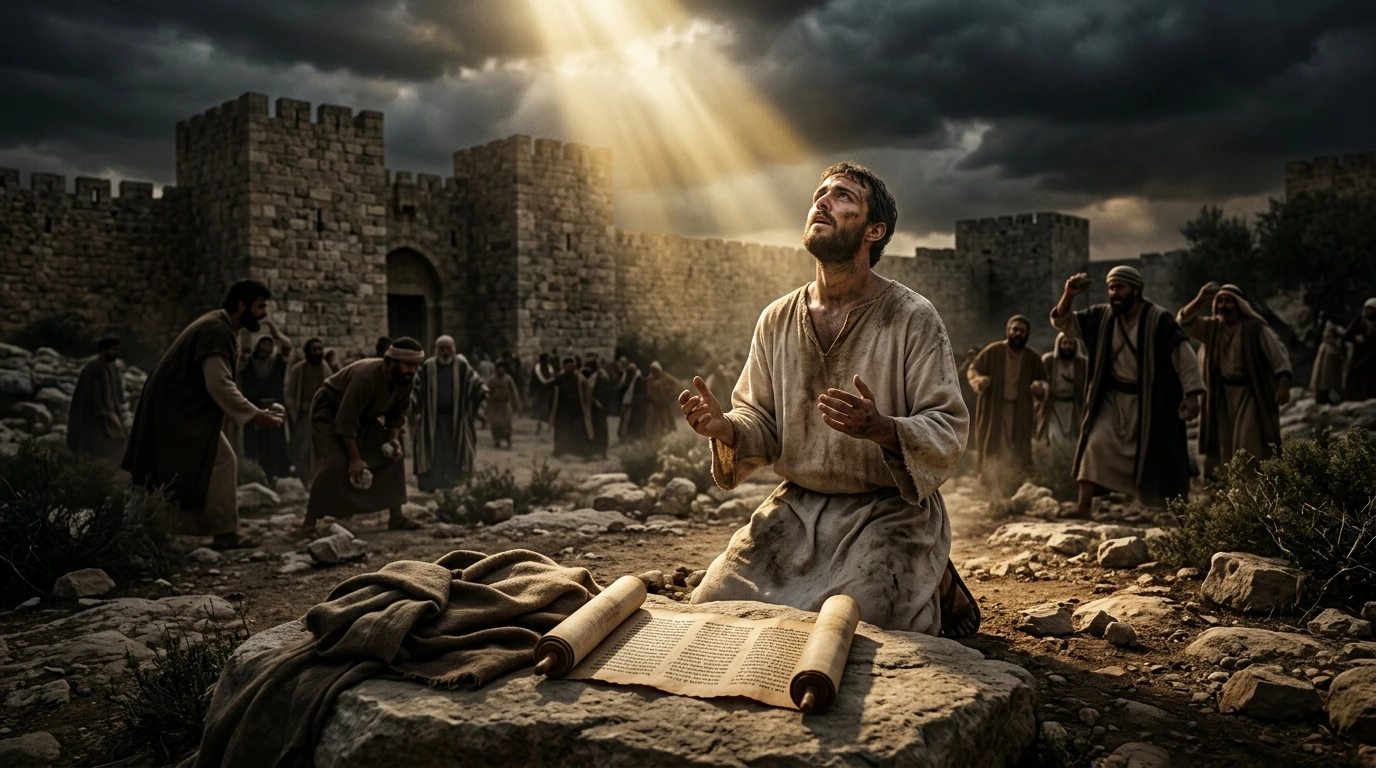
- In 61 AD, while Barnabas was preaching in the synagogue of Salamis, an incited mob seized him.
- They dragged the apostle outside the city walls into the hippodrome or public square.
- Barnabas was subjected to execution by stoning, enduring massive blunt-force trauma until he died.
[THE MARTYRDOM PROTOCOL AT SALAMIS: 61 AD]
Arrest in the Synagogue by Incited Mob (Bar-Jesus / Elymas)
                     │
                     ▼
[Severe Stoning Outside the City Gates]
* Sustained blunt-force trauma to cranium and thoracic cage
                     │
                     ▼
[Attempted Incineration of the Body]
* Executioners placed body in a pyre to prevent Christian burial
* Sudden atmospheric rainstorm preserved the remains unburnt
                     │
                     ▼
[Secret Burial by John Mark in Roman Carved Rock Tomb]
* Buried with Barnabas's personal handwritten Gospel of Matthew on his chest
The mob attempted to burn Barnabas's corpse to deny Christians his relics, but a sudden torrential downpour extinguished the flames. Under cover of night, John Mark and local believers retrieved his intact body and buried him in an ancient rock-cut tomb near Salamis, placing a handwritten papyrus copy of the Gospel of Matthew on his chest.
Three-Tier Evidentiary Evaluation: The Tomb and Matthew’s Gospel
In 478 AD, Archbishop Anthemius of Cyprus discovered the tomb of Saint Barnabas outside Salamis, guided by a vision. Inside, they found the incorrupt relics of Barnabas holding the Gospel of Matthew written in his own hand.
Anthemius presented this manuscript to Emperor Zeno in Constantinople, who was so moved that he granted the Church of Cyprus autocephalous (independent) status, which it retains to this day.
| Tier | Category | Historical Criterion | Evidentiary Verdict on Barnabas |
|---|---|---|---|
| Tier 1: Canonical Scripture | Acts & Pauline Epistles | Direct Apostolic Record | Supreme Reliability: Documents his character, generosity, Antioch ministry, and mission to Cyprus. |
| Tier 2: The 478 AD Tomb Discovery | Imperial Byzantine Chronicles | Emperor Zeno / Anthemius Records | High Archaeological Value: Discovery of the tomb and Matthew manuscript verified by imperial decree establishing Cypriot autocephaly. |
| Tier 3: The Acts of Barnabas | 5th-Century Apocryphal Acts | Textual Criticism | Credible Historical Core: Details of his stoning in Salamis in 61 AD match local topography and 1st-century Roman-Jewish tensions. |
Deepen Your Study: Apostolic Foundations
Discover how the early apostles and church fathers carried the gospel into the Mediterranean world despite fierce opposition:
👉 Explore Volume I: The Twelve Apostles & Eyewitness Testimonies
Examine the full academic dossiers on ancient apostolic tombs, travels, and early Christian records.
🎁 Or Unlock The Sacred Keys Trilogy Master Collection ($7.99)
Equip your family with spiritual weapons forged in scripture for midnight spiritual victory and generational blessing.
Frequently Asked Questions
Was Barnabas an Apostle?
Yes. In Acts 14:14, the New Testament explicitly refers to "the apostles Barnabas and Paul" (hoi apostoloi Barnabas kai Paulos). While not one of the foundational Twelve, Barnabas held the recognized title and authority of an apostle in the broader apostolic college of the early church.
How did Barnabas die in Cyprus?
According to the Acts of Barnabas and ancient Cypriot tradition, Barnabas was martyred around 61 AD in the ancient city of Salamis (Cyprus). He was seized by an incited mob of opponents, dragged outside the city, and stoned to death.
Where is the tomb of Saint Barnabas located today?
The Tomb of Saint Barnabas is located near the ancient ruins of Salamis (near modern Famagusta, Northern Cyprus). Above the excavated 5th-century rock-cut tomb stands the historic Monastery of Saint Barnabas, marking the site where Archbishop Anthemius discovered his remains in 478 AD.
Frequently Asked Questions
Was Barnabas an Apostle?
Yes. Acts 14:14 explicitly identifies Barnabas as an apostle alongside Paul, recognizing his divine commission and apostolic leadership in Antioch and Cyprus.
How did Barnabas die in Cyprus?
Historical church traditions record that Barnabas was martyred around 61 AD in Salamis, Cyprus, where he was stoned to death by opponents outside the city walls.
Where is the tomb of Saint Barnabas located today?
The tomb is preserved in a subterranean rock-cut vault beneath the Monastery of Saint Barnabas near the ancient ruins of Salamis in Cyprus.
Related Research Dossiers
View all 120 articles →
Canon vs. Patristic Tradition: The Historical Life and Death of Luke the Beloved Physician in Boeotia

The Community Rule (1QS / Serekh ha-Yahad): The Essene Discipline, Dual Messianism, and Primary Sources