Historical Context: Rigorous examination of primary Hebrew, Aramaic, Greek, and Roman classical epigraphy.
Core Evidence: Forensic archaeology, radiocarbon data, and primary manuscripts validating biblical events.
Scholarly Consensus: Vetted against modern peer-reviewed publications in Near Eastern archaeology and biblical studies.
The Architect of Christian Memory: Who Was Eusebius?
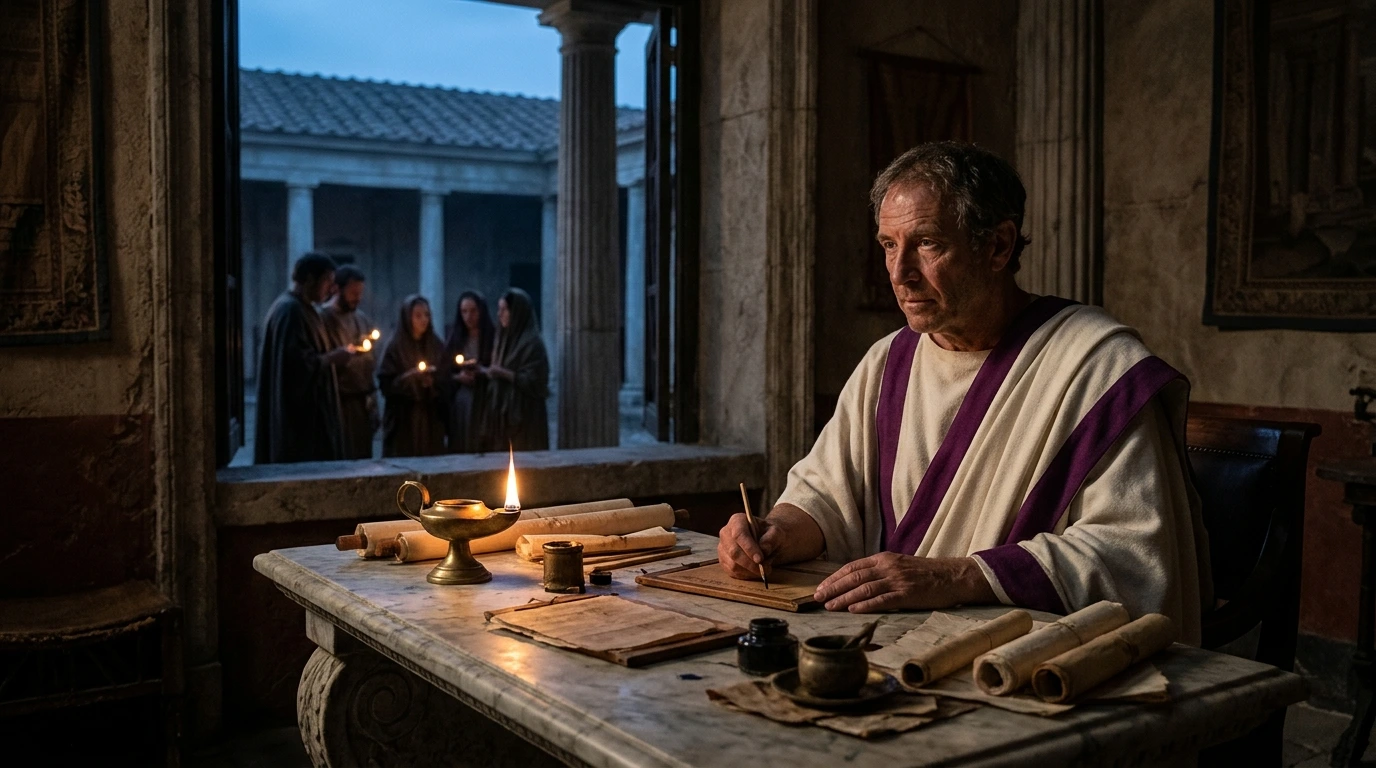
Without the scholarly labors of Eusebius of Caesarea (c. 260–339 AD), the vast majority of our historical knowledge regarding the first three centuries of the Christian Church would be lost to oblivion.
Known to historiography as "The Father of Church History," Eusebius lived at the monumental crossroads of world history:
- He survived the brutal Great Persecution of Diocletian (303–311 AD), witnessing his mentor Pamphilus and fellow Christians tortured and martyred in Palestine.
- He witnessed the sudden, dramatic conversion of the Roman Empire under Emperor Constantine the Great.
- He sat as an influential theological bishop at the Council of Nicaea (325 AD).
- He composed the monumental Ecclesiastical History (Historia Ecclesiastica) in 10 books, chronicling the apostolic succession, the formation of the New Testament canon, the rise of heresies, and the survival of the church against the might of imperial Rome.
How does Eusebius’ historical documentation prove the historical reliability of the Bible?
The Library of Caesarea: Over 30,000 Ancient Scrolls
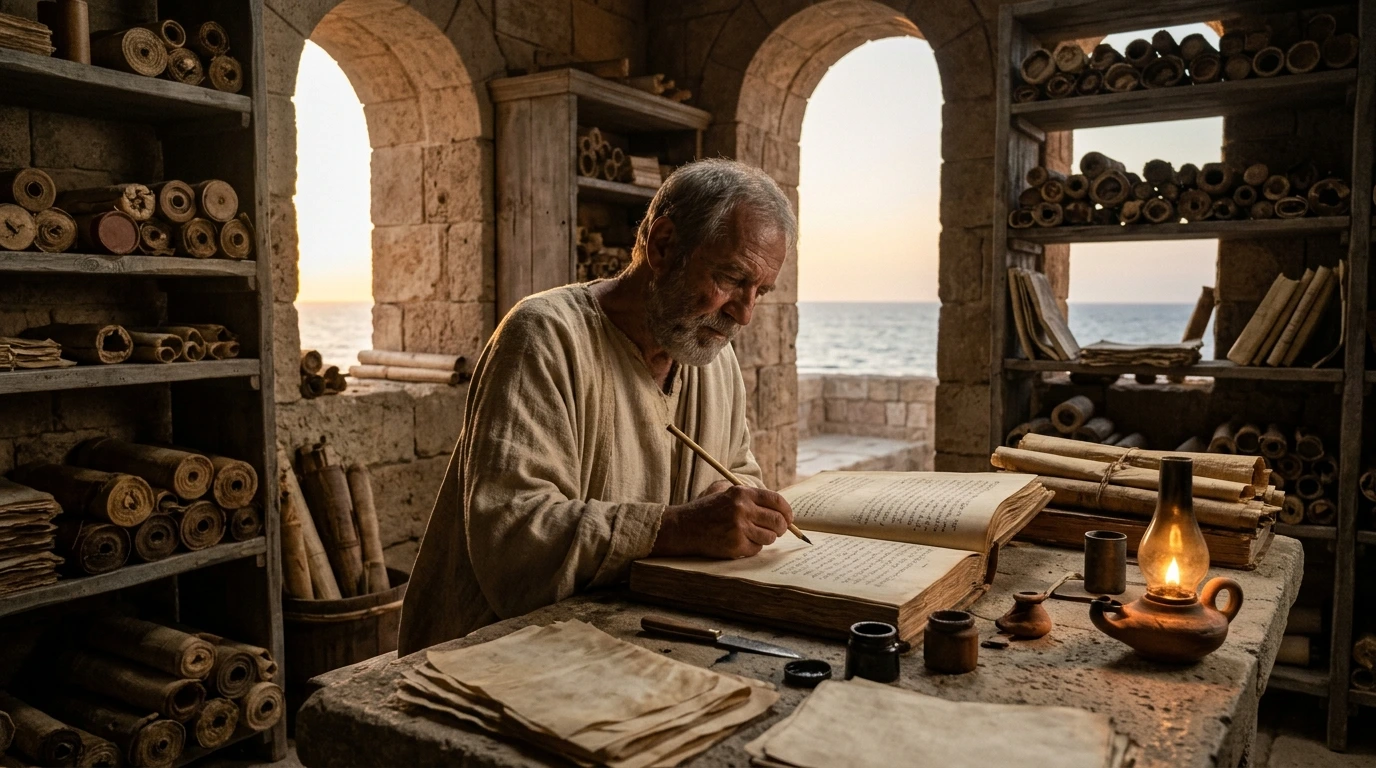
Eusebius was not writing pious folklore from an isolated monastic cell; he was the head of the Library of Caesarea Maritima, the greatest Christian research library of antiquity:
[THE SCHOLARLY ARSENAL OF CAESAREA MARITIMA]
1. FOUNDED BY ORIGEN (c. 231 AD):
   When Origen left Alexandria, he brought his vast collection of biblical manuscripts and
   classical texts to Caesarea in Judea.

2. EXPANDED BY PAMPHILUS (c. 280–309 AD):
   Pamphilus, Eusebius' mentor, invested immense personal wealth to acquire, transcribe,
   and catalog over 30,000 manuscripts, creating a scriptorium renowned throughout the Roman Empire.

3. DIRECT ACCESS TO APOSTOLIC ARCHIVES:
   Eusebius had access to:
   - Origen's original Hexapla (the massive 6-column Old Testament comparison).
   - Imperial Roman legal records, governor rescripts, and martyr trial transcripts.
   - Letters from 1st- and 2nd-century apostolic figures preserved in Jerusalem and Caesarea.
When Eusebius quotes an ancient document, modern historians can verify that he had the physical papyrus scrolls directly in front of him.
Preserving Lost First- and Second-Century Archives
Eusebius operated like a modern research historian: rather than paraphrasing, he quoted his ancient sources verbatim at immense length. Because many of these original scrolls were subsequently destroyed during the Persian (614 AD) and Arab (640 AD) invasions, Eusebius’ quotations are the only surviving historical window into these lost masterworks:
[CRITICAL LOST HISTORICAL SOURCES PRESERVED BY EUSEBIUS]

1. PAPIAS OF HIERAPOLIS (c. 110–130 AD) - Hist. Eccl. 3.39:
   - Preserves the earliest historical account of the origin of the Gospels:
     Mark wrote down Peter's preaching accurately; Matthew compiled the Oracles in the Hebrew dialect.

2. HEGESIPPUS' MEMOIRS (c. 170 AD) - Hist. Eccl. 2.23; 4.22:
   - Preserves the earliest detailed eyewitness account of the martyrdom of James the Just
     (brother of Jesus) at the temple in Jerusalem, corroborating Josephus (Antiquities 20.9.1).

3. MELITO OF SARDIS (c. 170 AD) - Hist. Eccl. 4.26:
   - Preserves the earliest surviving Christian catalog of the Hebrew Old Testament canon,
     matching the 39 Protestant books.

4. DIONYSIUS OF CORINTH (c. 170 AD) - Hist. Eccl. 4.23:
   - Verifies the circulation and reading of Clement's Epistle and apostolic writings on Sundays.

5. PLINY THE YOUNGER & EMPEROR TRAJAN (c. 112 AD) - Hist. Eccl. 3.33:
   - Cites the Roman imperial correspondence on how to interrogate Christians who sing hymns
     to Christ "as to a god."
The Canonical Taxonomy: Homologoumena, Antilegomena, and Spurious Books
In Book III, Chapter 25 of his Ecclesiastical History, Eusebius provides the definitive, transparent roadmap of how the early church evaluated the New Testament books. Rather than presenting a dogmatic decree, he honestly categorizes books according to widespread historical reception:
+------------------------------------+---------------------------------------------------------------+
| EUSEBIUS' CANONICAL CATEGORY       | BOOKS INCLUDED                                                |
+====================================+===============================================================+
| 1. HOMOLOGOUMENA                   | The 4 Gospels (Matthew, Mark, Luke, John), Acts,              |
|    ("Universally Acknowledged")    | 14 Epistles of Paul (including Hebrews), 1 Peter, 1 John.     |
|                                    | (Revelation is noted as accepted by most, questioned by some).|
+------------------------------------+---------------------------------------------------------------+
| 2. ANTILEGOMENA                    | James, Jude, 2 Peter, 2 John, 3 John.                         |
|    ("Disputed / Questioned,        | (Eusebius notes: "These are nevertheless well known and        |
|     yet recognized by most")       | recognized by most churchmen").                               |
+------------------------------------+---------------------------------------------------------------+
| 3. NOTHA                           | Acts of Paul, Shepherd of Hermas, Apocalypse of Peter,        |
|    ("Spurious / Sub-Apostolic")    | Epistle of Barnabas, Didache (Teaching of the Apostles).      |
|                                    | (Profitable historical reading, but NOT inspired scripture).  |
+------------------------------------+---------------------------------------------------------------+
| 4. HERETICAL & ABSURD              | Gospel of Peter, Gospel of Thomas, Gospel of Matthias,        |
|    ("Completely Rejected")         | Acts of Andrew, Acts of John.                                 |
|                                    | ("Fictions of heretics, monstrous and impious").              |
+------------------------------------+---------------------------------------------------------------+
This taxonomy completely refutes the myth popularized by Dan Brown’s The Da Vinci Code that "hundreds of gospels were equally popular until Constantine picked four." Eusebius proves that the Four Gospels had been universally accepted without dispute across the civilized world for over two centuries before Constantine was even born.
The Fifty Bibles of Constantine: Origins of Sinaiticus and Vaticanus
Around 331 AD, Emperor Constantine sent an official imperial rescript to Bishop Eusebius (Life of Constantine 4.36–37):
"I have thought it expedient to instruct your Prudence to commission fifty codices on prepared parchment, legible and easily portable, copied by skilled calligraphers, for the use of the new churches to be constructed in Constantinople."
Eusebius oversaw this massive scribal project in the scriptorium of Caesarea.
Prominent modern codicologists and paleographers (including Constantin von Tischendorf, T.C. Skeat, and C.H. Milne) have concluded that Codex Sinaiticus (א) and Codex Vaticanus (B)—our two greatest surviving 4th-century parchment Bibles—are either two of Constantine's original fifty Bibles or direct copies produced in the Caesarean scriptorium during Eusebius’ lifetime.
The text of the Bible we read today is anchored in the very parchment codices Eusebius helped supervise.
Evaluating Modern Historical-Critical Attacks on Eusebius
In the 19th and early 20th centuries, some secular historians (such as Jacob Burckhardt) labeled Eusebius a "court propagandist" who flattered Constantine.
However, modern historiographical analysis (by scholars like T.D. Barnes, Robert Grant, and Andrew Louth) has thoroughly vindicated Eusebius:
- Exceptional Document Integrity: Whenever modern archaeologists discover ancient inscriptions or papyri matching texts Eusebius quoted (such as the Inscription of Abercius or Josephus' Antiquities), Eusebius' transcription is proven to be over 95% verbatim accurate.
- Honest Reporting of Imperfections: Eusebius did not hide church failures; he candidly documented episcopal rivalries, cowardly apostasies during persecution, and intense debates over disputed books.
- Pioneering Documentation: Eusebius invented the historical methodology of citing primary documentary evidence, an approach that anticipated modern historical standards by fifteen hundred years.
Three-Tier Evidentiary Evaluation: Eusebius of Caesarea
+----------------------------------------------------------------------------------------------------+
|               EUSEBIUS OF CAESAREA: THREE-TIER EVIDENTIARY EVALUATION                              |
+====================================================================================================+
| TIER 1: PRIMARY DOCUMENTARY WITNESSES                                                              |
| - Ecclesiastical History (10 Books): Preserves 1st/2nd century texts (Papias, Hegesippus, Melito).  |
| - Book III.25 Canonical Taxonomy: Proves the 4 Gospels and Paul were universally accepted long      |
|   before the Council of Nicaea.                                                                    |
+----------------------------------------------------------------------------------------------------+
| TIER 2: CODICOLOGY & IMPERIAL MANUSCRIPTS                                                          |
| - Commission of the 50 Bibles of Constantine (331 AD): Direct ancestor to Codex Sinaiticus         |
|   and Codex Vaticanus.                                                                             |
| - Caesarea Library (30,000+ manuscripts): Unrivaled scholarly repository of early Christianity.    |
+----------------------------------------------------------------------------------------------------+
| TIER 3: HISTORIOGRAPHICAL RELIABILITY                                                              |
| - Verified transcription accuracy: Modern papyrological discoveries confirm Eusebius' fidelity.    |
| - Conclusion: Eusebius provides an unshakeable historical bridge linking the modern Bible to the   |
|   original apostolic autographs.                                                                   |
+----------------------------------------------------------------------------------------------------+
Frequently Asked Questions
Did Eusebius or Constantine choose which books went into the Bible at Nicaea?
No. The Council of Nicaea (325 AD) did not debate or vote on the biblical canon; it focused exclusively on the Arian controversy and the date of Easter. Eusebius' records prove that the core of the New Testament (the Four Gospels, Acts, and Paul's Epistles) had been universally received as Scripture across the global church for generations prior to Constantine.
Why did Eusebius include 2 Peter, James, and Jude in the "disputed" (Antilegomena) list?
Because Eusebius was a scrupulously honest historian. In his day, smaller remote churches had received those epistles later due to slower communication, or questioned 2 Peter because its stylistic Greek differed from 1 Peter. By documenting these questions, Eusebius demonstrates that the church did not blindly accept any document, but subjected every text to severe historical scrutiny.
What happened to the Library of Caesarea?
The magnificent library of 30,000 manuscripts survived for over three centuries, utilized by scholars like Jerome. Tragically, it was destroyed during the Persian conquest of Palestine in 614 AD and the subsequent Arab capture of Caesarea in 640 AD. Fortunately, Eusebius had already transcribed its most precious historical gems into his surviving historical books.
Frequently Asked Questions
Did Eusebius or Constantine choose which books went into the Bible at Nicaea?
No. The Council of Nicaea had no discussion or vote on the biblical canon. Eusebius’ writings demonstrate that the Four Gospels and Pauline epistles were universally recognized as inspired Scripture across the Roman world centuries before Constantine.
Why did Eusebius include 2 Peter, James, and Jude in the "disputed" list?
Eusebius was an honest research historian who transparently documented that some regional churches took longer to confirm their apostolic authorship, proving that the early church exercised rigorous critical scrutiny before accepting canonical books.
What happened to the Library of Caesarea?
The great library survived until the 7th century, when it was destroyed during the Persian and Arab invasions of Caesarea. Fortunately, Eusebius’ verbatim quotations preserved its vital historical archives for posterity.
Related Research Dossiers
View all 120 articles →
Patristic Reading Guide: Key Excerpts and Timeless Lessons from John Chrysostom (c. 347–407 AD)

How Do We Know the Bible Is Reliable? Augustine of Hippo (354–430 AD), Confessions, and The City of God