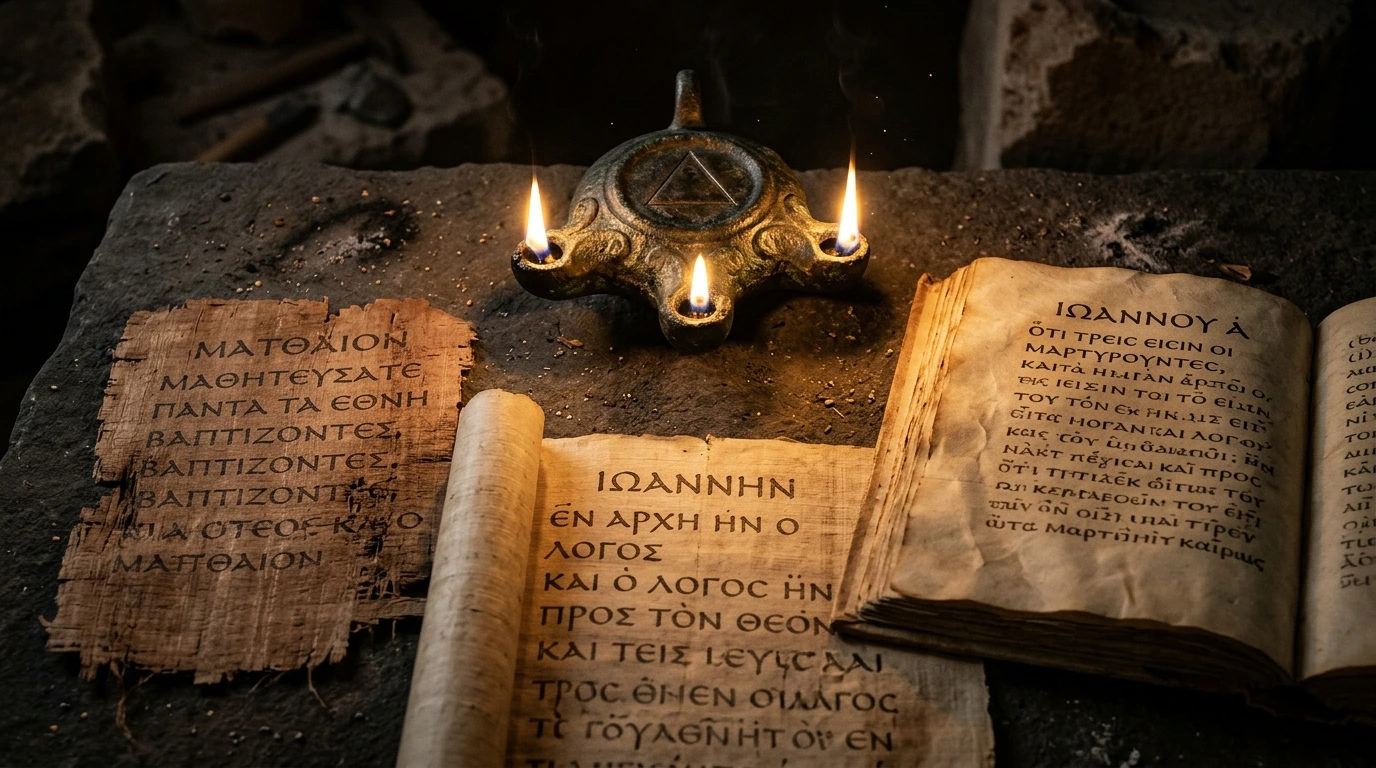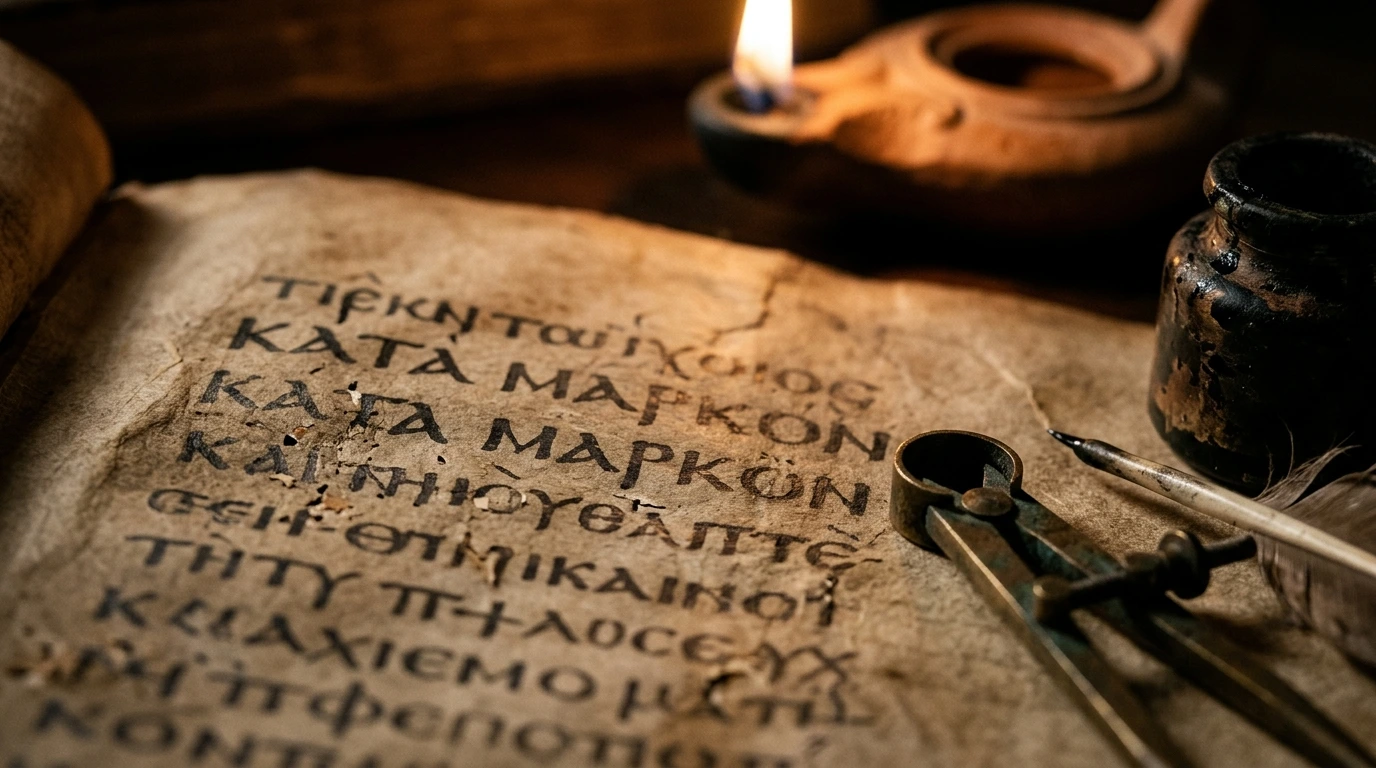
Historical Context: Rigorous examination of primary Hebrew, Aramaic, Greek, and Roman classical epigraphy.
Core Evidence: Forensic archaeology, radiocarbon data, and primary manuscripts validating biblical events.
Scholarly Consensus: Vetted against modern peer-reviewed publications in Near Eastern archaeology and biblical studies.
The 3-Minute Fast Answer for Bible Studies
When church members, students, or skeptics look down at their Bibles and ask: "Why are verses 9 to 20 in brackets? Does the Bible have missing or fake verses?"
Here is the exact 60-second explanation to share:
"The brackets prove that modern Bible translators are completely honest and transparent about manuscript history! The two oldest complete Greek Bibles from the 300s AD (Sinaiticus and Vaticanus) end Mark at verse 8, likely because the final page of the original scroll tore off in the first century. However, Church Fathers like Irenaeus quoted verse 19 as early as 180 AD—150 years before those codices were made! Furthermore, over 99% of all later Greek manuscripts contain verses 9–20. And most importantly, not a single doctrine is affected, because everything in these verses is also taught in Matthew, Luke, John, and Acts!"
The 4 Master Keys to Understand the Footnotes
[KEY 1: TRANSLATOR INTEGRITY, NOT CONSPIRACY]
* Footnotes and brackets are not signs of weakness; they are proof of scholarly honesty.
* Modern translations hide nothing from the reader.

[KEY 2: THE ANCIENT EVIDENCE (IRENAEUS IN 180 AD)]
* Skeptics claim the ending was invented in the 4th or 5th century.
* Historical Fact: St. Irenaeus quoted Mark 16:19 directly in 180 AD, proving it was
  already well-established across the Roman Empire in the 2nd century!

[KEY 3: ZERO DOCTRINE IS LOST]
* Bodily Resurrection? -> Found in Matthew 28, Luke 24, John 20, 1 Cor 15.
* The Great Commission? -> Found in Matthew 28:19-20.
* The Ascension to Heaven? -> Found in Luke 24:51 and Acts 1:9.
* Healing and Deliverance? -> Found throughout the Book of Acts.

[KEY 4: THE CODEX VATICANUS CLUE]
* Even though Codex Vaticanus ends at verse 8, the scribe left a BLANK COLUMN.
* It is the only blank column in the entire New Testament of that manuscript,
  proving the scribe knew about the longer ending!
Visual Comparison: The Ending in Major Bible Translations
| Bible Version | Presentation Style | Footnote Explanation |
|---|---|---|
| ESV (English Standard Version) | Verses 9–20 printed in brackets with a header. | "Some of the earliest manuscripts do not include 16:9–20." |
| NIV (New International Version) | Verses 9–20 separated by a line and bold note. | "The earliest manuscripts and some other ancient witnesses do not have verses 9–20." |
| NASB (New American Standard) | Verses 9–20 placed in brackets. | "Later mss add verses 9–20." |
| KJV / NKJV (King James Version) | Printed continuously without brackets. | Notes in NKJV explain the presence in the Textus Receptus and early Patristics. |
The Physical Papyrus Reality: How Ancient Book Ends Were Damaged
In the ancient Greco-Roman world, the physical format of books explains why beginnings and endings were frequently lost:
- The Scroll Format: When a papyrus roll was rolled up, the beginning (protokollon) was on the inside, and the final column was on the exposed outer edge, making the final leaf highly susceptible to fraying, moisture, and tearing.
- The Early Codex Format: Early Christians pioneered the codex (modern book with pages bound on one spine). The first page and the final page had no protective covers and frequently detached after decades of vigorous congregational reading.
- The Result: If the final leaf of Mark's original manuscript was detached or destroyed in Rome before copies were dispatched to Alexandria, early copies naturally ended at verse 8 until an early apostolic summary was appended.
Three-Tier Evidentiary Evaluation: Quick Reference
| Level of Evidence | Fact Verified | Practical Application in Bible Study |
|---|---|---|
| Textual | Over 1,600 Greek manuscripts preserve Mark 16:9–20. | Reassures students of the overwhelming manuscript support for their Bibles. |
| Patristic | Irenaeus quoted verse 19 in 180 AD; Justin Martyr in 150 AD. | Demonstrates that the verses originated in the primitive, post-apostolic era. |
| Theological | Every event in Mark 16:9–20 is corroborated in other Gospels. | Proves that Christian faith does not hang on a single disputed variant. |
Frequently Asked Questions
How should a pastor preach on Mark 16:9–20?
A pastor can preach the passage with confidence while honestly explaining the textual footnote. The sermon can highlight the early Church's unanimous witness to the risen Lord and note how every theme in the passage is echoed throughout the New Testament.
Does the footnote mean the Bible is unreliable?
No. The existence of footnotes demonstrates the extraordinary fidelity of biblical preservation. With over 5,800 Greek New Testament manuscripts, scholars can identify even minor variations down to single letters, ensuring that no essential truth is lost.
Why did Mark end at 16:8 with "for they were afraid"?
Either the final leaf of the manuscript was accidentally lost or damaged in antiquity, or Mark intentionally ended his narrative on a dramatic note of awe and trembling, challenging the reader to take up the story and proclaim the risen Christ.
Related Research Dossiers
View all 120 articles →
Direct Answer (AEO): The Comma Johanneum (1 John 5:7–8) and the Trinity in Original Greek Manuscripts

Apparent Contradiction Resolved: Harmonizing Textual Variants in 1 John 5:7–8 with the Biblical Doctrine of the Trinity