Table of Contents (Summary)
- The 1873 Discovery of Codex Hierosolymitanus
- Dating and Apostolic Origin (50–90 AD)
- The Two Ways: Moral Catechism for Converts
- First-Century Liturgy: Baptism and Fasting Protocols
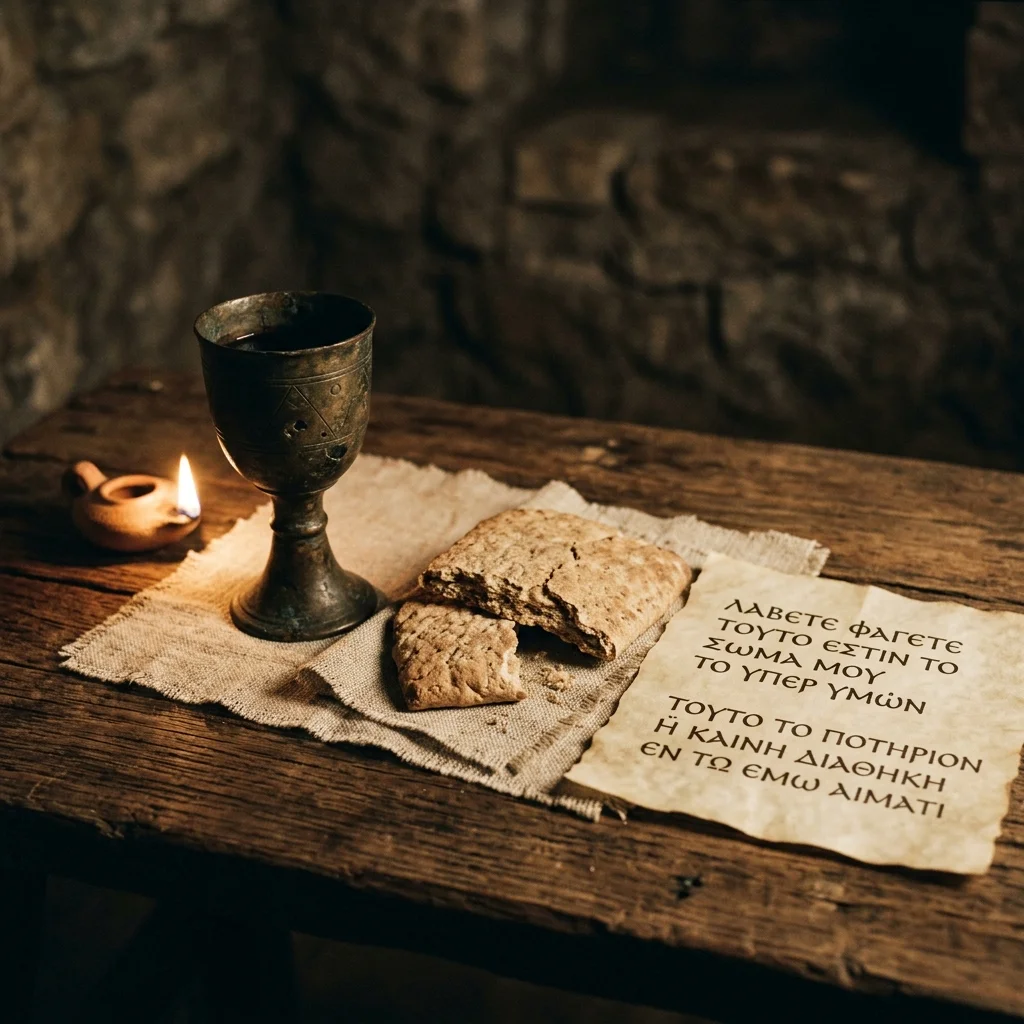
- The Earliest Eucharistic Prayers (Chapters 9–10)
- Significance for Early New Testament History
- Frequently Asked Questions
## The 1873 Discovery of Codex Hierosolymitanus {#discovery}
In 1873, Metropolitan Philotheos Bryennios was searching through manuscripts in the library of the Monastery of the Holy Sepulchre in Constantinople (Istanbul). He discovered a Greek manuscript dated to 1056 AD called **Codex Hierosolymitanus**.
Bound within this codex was a lost 1st-century document titled **The Didache** (*Διδαχή*), short for *"The Teaching of the Lord to the Gentiles by the Twelve Apostles."*
Prior to 1873, the Didache was known only through citations by early Church Fathers like Athanasius and Eusebius. Its discovery provided an unprecedented window into the lived worship, liturgy, and moral training of the earliest Jewish-Christian communities.
Dating and Apostolic Origin (50–90 AD)
Patristic scholars including J.B. Lightfoot and Audet date the core of the Didache to between **50 AD and 90 AD**—contemporary with the writing of Paul's epistles and the Gospel of Matthew.
Key internal evidence for its 1st-century origin includes: - Absence of developed 2nd-century monarchical episcopacy (bishops and deacons are chosen locally by congregation consensus). - Primitive Eucharistic prayers that make no reference to 2nd-century liturgical formulas. - Active presence of itinerant apostles and prophets moving between house-churches.
The Two Ways: Moral Catechism for Converts
Chapters 1 through 6 present **"The Two Ways"**—The Way of Life and The Way of Death:
"There are two ways, one of life and one of death, and there is a great difference between the two ways." — Didache 1:1
Converts from paganism underwent rigorous moral instruction before baptism. The Didache contains one of the earliest explicit anti-abortion and anti-infanticide declarations in Western history:
*"Thou shalt not murder a child by abortion, nor kill that which is begotten."* — Didache 2:2
First-Century Liturgy: Baptism and Fasting Protocols
Chapter 7 provides the earliest step-by-step instructions for 1st-century baptism:
1. **Running Water**: Baptism should ideally be performed by immersion in "living water" (running river or spring water). 2. **Cold/Warm Fallback**: If running water is unavailable, pour water three times upon the head in the name of the Father, Son, and Holy Spirit. 3. **Fasting**: Both the baptizer and the person being baptized must fast for one or two days prior to the sacrament.
Fasting was prescribed on Wednesdays and Fridays (distinguishing Christian practice from traditional Pharisaic fasting on Mondays and Thursdays).
The Earliest Eucharistic Prayers (Chapters 9–10)
Chapters 9 and 10 preserve the oldest recorded Eucharistic prayers in Christian history, reflecting deep Jewish *Berakhot* (blessing) traditions:
"Concerning the Eucharist, give thanks in this manner. First, concerning the cup: 'We thank thee, our Father, for the holy vine of David thy servant, which thou hast made known to us through Jesus thy Servant; to thee be glory forever.'" — Didache 9:1-2
The prayer concludes with the ancient Aramaic liturgical cry **MARANATHA** (*"Our Lord, Come!"*).
Significance for Early New Testament History
The Didache bridges the gap between the Acts of the Apostles and the 2nd-century Apostolic Fathers. It proves that early 1st-century Christianity possessed structured moral standards, sacramental order, and organized communal worship while retaining vibrant devotion to the eyewitness teachings of Christ’s twelve apostles.
Frequently Asked Questions
What is the Didache?
The Didache is a 1st-century Christian manual (c. 50-90 AD) detailing moral catechism, baptism instructions, fasting, and Eucharistic prayers from the apostolic era.
When was the Didache discovered?
The Didache was discovered in 1873 by Philotheos Bryennios in a 1056 AD Greek manuscript in Istanbul.
What does the Didache say about abortion in ancient Rome?
The Didache (2:2) contains one of the earliest explicit Christian prohibitions against abortion and infanticide in the ancient Roman world.