Historical Context: Rigorous examination of primary Hebrew, Aramaic, Greek, and Roman classical epigraphy.
Core Evidence: Forensic archaeology, radiocarbon data, and primary manuscripts validating biblical events.
Scholarly Consensus: Vetted against modern peer-reviewed publications in Near Eastern archaeology and biblical studies.
The Internet Conspiracies Surrounding Jubilees
In modern digital subcultures, the Book of Jubilees is frequently sensationalized as "the secret pre-Flood history that Rome doesn't want you to read."
Alternative history channels claim that the book was purged from the Bible by Emperor Constantine to suppress the "sacred 364-day Enochian calendar," that its named patriarchal matriarchs represent suppressed feminist history, or that the Dead Sea Scrolls prove it was part of the original inspired canon.
Examining the archaeological stratigraphy of Qumran, the Hebrew fragments, and the rabbinic historical record thoroughly refutes these sensationalist fables.
Myth 1: "The Catholic Church Deleted Jubilees to Hide the True Solar Calendar"
- The Viral Claim: The early Christian Church and the Roman papacy hunted down and burned Jubilees because its 364-day solar calendar disproved the Catholic calendar.
- The Historical Reality:
- Rabbinic Judaism Excluded It Long Before Rome: Long before Christianity became the state religion of Rome in the fourth century, Jewish rabbis meeting at Yavne (Jamnia) in the late first century AD firmly rejected Jubilees from the Hebrew Bible (Tanakh).
- The Jewish Reason for Exclusion: The Torah established a lunar-based liturgical calendar where the new moon (Rosh Chodesh) was determined by eyewitness observation in Jerusalem (Numbers 28:11–14). The Essene sect's artificial 364-day calendar disconnected Jewish festivals from the physical cycles of the moon, which the rabbis condemned as sectarian apostasy.
- Preserved by Christian Monks: Far from destroying the book, the Christian Church in Ethiopia treasured, copied, and translated Jubilees into Ge'ez, keeping it safe in remote mountain monasteries for over 1,500 years!
Myth 2: "The Names of the Matriarchs Were Suppressed to Diminish Women"
- The Viral Claim: Canonical Genesis omitted the names of the wives of Adam, Seth, and Noah out of misogyny, while Jubilees restored their names until church councils censored them.
- The Philological Reality:
- Canonical Antiquity: The canonical text of Genesis was composed centuries earlier than Jubilees. The omission of the names in Genesis 4 and 5 reflects ancient Near Eastern genealogical shorthand, where only primary heirs carrying the line were recorded.
- Haggadic Name-Giving: In the Hellenistic and Roman periods (300 BC–100 AD), Jewish writers frequently invented names for anonymous biblical figures to satisfy curiosity.
- In the New Testament, 2 Timothy 3:8 mentions the Egyptian magicians Jannes and Jambres, names that appear nowhere in Exodus, but were drawn from Second Temple Jewish tradition.
- In the Protoevangelium of James, Mary's parents are named Joachim and Anna.
- The names given in Jubilees (Awan, Azura, Emzara) were pious Second Temple literary traditions, not suppressed eyewitness records.
Myth 3: "Jubilees Was Canonized by Jesus and the Apostles"
- The Viral Claim: Jesus and the early Church read and quoted the Book of Jubilees as canonical Old Testament scripture.
- The Textual Reality:
- Zero New Testament Citations: Across the 27 books of the New Testament, there is not a single direct quotation, title citation, or explicit reference to the Book of Jubilees.
- Jesus Followed the Temple Calendar: Jesus observed the biblical feasts (Passover, Tabernacles, Hanukkah) in Jerusalem according to the standard Temple calendar, not the sectarian Essene calendar of Jubilees. When Jesus ate the Passover meal, He did so in synchronization with the rest of Jerusalem.
- Jesus Affirmed the 24-Book Hebrew Canon: In Luke 24:44, Jesus defined the scriptures as "the Law of Moses, and the Prophets, and the Psalms"—the classic tripartite Hebrew canon which never included Jubilees.
The Real Qumran Archaeology: Cave 4 Discoveries
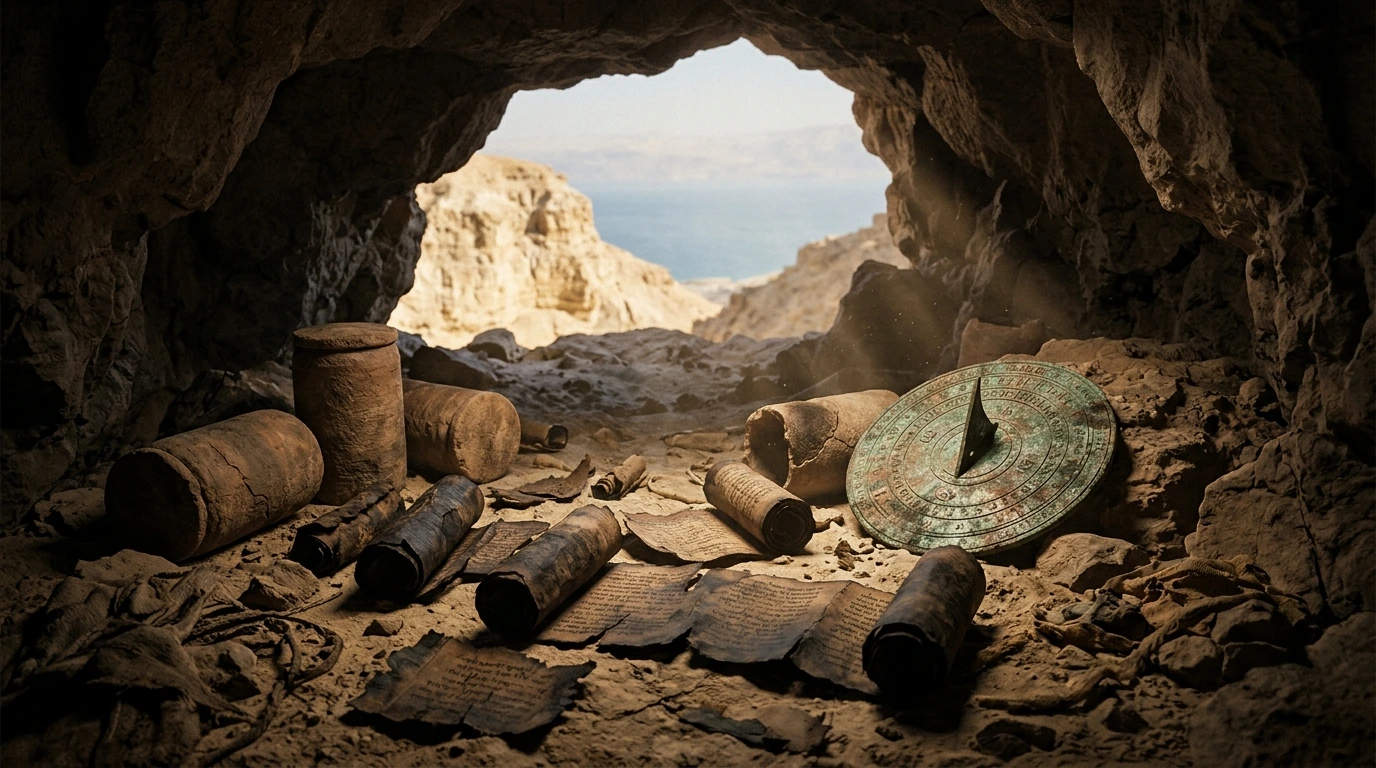
The authentic scientific significance of Jubilees was revealed through the excavation of Qumran Cave 4:
[PALEOGRAPHICAL AND ARCHAEOLOGICAL FACTS: QUMRAN CAVE 4]
1. Manuscript Volume: At least 15 Hebrew scrolls of Jubilees were recovered.
2. Chronological Range: The oldest manuscript (4Q216) dates to c. 125–100 BC;
   the youngest (4Q223–224) dates to the early 1st century AD.
3. The Essene Library Function: The Qumran community viewed Jubilees as a sacred,
   authoritative commentary that corroborated their Damascus Document (CD 16:3–4 cites
   "the Book of the Divisions of the Periods according to their Jubilees and their Weeks").
4. Separation from Canonical Torah: Despite its popularity, the Essenes at Qumran
   NEVER bound Jubilees into the same scrolls as Genesis or Exodus.
   It was copied on separate, independent parchment rolls.
Three-Tier Evidentiary Evaluation: Deconstructing Jubilees Myths
| Evidentiary Tier | Scientific & Historical Data | Hermeneutical Value |
|---|---|---|
| Tier 1: Qumran Scroll Materiality | 15 Hebrew manuscripts in Cave 4 copied on separate scrolls from the Torah. | Proves that even the Qumran Essenes recognized a boundary between canonical Torah and Jubilees. |
| Tier 2: New Testament Silence | Total absence of Jubilees citations across all four Gospels and Epistles. | Refutes claims that Jesus and the apostolic church endorsed Jubilees as canonical scripture. |
| Tier 3: Rabbinic Historical Record | The Yavne canonical decisions excluding texts written in the Hellenistic era. | Confirms that Jewish exclusion was based on the close of the prophetic era, not Roman censorship. |
Deepen Your Understanding of Biblical Catastrophes
Explore our comprehensive research library and investigative volumes on biblical archaeology, ancient conflagrations, and prophetic warnings:
- Volume I: Foundations of Sacred History — Dive into ancient covenant geography, the Tabernacle sacrifices, and wilderness archaeology.
- Volume II: The Dead Sea Scrolls & The Second Temple — Uncover the apocryphal manuscripts, Qumran libraries, and canonical boundaries.
- The Keys Trilogy Bundle — The complete 3-volume master collection covering biblical catastrophes, temple architecture, and apocalyptic prophecy.
Frequently Asked Questions
Did Constantine or the Council of Nicaea ban the Book of Jubilees?
No. The Council of Nicaea (325 AD) dealt with the Arian controversy and never discussed Jubilees. The book had already been excluded by Jewish rabbis centuries earlier and was simply never considered canonical by the broader church.
Where did the names of Cain’s and Noah’s wives come from in Jubilees?
They were traditional Haggadic names (such as Awan and Emzara) created by late Second Temple Jewish writers to fill narrative gaps in the canonical Genesis text.
Why did the Qumran community love the Book of Jubilees?
Because Jubilees strongly advocated their strict 364-day solar calendar, which they believed was the only valid liturgical system ordained by God, setting them apart from the Jerusalem Temple authorities.
Frequently Asked Questions
Did Constantine or the Council of Nicaea ban the Book of Jubilees?
No. The Council of Nicaea never discussed Jubilees; it had already been excluded from the Hebrew Bible by rabbis long before Christian councils met.
Where did the names of Cain’s and Noah’s wives come from in Jubilees?
They were Haggadic midrashic names coined during the Second Temple period, not suppressed eyewitness records.
Why did the Qumran community love the Book of Jubilees?
Because it provided theological justification for their 364-day solar liturgical calendar in opposition to the Hellenized Jerusalem priesthood.
Related Research Dossiers
View all 120 articles →
The Gospel of Judas and Codex Tchacos: Sethian Gnosticism, Irenaeus' Critique, and Canonical Boundaries

The Early Church and the Psalms of Solomon: Patristic Citations, Codex Alexandrinus, and Messianic Expectation