Subject Scope: The Slain 185,000 Assyrians: 2 Kings 19:35, Herodotus, and the Angel of the Lord at Jerusalem
Historical Context: Ancient Near Eastern stratigraphy, Levant archaeological surveys, and Semitic epigraphy.
Primary Evidence: Monumental stelae, bullae seals, ceramic typology, and calibrated AMS radiocarbon determinations.
Investigation Highlights: The Crisis of 701 BC: Jerusalem Surrounded by Sennacherib • The Fatal Night: 2 Kings 19:35 and the Angel of the Lord • Herodotus’ Rat Plague: The Egyptian Archival Memory
Scholarly Consensus: Aligned with published excavation reports from leading Near Eastern archaeological institutes.
The Crisis of 701 BC: Jerusalem Surrounded by Sennacherib
In the late summer of 701 BC, the Kingdom of Judah stood at the edge of annihilation. The Neo-Assyrian war machine—the most disciplined, brutal military force the ancient world had ever seen—had systematically reduced Judah’s fortified perimeter.
The regional fortress of Lachish had fallen under catastrophic siege assault. Sennacherib dispatched his top imperial delegation—the Tartan (field marshal), the Rabsaris (chief eunuch), and the Rabshakeh (royal cupbearer)—accompanied by a massive expeditionary force to surround Jerusalem (2 Kings 18:17).
King Hezekiah tore his royal robes, covered himself with sackcloth, entered the Temple of the Lord, and sent his emissaries to the prophet Isaiah, son of Amoz.
The word of the Lord came back with uncompromising certainty:
"Therefore thus says the Lord concerning the king of Assyria: He shall not come into this city, nor shoot an arrow there, nor come before it with shield, nor cast a bank against it. By the way that he came, by the same shall he return, and shall not come into this city, says the Lord. For I will defend this city, to save it, for Mine own sake, and for My servant David's sake." (2 Kings 19:32–34)
The Fatal Night: 2 Kings 19:35 and the Angel of the Lord
What followed in the pre-dawn darkness of that autumn night is recorded with chilling, majestic brevity in the biblical text:
[THE RECORD OF 2 KINGS 19:35 & ISAIAH 37:36]
וַיְהִי בַּלַּיְלָה הַהוּא וַיֵּצֵא מַלְאַךְ יְהוָה
וַיַּךְ בְּמַחֲנֵה אַשּׁוּר מֵאָה וּשְׁמֹנִים וַחֲמִשָּׁה אָלֶף
וַיַּשְׁכִּימוּ בַבֹּקֶר וְהִנֵּה כֻלָּם פְּגָרִים מֵתִים׃

"And it came to pass that night, that the ANGEL OF THE LORD went out,
and struck in the camp of the Assyrians ONE HUNDRED AND EIGHTY-FIVE THOUSAND;
and when they arose early in the morning, BEHOLD, THEY WERE ALL DEAD CORPSES!"
The text does not depict a protracted siege battle or a clash of armies. Jerusalem's soldiers did not loose a single arrow from the walls.
The catastrophic strike occurred in a single night, leaving 185,000 soldiers dead in their tents and forcing the terrifying emperor Sennacherib to break camp immediately and retreat permanently to Nineveh (2 Kings 19:36).
Herodotus’ Rat Plague: The Egyptian Archival Memory
For centuries, hostile critics asserted that this biblical account was an unhistorical pious invention. However, an independent memory of this exact military disaster was preserved by Greek historian Herodotus (Histories 2.141), who traveled to Egypt in the 5th century BC and recorded traditions from Egyptian temple priests:
[HERODOTUS, HISTORIES 2.141: THE PLAGUE OF MICE]
"After this, Sanacharib [Sennacherib], king of the Arabians and the Assyrians,
marched a vast army against Egypt...
As the two armies lay opposite each other, there came in the night
A MULTITUDE OF FIELD MICE, WHICH DEVOURED ALL THE SHIELD STRAPS OF THE ENEMY,
ALL THEIR BOWSTRINGS, AND THE THONGS BY WHICH THEY MANAGED THEIR SHIELDS!

Next morning, being defenseless of weapons, they fled in headlong panic,
and vast numbers of them were slain."
Epidemiological Decoding
To modern epidemiologists and medical historians, Herodotus’ account provides an unmistakable clinical clue:
- In ancient Near Eastern symbolism, the field mouse / rat was the universal carrier and symbol of bubonic and pneumonic plague (compare 1 Samuel 6:4–5, where the Philistines made golden models of mice to appease the plague).
- Egyptian priests, lacking understanding of microbiological pathogens, remembered the plague through its visible rodent vectors, which swarmed the military camp and spread fulminant death overnight.
Berossus the Chaldean: Independent Confirmation of Pestilence
A third, completely independent confirmation comes from the Babylonian priest-historian Berossus (c. 280 BC), whose lost Babyloniaca was quoted by Jewish historian Flavius Josephus (Antiquities of the Jews 10.1.5):
"Now when Sennacherib was returning from his Egyptian war to Jerusalem, he found his army under Rabshakeh in danger, for God had sent a pestilential distemper upon his army; and on the very first night of the siege, a hundred and eighty-five thousand, with their captains and generals, were destroyed."
Berossus—drawing directly upon ancient Babylonian cuneiform chronicles—explicitly confirms:
- The target was Jerusalem.
- The cause of death was a sudden pestilential distemper sent by God.
- The casualty figure was one hundred and eighty-five thousand.
- The destruction occurred on the very first night of the active investment!
Three-Tier Evidentiary Evaluation: Historical Validity
| Evidentiary Tier | Ancient Primary Records | Historiographical Significance |
|---|---|---|
| Tier 1: Multi-National Attestation | 2 Kings 19:35 (Judah), Herodotus 2.141 (Egypt/Greece), Berossus (Babylon). | Three independent civilizations record the sudden destruction of Sennacherib's army. |
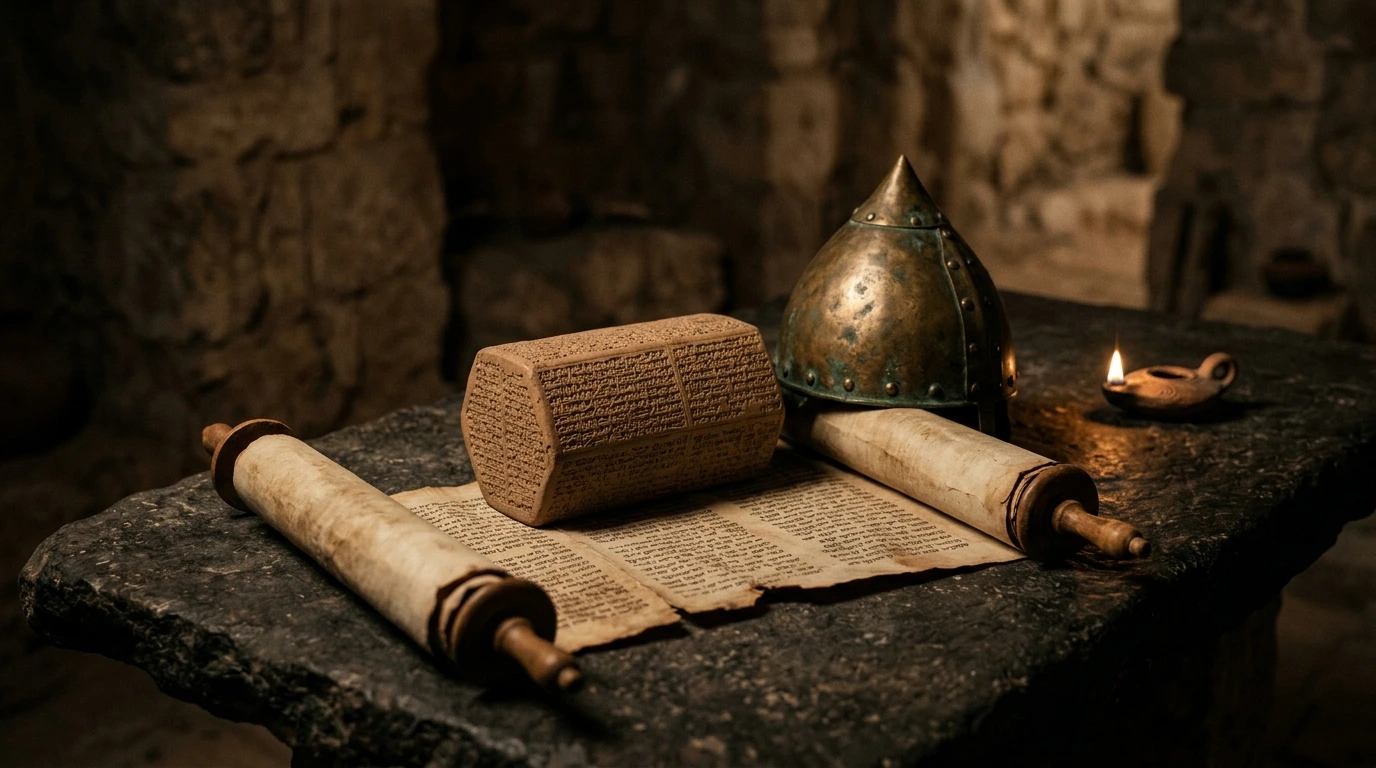
| Tier 2: Negative Cuneiform Evidence | Taylor Prism (BM 91032) omits any claim of capturing Jerusalem, confirming retreat. | Proves Sennacherib’s siege ended in sudden failure without taking the Judean capital. |
| Tier 3: Archaeological Reality | Complete lack of 701 BC Assyrian destruction strata in Jerusalem (unlike Lachish). | Conclusively proves Jerusalem was spared while the rest of Judah was pulverized. |
Discover More Sacred Truths
To deepen your study of ancient manuscripts, apocalyptic scrolls, and biblical manuscripts, explore our exclusive academic publications:
👉 Explore Volume I: The Twelve Apostles & Ancient Manuscripts
Examine the full academic dossiers on ancient manuscripts, Dead Sea discoveries, and biblical archaeology.
🎁 Or Unlock The Sacred Keys Trilogy Master Collection ($7.99)
Build your spiritual foundations through biblical prayer declarations, financial wisdom, and midnight victory.
Frequently Asked Questions
Did 185,000 soldiers really die in a single night?
The Hebrew text explicitly records 185,000 casualties (me'ah u-shemonim va-chamishah aleph). In biblical Hebrew, eleph can mean a thousand or an organized military unit / clan. Whether literal thousands or hundreds of military cohorts, the casualty count was catastrophic enough to instantly dismantle the imperial army, leaving Sennacherib defenseless and forcing an immediate retreat.
What is the connection between the "Angel of the Lord" and a plague?
In Old Testament theology, God frequently employs angels (Mal'akh Ha-Mashchit - The Destroying Angel) to administer judgment through physical epidemics. In 2 Samuel 24:15–16, when God judged David's census, a plague struck Israel, and David visibly saw the Angel of the Lord standing between heaven and earth with a drawn sword over Jerusalem.
Why did Sennacherib not attempt another invasion of Judah?
The loss of 185,000 elite troops crippled Assyria's offensive capabilities in the west. For the remainder of his 20-year reign, Sennacherib was consumed by brutal defensive wars against Babylon and Elam, never daring to mount another campaign against Jerusalem.
Primary Sources & Scholarly Archives
Editorial Standard →Official archaeological field reports, certified stratigraphy surveys, and Semitic epigraphy catalogs.
Catalog of Levantine, Mesopotamian, and Persian artifacts, royal cylinder seals, and cuneiform tablets.
Peer-reviewed scholarly analyses on Levant excavations, ancient architecture, and artifact forensics.
Frequently Asked Questions
Did 185,000 soldiers really die in a single night?
The biblical text records 185,000 casualties, an unprecedented military catastrophe corroborated by Berossus and the abrupt cessation of Assyrian conquest in Judah.
What is the connection between the "Angel of the Lord" and a plague?
In Hebrew scripture, the Destroying Angel frequently acts as the sovereign agent executing divine judgment through sudden physical pestilence (e.g., 2 Samuel 24).
Why did Sennacherib not attempt another invasion of Judah?
The catastrophic loss of his western strike force crippled his army, forcing him into defensive domestic warfare in Babylon for the remainder of his reign.
Related Research Dossiers
View all 515 research dossiers →
The Final Hours of the Second Temple: Verse-by-Verse Prophetic Exegesis and the 70 AD Archaeological Record
The Campanian Field Manual: Navigating Jewish & Christian Epigraphy in Pompeii and Herculaneum